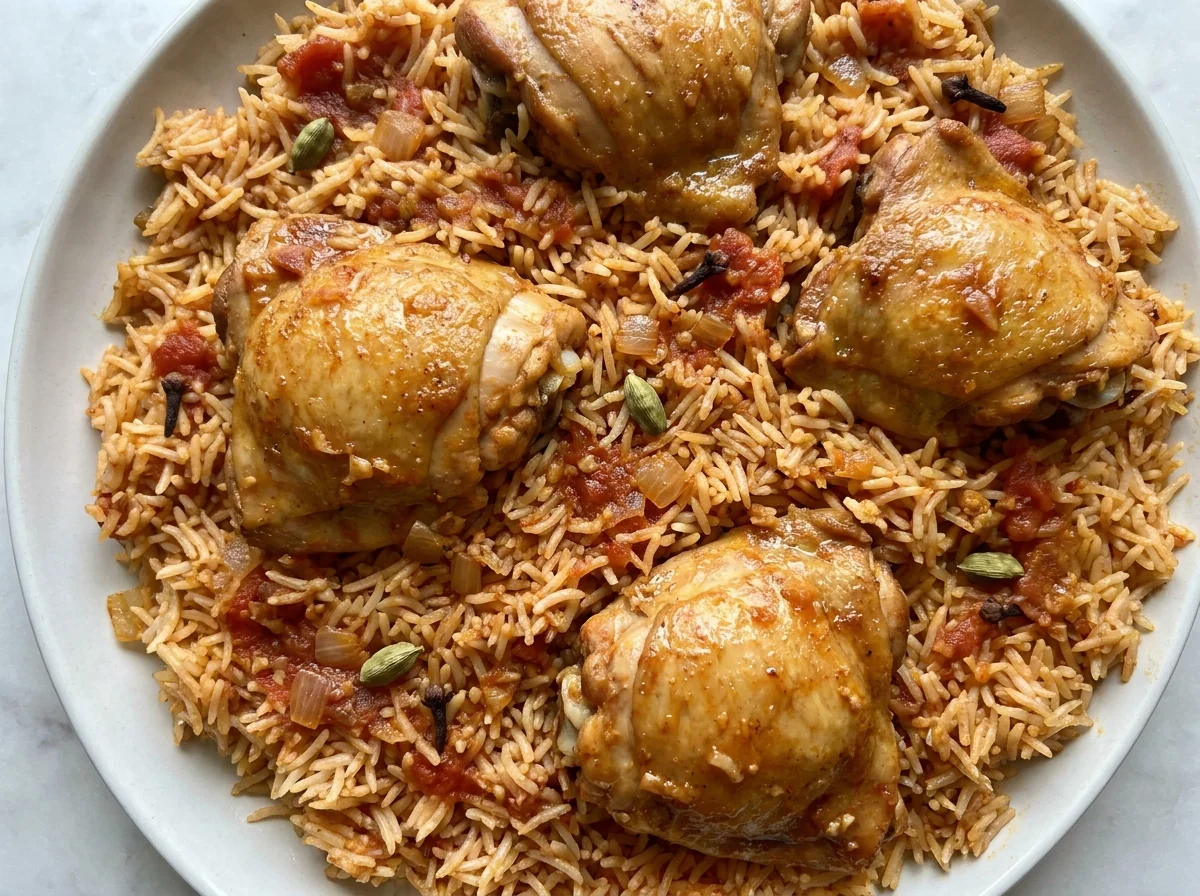
Kabsa is the queen of Gulf tables, and here we cook it in a pressure cooker so we finish faster: the chicken builds a rich stock that the basmati grains absorb in just a few minutes.
Preparation Steps
Sautéing
Turn on the sauté mode and melt the ghee, then add the cardamom, cloves, cinnamon, bay leaves, and loomi and stir for two minutes until fragrant, because heating releases the aromatic oils of the spices.
Onion and base
Add the onion and the garlic-ginger paste and stir until the onion softens, then add the tomato puree and paste and cook for two minutes until the mixture thickens and its color deepens slightly.
Adding the chicken
Add the chicken, the ground spices, and the salt and stir to coat the pieces, as early coating distributes the flavor evenly.
Pressure-cooking the chicken
Lock the lid to the sealing position and cook on high pressure for 10 minutes, then a natural release for 5 minutes followed by a quick release, until the chicken is fully cooked and reaches 74°C at the deepest point (FSIS).
Preparing the stock
Set the chicken aside and measure the stock, keeping 600 ml and topping up with water if needed, because the liquid-to-rice ratio is what sets its texture.
Rice under pressure
Add the rinsed rice to the stock in the pot and level it, then cook on high pressure for 6 minutes and a natural release for 5 minutes followed by a quick release, as cooking under pressure with less water preserves the rice's flavor and nutrients.
Serving
Spread out the rice and return the chicken on top, then leave it for two minutes with the lid open to rest before serving.
Blood Sugar Impact
The glycemic index (GI) measures how quickly a food raises blood sugar, while the glycemic load (GL) measures how much a full serving raises it. Together they give the complete picture.
Glycemic Index
GI
67Medium
Low0–55Medium56–69High70+
A low value (≤55) means a gradual rise in blood sugar — the most suitable range for diabetes and insulin resistance.
Glycemic Load
GL
58High
Low0–10Medium11–19High20+
Glycemic load reflects the impact of the full serving. To lower it: take half a serving, or pair the recipe with a source of protein and fiber.
Nutritional Information
Per ServingMakes 5 servings · one serving is about 625 g of raw ingredients
Calories716 kcal36%of Daily Value*
Protein45 g90%of Daily Value*
Carbohydrates91 g33%of Daily Value*
Fat18 g23%of Daily Value*
Fiber4 g14%of Daily Value*
Sodium816 mg35%of Daily Value*
* Percent Daily Values are based on a 2,000-calorie diet per FDA food-label reference values — your daily needs may be higher or lower. Values are derived from the recipe's ingredients via the USDA database.
Troubleshooting
The most common problems when preparing Pressure-Cooker Chicken Kabsa, and how to fix them:
The rice is sticky or clumped
There was too much liquid for the ratio; measure the stock precisely (600 ml per 500 g of rice) and do not stir the rice too much after cooking.
Burnt bottom and burn alarm
Tomato residue stuck to the bottom; scrape the bottom well after sautéing before locking the lid and make sure there is enough liquid.
The chicken is undercooked near the bone
Return it under pressure for two extra minutes until it reaches 74°C, as large pieces need a little more time.
Storage and Make-Ahead
Refrigerator
In an airtight container for up to 3 days; reheat with a splash of water to make the rice soft again.
Freezer
Rice with chicken for up to a month; thaw it in the refrigerator then reheat over low heat.
Tested Ingredient Substitutions
Original Ingredient
Tested Substitute
Ratio
Flavor Difference
Ghee
Vegetable oil
For a lighter version
The flavor is slightly less rich
Fresh tomato puree
Canned crushed tomatoes
When fresh is unavailable
Adjust the salt because canned may be salted
Chicken thighs
Bone-in chicken breasts
For those who prefer white meat
Reduce the pressure time by one minute to avoid dryness
How Much Does It Make? Scaling Guide
Ingredient
2 servings
4 servings (base)
8 servings
Chicken thighs
480 g
1200 g
2400 g
Basmati rice
200 g
500 g
1000 g
Water or stock
290 ml
720 ml
1440 ml
Ghee
20 ml
45 ml
90 ml
EEINA Nutrition Tip
Do not fill the pot beyond two-thirds when cooking the rice, as the rice expands and releases foam that may block the steam valve; and make sure at least a cup of liquid remains under pressure.
Add This Recipe to Your Plan
The EEINA app saves your favorite recipes, calculates them from their real ingredients, and shows your daily numbers toward your goal. Try it free now.