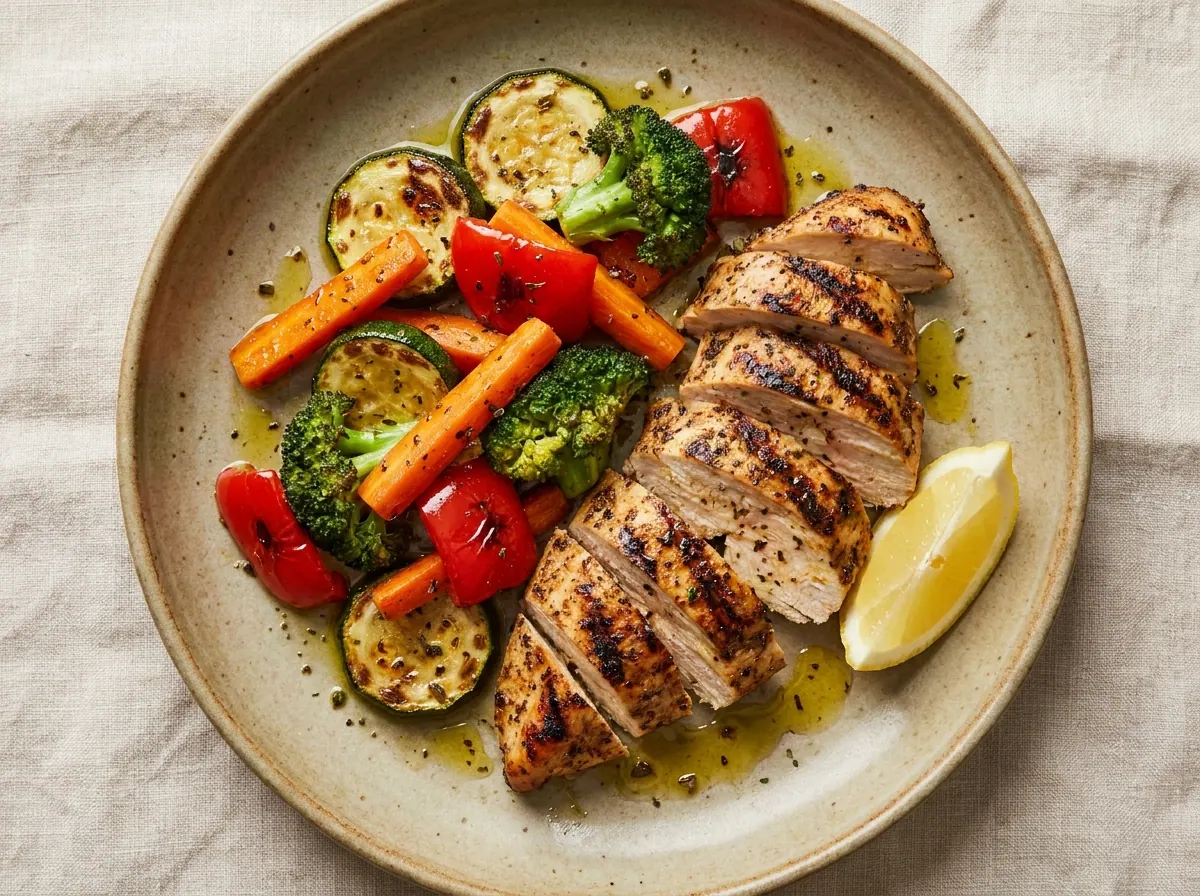
Tender grilled chicken breasts over colorful roasted vegetables. A high-protein, low-carb dish, GI 19, 38 g protein per serving, suitable for diabetes, heart, weight loss, and PCOS.
This dish is the definition of a balanced healthy meal: high-quality lean protein from chicken breast, over non-starchy vegetables roasted to concentrate their flavor with dry heat rather than water. No rice and no bread, so the carbs are very low and all from the vegetables.
The secret of the flavor is roasting, not boiling: at two hundred degrees the vegetables' natural sugars caramelize, gaining sweetness and golden edges, while the chicken stays tender because it is grilled separately and rested before slicing. The result is a long-satisfying meal at moderate calories, suitable for anyone watching their weight or blood sugar.
Preparation Steps
Marinate the chicken
Marinate the chicken breasts with half the olive oil, the lemon juice, the crushed garlic, the herbs, salt, pepper, and paprika, and leave them to soak up the marinade for twenty to thirty minutes (or up to an hour in the fridge for a deeper flavor).
Heat the oven
Heat the oven to two hundred degrees Celsius, or heat a griddle or grill over medium to high heat.
Season the vegetables
Cut the zucchini, pepper, carrot, and broccoli into similar sizes, and toss them with the remaining olive oil and a pinch of salt and pepper so the seasoning is distributed.
Roast the vegetables
Spread the vegetables in a single tray in one layer without piling them so they roast rather than steam, and put them in the oven for twenty to twenty-five minutes, turning them once halfway through.
Grill the chicken
Grill the chicken breasts five to seven minutes per side until the internal temperature reaches seventy-four degrees Celsius (recommended by USDA for poultry safety) and the color is golden and the juices run clear.
Rest the chicken
Rest the chicken for five minutes before slicing so it keeps its juices, then slice it.
Serve
Arrange the roasted vegetables on the plate with the chicken slices on top, and finish with a fresh squeeze of lemon and a sprinkle of green herbs before serving.
Blood Sugar Impact
The glycemic index (GI) measures how quickly a food raises blood sugar, while the glycemic load (GL) measures how much a full serving raises it. Together they give the complete picture.
Glycemic Index
GI
19Low
Low0–55Medium56–69High70+
A low value (≤55) means a gradual rise in blood sugar — the most suitable range for diabetes and insulin resistance.
Glycemic Load
GL
2Low
Low0–10Medium11–19High20+
Glycemic load reflects the impact of the full serving. To lower it: take half a serving, or pair the recipe with a source of protein and fiber.
Nutritional Information
Per ServingMakes 2 servings · one serving is about 420 g of raw ingredients
Calories381 kcal19%of Daily Value*
Protein38 g76%of Daily Value*
Carbohydrates16 g6%of Daily Value*
Fat18 g23%of Daily Value*
Fiber5 g18%of Daily Value*
Sodium316 mg14%of Daily Value*
* Percent Daily Values are based on a 2,000-calorie diet per FDA food-label reference values — your daily needs may be higher or lower. Values are derived from the recipe's ingredients via the USDA database.
Troubleshooting
The most common problems when preparing Grilled Chicken Breast with Roasted Vegetables, and how to fix them:
The chicken came out dry and tough
Usually the internal temperature exceeded seventy-four degrees, or it was sliced right off the heat. Chicken breast is lean, so it dries out quickly past this temperature. Use a meat thermometer and pull the breast as soon as it reaches seventy-four degrees, then rest it five minutes covered before slicing so the juices redistribute. Marinating with acid and oil beforehand also helps retain moisture.
The vegetables came out boiled and soft, not roasted
They were piled in the tray so their moisture steamed instead of roasting. Spread them in a single layer with spaces between them, and use a wide tray or two trays when doubling the amount. A preheated oven at two hundred degrees is essential, as a cold oven releases water before browning forms.
Some vegetables burned and some are raw
The pieces are uneven in size, or vegetables with different cooking times were mixed. Cut each type to a similar size, and start the denser carrot five minutes before adding the quick-cooking zucchini and pepper. The broccoli holds up, but its thin tips blacken quickly, so turn the tray once halfway through.
The dish is flavorless and flat-tasting
The marinade did not get its time, or there is a shortage of acid at the end. Leave the chicken in the marinade for at least twenty minutes, and give the vegetables salt and pepper before the oven, not after. A fresh squeeze of lemon over the dish at serving lifts all the flavors and balances the richness of the oil.
The chicken stuck to the grill or griddle
The surface was not hot enough, or the breast was moved early. Heat the griddle well and brush it with a little oil, place the breast and then leave it without moving until a golden surface forms that releases on its own, as the meat sticks while wet and frees up when browned.
The chicken did not cook through inside while the surface browned
The breast is too thick and the heat high, so the surface burned before the center cooked. Even out the thickness with gentle pounding between two sheets of parchment, or split it horizontally into two thinner pieces. With the oven or grill, lowering the heat a little gives the center time to reach seventy-four degrees without burning the surface.
Storage and Make-Ahead
Fridge (4°)
The grilled chicken and vegetables: three to four days in an airtight container, per USDA recommendation for cooked leftovers. Do not leave the dish out of the fridge for more than two hours (the danger zone rule).
Freezer (-18°)
The chicken: freezes well for up to two to three months. The roasted vegetables: lose their texture after thawing and become soft, so it is best to freeze the chicken alone.
Make ahead
Marinating: the chicken can be marinated and kept raw in the fridge for up to twenty-four hours before cooking. Cutting the vegetables: a day ahead, kept in an airtight container in the fridge ready to roast.
Reheating
Reheat the chicken gently in the oven at one hundred sixty degrees or on a covered pan with a splash of water so it does not dry out. The microwave dries out the breast, so use it briefly on medium power if needed.
Tested Ingredient Substitutions
Original Ingredient
Tested Substitute
Ratio
Flavor Difference
Chicken breasts
Skinless boneless chicken thighs
same weight
More tender and richer, slightly higher calories, hard to dry out
Chicken breasts
Turkey breast or turkey slices
same weight
Similar protein, lighter flavor, needs a stronger marinade
Chicken (vegetarian option)
Firm pressed tofu
same weight
Meat-free, needs longer marinating and high heat to brown
Broccoli
Cauliflower or green beans
same weight
Milder flavor, roasts well, a different look for the dish
Olive oil
Avocado oil
same amount
Higher smoke point, neutral flavor, suitable for high heat
How Much Does It Make? Scaling Guide
Number of servings
Chicken breasts
Total vegetables
Olive oil
Lemon
1 (individual)
150 g
250 g
1 tbsp
1 tbsp
2 (base)
300 g
490 g
2 tbsp
2 tbsp
4 (family)
600 g
~1 kg
4 tbsp
0.25 cup
6 (entertaining)
900 g
1.5 kg
6 tbsp
1/3 cups
EEINA Nutrition Tip
Protein first is the secret of satiety: this dish provides about 38 g of protein per serving, which supports satiety and preserving muscle mass during weight loss. Start your meal with the chicken and vegetables before any starches, as this order lessens the post-meal blood sugar rise and prolongs the feeling of fullness.
Add This Recipe to Your Plan
The EEINA app saves your favorite recipes, calculates them from their real ingredients, and shows your daily numbers toward your goal. Try it free now.
Ideal. The glycemic index is 19 and the glycemic load is 2, among the lowest there is, and the high protein with the fiber slows the post-meal blood sugar rise. A full serving is suitable at any time.
Does it help with weight loss?
Yes. 381 calories with 38 g of protein give long satiety at moderate calories, and the low carbs suit low-carb diets. Keep the moderate splash of oil to control the calories.
Can I make it without an oven?
Yes. Roast the vegetables on a griddle or a wide grill pan over high heat with tossing, and the chicken likewise on the griddle. The roasted flavor stays very close to the oven's.
How long does it keep in the fridge?
Three to four days in an airtight container per USDA recommendation for cooked leftovers. The chicken freezes for up to two months, but the roasted vegetables lose their texture after thawing.
Sources: USDA · University of Sydney · Gulf GSO · Our methodology · Updated on