Ingredient Profile
- Scientific name
- Citrus aurantifolia (Dried)
- Active chemistry
- Maillard compounds, concentrated Limonene
- Regional types
- Omani (Darkest), Iraqi (Lightest), Saudi Hassawi
- Culinary use
- Kabsa, Machboos, stews (Margah), Loomi tea
- Flavor profile
- Sour, smoky, fermented, slightly bitter
- Key benefit
- Aids digestion and reduces bloating
- Storage
- Airtight glass; lasts 1–2 years
What Is Black Lime?
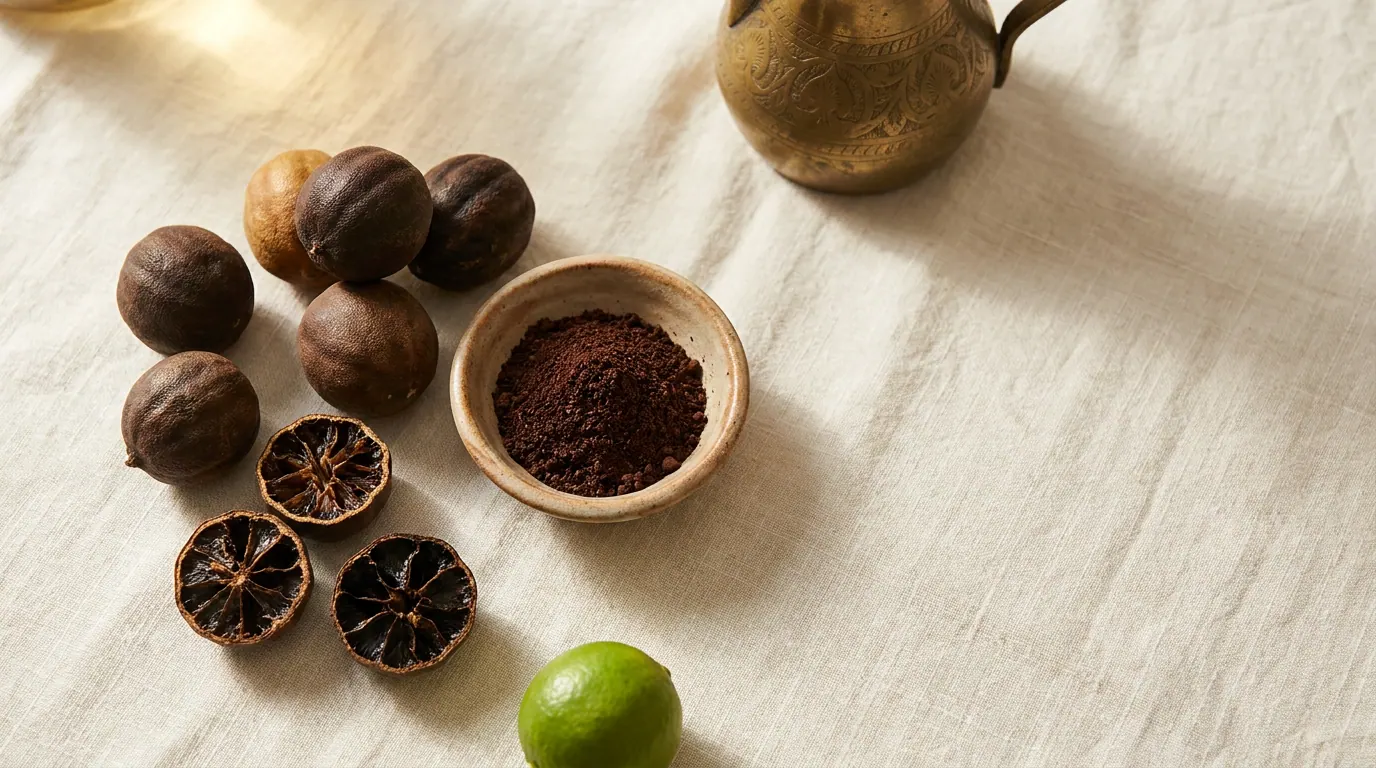
Loomi is created by boiling small green limes (Key Limes) in salt water and then leaving them to dry in the sun until they turn rock-hard and dark brown or black. This process is not just about preservation; it triggers Maillard reactions, creating dozens of new flavor compounds that do not exist in fresh citrus.
The result is a spice that adds a "fermented" sourness and a lingering smoky depth to Gulf dishes. In Saudi Arabia, the Hassawi variety from Al-Ahsa is particularly celebrated for its balanced aroma, while Omani black limes are prized for their intense, jet-black concentration.
The Science of Loomi — Why It Works
Loomi tea is a time-honored remedy for indigestion and bloating. The concentrated essential oils, particularly D-Limonene, stimulate gastric juices and may help calm the smooth muscles of the digestive tract after heavy meals.
The dark color comes from melanoidins produced during sun-drying. These compounds are studied for their potential prebiotic effects, providing fuel for beneficial gut bacteria, much like those found in coffee and roasted grains.
The traditional salting and drying process reduces water activity to near zero, making Loomi naturally resistant to spoilage. Its high citric acid concentration acts as a natural antimicrobial in traditional marinades.
Loomi has a slightly higher pH than fresh lemon (around 2.5–3.0), making it gentler on the stomach lining while still providing the acidity needed to balance high-carbohydrate rice dishes.
When using whole Loomi in stews or rice, always pierce the skin with a fork or knife in 2–3 places. This allows the cooking liquid to enter the lime, extracting the dark, smoky juice from the interior. Remove the whole limes before serving to avoid a sudden burst of bitterness.