Called the "Queen of Spices," cardamom is the defining flavor of Saudi Arabic coffee (gahwa) and Gulf cuisine. It is the third most expensive spice in the world, after saffron and vanilla, yet it is consumed daily across the Arabian Peninsula in coffee, rice dishes, and desserts.
3rdMost expensive spice globally
8 min readUpdated 2026-05-28Verified data
EEINA Editorial Content
Based on authoritative sources (USDA · SFDA · Sydney) and reviewed per our editorial methodology
Medical Disclaimer: The following content is a general educational reference based on peer-reviewed studies and classical medical heritage. It does not substitute professional medical advice. If you have a health condition, take chronic medications, or are pregnant or breastfeeding, consult your doctor before following any dietary recommendation.
Ingredient Profile
Scientific name
Elettaria cardamomum (green) / Amomum (black)
Active compounds
Cineole (1,8-cineole), terpinyl acetate, linalool
Origin
Western Ghats, Kerala, India
Top producers
Guatemala (green), India, Nepal (black)
Saudi daily use
Arabic coffee (gahwa), kabsa, desserts
Safe daily dose
2–3 pods or ½ tsp ground
Green vs. Black Cardamom
Green Cardamom
Elettaria cardamomum
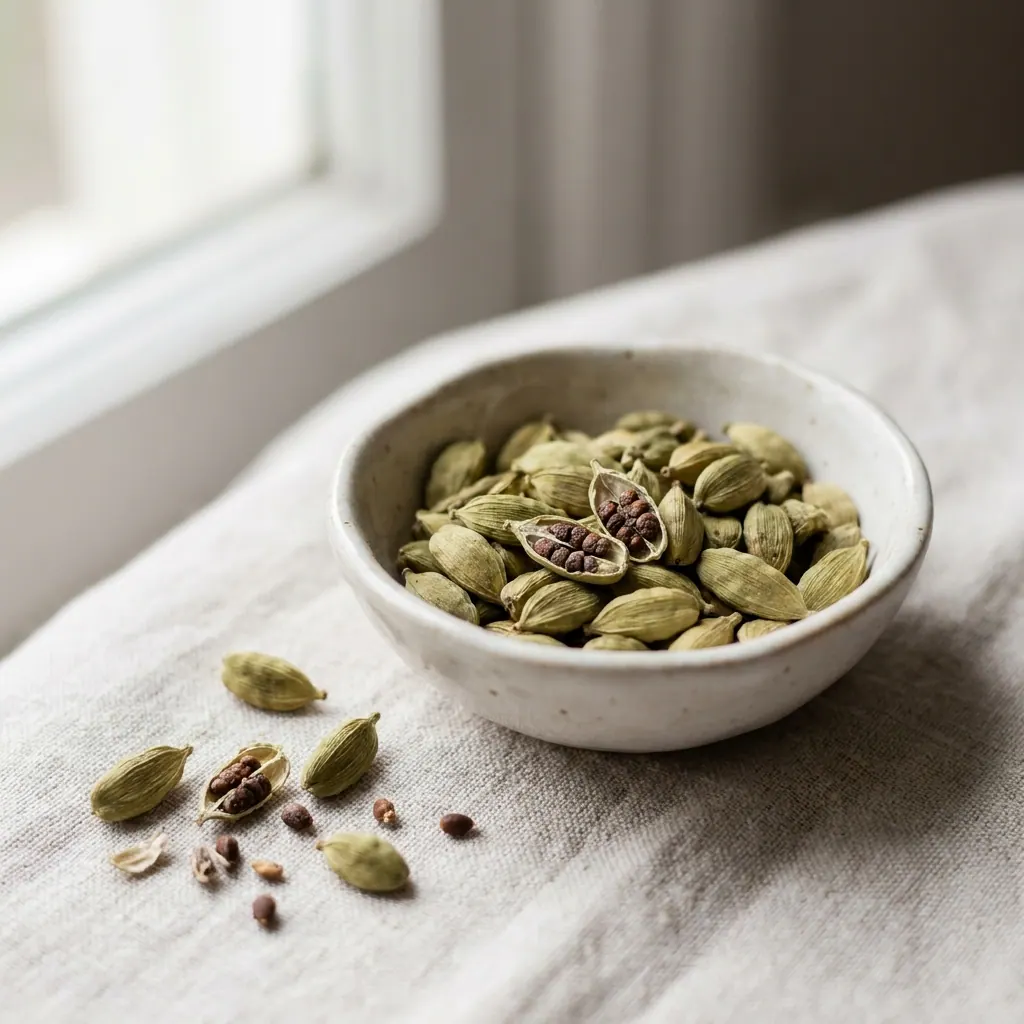
The variety used in Saudi gahwa and Gulf cooking. Small green pods (1–2 cm) with a floral, eucalyptus aroma from cineole. Flavor: sweet, camphor-like, citrus. Used whole in coffee, ground in bzar, and added to rice and desserts. Guatemala produces 60% of global supply; India produces the finest.
Black Cardamom
Amomum subulatum
Larger, smoke-dried pods (2–4 cm) with a earthy, camphor, smoky flavor. Not interchangeable with green — completely different aroma profile. Used in Indian biriyani and Chinese five-spice. Less common in Saudi cooking but available in specialty spice shops.
Health Benefits — What Science Says
Digestion
Traditional + evidence-based
Cineole relaxes smooth muscle in the GI tract, reducing bloating and cramping. Cardamom tea after heavy meals is a documented traditional remedy across the Arabian Peninsula, India, and Persia. Also has mild antiemetic (anti-nausea) properties.
Blood Pressure
Small RCT evidence
A 12-week RCT in 20 hypertensive patients found 3 g/day cardamom powder significantly reduced systolic and diastolic blood pressure. Mechanism may involve diuretic effects and calcium channel modulation. Culinary amounts are safe; supplement doses require physician oversight.
Oral Health
Traditional antimicrobial use
Cardamom is chewed across South Asia and the Gulf to freshen breath. Cineole has demonstrated antibacterial properties against oral pathogens including Streptococcus mutans in in vitro studies.
Kitchen Uses — Saudi & Gulf
Arabic Coffee (Gahwa)3–5 pods per cup
The defining flavor of Saudi hospitality. Whole pods or seeds added to the dallah (coffee pot) with lightly roasted green coffee beans. Some households add saffron. Served in small handle-less cups (finjan).
Kabsa Bzar1 tsp ground
Ground cardamom is a key component of the nine-spice bzar. Its floral sweetness balances the heat of black pepper and the bitterness of loomi.
Saleeg Rice2 pods
Two whole pods added to the creamy rice cooking liquid give saleeg its characteristic aromatic depth without being identifiable as cardamom on its own.
Luqaimat Batter½ tsp ground
Ground cardamom in the luqaimat dough adds the floral note that makes these fried dumplings distinctly Gulf in character.
Frequently Asked Questions
Green pods or ground — which is better?
Whole green pods retain flavor for 2+ years. Ground cardamom loses 50% of its essential oils within 3–4 months. For coffee: use whole pods or seeds. For cooking: grind just before use or buy small quantities of ground.
Can cardamom reduce coffee's caffeine effect?
This is a traditional Gulf belief. The science is inconclusive — cardamom does not chemically block caffeine. However, cineole's calming effect on the nervous system may moderate the stimulant response for some individuals.
Is cardamom safe during pregnancy?
Culinary amounts in food and Arabic coffee are considered safe. Avoid concentrated cardamom supplements during pregnancy. If you have concerns, consult your doctor or midwife.