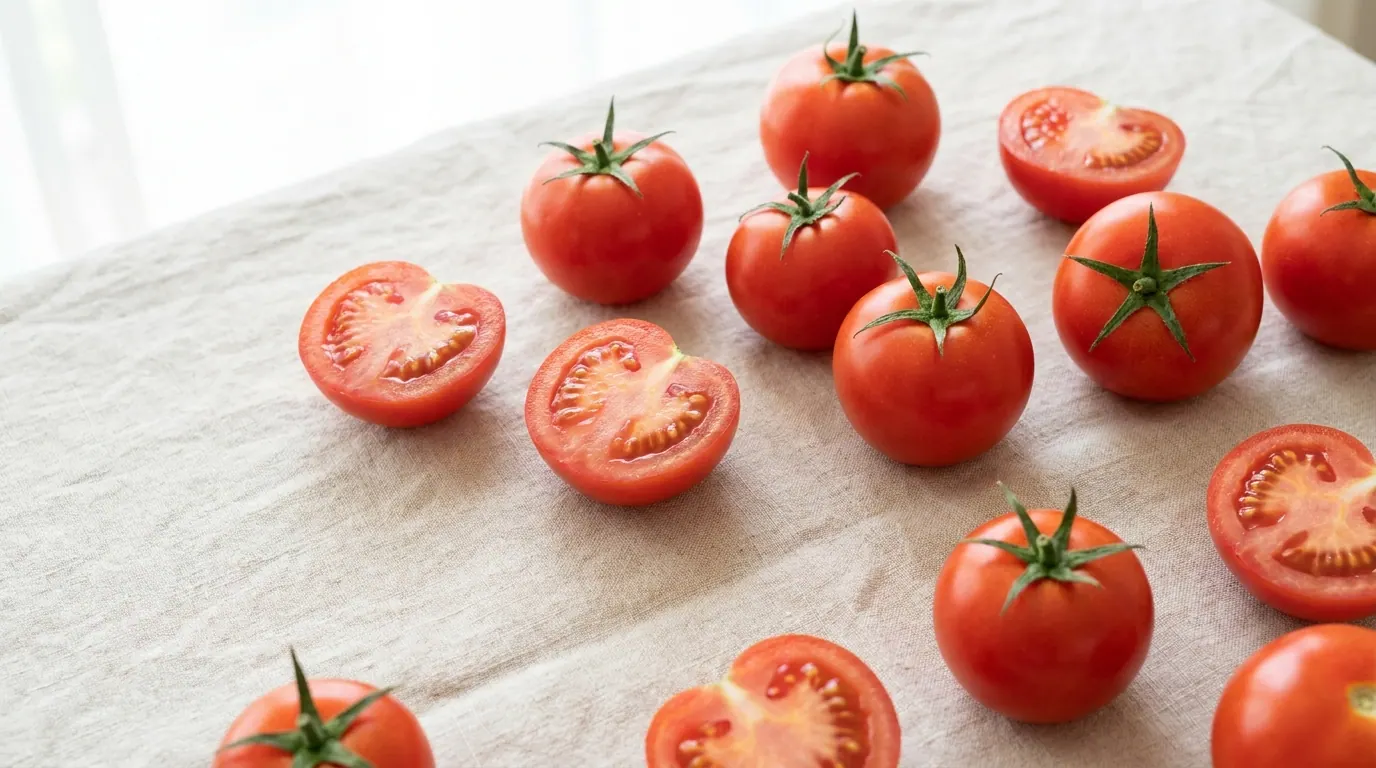
Tomato — Solanum lycopersicum — is the foundation of every Saudi kabsa broth and every spicy daggus. Originally from the Andes, it became a staple of Arab and Mediterranean cuisine. Its secret: lycopene, an antioxidant that becomes more bioavailable when cooked with fat.
95%Water in fresh fruit
5 min readUpdated 2026-05-28Verified data
EEINA Editorial Content
Based on authoritative sources (USDA · SFDA · Sydney) and reviewed per our editorial methodology
Medical Disclaimer: The following content is a general educational reference based on peer-reviewed studies and classical medical heritage. It does not substitute professional medical advice. If you have a health condition, take chronic medications, or are pregnant or breastfeeding, consult your doctor before following any dietary recommendation.
Ingredient Profile
Scientific name
Solanum lycopersicum, family Solanaceae
Active compound
Lycopene — powerful fat-soluble antioxidant
Origin
Andes and Mexico (South & Central America)
Top producers
China, India, Turkey, USA
Saudi culinary use
Kabsa broth, daggus, salad, maragat
Key synergy
Cooking + Olive Oil = maximum lycopene
Nutrition
High Vitamin C, Potassium, and Folate
What Is the Tomato?
Botanically a fruit but culinarily a vegetable, the tomato is a member of the nightshade family (alongside eggplants and peppers). While it is 95% water, its nutritional density comes from lycopene, the red pigment that protects cells from oxidative stress. In Saudi cooking, it provides the "red" base for nearly all heritage rice dishes.
The Science of Lycopene
The Cooking Paradox
Unlike most vegetables where heat destroys nutrients, cooking tomatoes increases lycopene absorption. Heat breaks down cell walls and converts lycopene into a form the human body can absorb more easily. For the best result, cook with healthy fats like olive oil.
Heart Health
Lycopene is linked to improved blood vessel function and lower LDL (bad) cholesterol levels. Regular consumption is associated with a lower risk of stroke and heart disease.
Skin Protection
Dietary lycopene provides "internal" sun protection by increasing the skin's resistance to UV damage, though it does not replace topical sunscreen.
Kitchen Uses in Saudi & Gulf Cooking
Kabsa Base
Finely chopped or pureed tomatoes sautéed with onions and bzar to create the aromatic red broth for chicken or meat kabsa.
Spicy Daggus
A fresh or cooked salsa of tomatoes, chili, and garlic. The essential companion to grilled meats and Mandi rice.
Green Salad
Diced fresh tomatoes with cucumber, lemon, and parsley. A cooling, hydrating side for heavy rice meals.
Frequently Asked Questions
Is tomato paste as healthy as fresh tomatoes?
Yes — and for lycopene, it's actually better. Tomato paste is concentrated, meaning it has much higher lycopene per gram than fresh tomatoes. However, fresh tomatoes have more Vitamin C.
Should I keep tomatoes in the fridge?
No. Cold temperatures destroy the flavor-producing enzymes in tomatoes and make the texture mealy. Keep them on the counter at room temperature for the best taste.
Does tomato cause acidity?
For some people, yes. Tomatoes are naturally acidic and can trigger heartburn or GERD. Cooking them can sometimes reduce this effect for certain individuals.