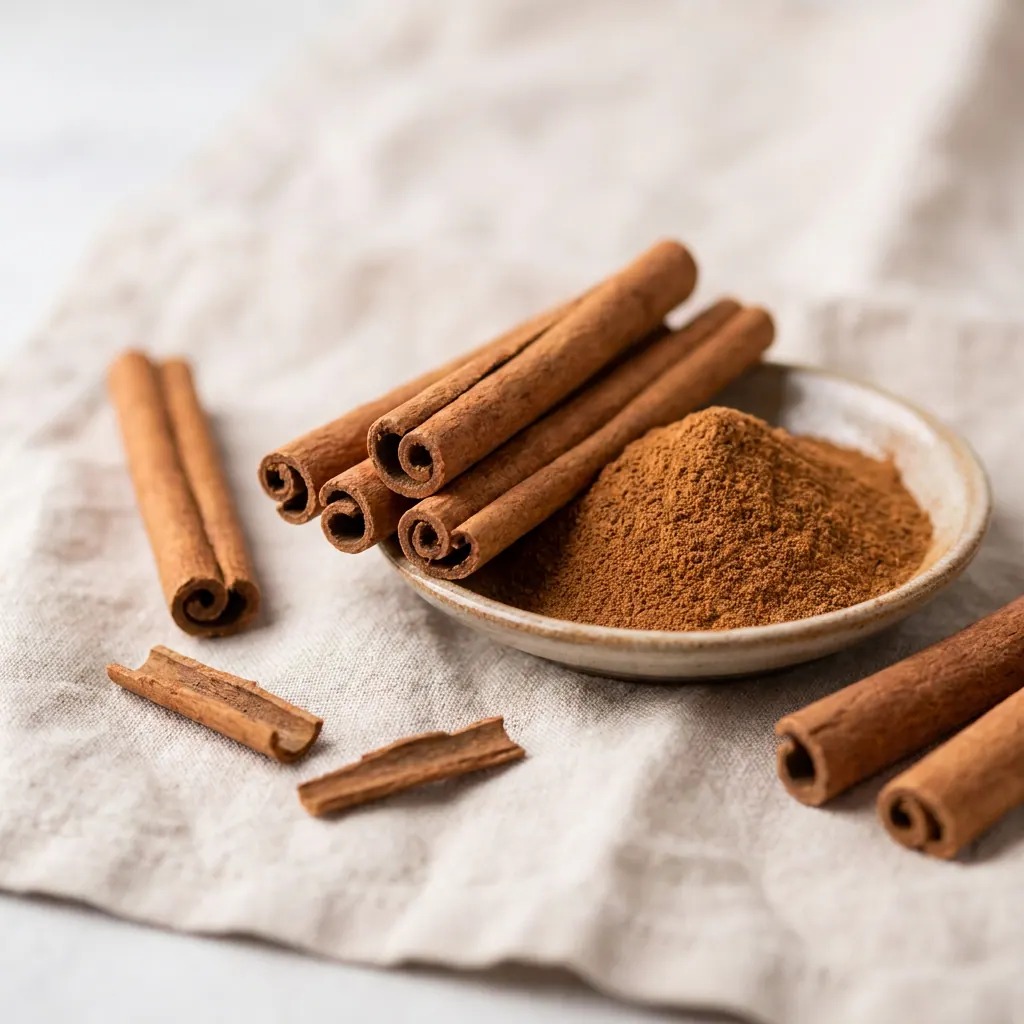
Cinnamon is harvested from the inner bark of Cinnamomum trees. Two commercial types exist: Ceylon (true cinnamon, safer) and Cassia (common in Saudi markets, higher in coumarin). Research shows cinnamon can meaningfully lower fasting blood glucose — a finding with direct relevance to Saudi Arabia's high diabetes prevalence.
2Commercial types (Ceylon vs. Cassia)
8 min readUpdated 2026-05-28Verified data
EEINA Editorial Content
Based on authoritative sources (USDA · SFDA · Sydney) and reviewed per our editorial methodology
Medical Disclaimer: The following content is a general educational reference based on peer-reviewed studies and classical medical heritage. It does not substitute professional medical advice. If you have a health condition, take chronic medications, or are pregnant or breastfeeding, consult your doctor before following any dietary recommendation.
Ingredient Profile
Scientific name (Ceylon)
Cinnamomum verum / zeylanicum
Scientific name (Cassia)
Cinnamomum aromaticum / cassia
Active compounds
Cinnamaldehyde, cinnamic acid, coumarin (Cassia)
Origin
Ceylon: Sri Lanka · Cassia: China, Vietnam
Saudi market reality
~90% of marketed cinnamon is Cassia
Safe daily limit (Cassia)
≤1 tsp/day (to limit coumarin)
Ceylon vs. Cassia — A Critical Difference
Ceylon ("True Cinnamon")
C. verum — Sri Lanka
Multiple thin papery layers that crumble easily. Light tan color, mild sweet flavor, very low coumarin (0.004%). Safe for daily supplemental use. Preferred for diabetes management and children. More expensive and less available in Saudi markets.
Cassia (Common Cinnamon)
C. aromaticum — China/Vietnam
One thick hard layer, dark reddish-brown color, stronger spicier flavor. High coumarin (0.26%) — potentially toxic to the liver in high daily doses. Safe in normal culinary amounts (≤1 tsp/day). ~90% of cinnamon sold in Saudi supermarkets is Cassia.
How to Tell Them Apart at the Market
Ceylon: light tan, thin layered quill, crumbles between fingers, sweet aroma. Cassia: dark reddish-brown, thick hard single roll, spicy-strong aroma. In Saudi supermarkets, "cinnamon" without origin labeling is almost always Cassia. Look for "Ceylon cinnamon" or "Sri Lankan cinnamon" labels for the safer variety.
Blood Glucose Research
A 2019 meta-analysis of 18 randomized controlled trials (1,096 patients) found cinnamon supplementation reduced fasting blood glucose by 29 mg/dL on average, with greater effects in type 2 diabetes patients. Cinnamaldehyde appears to improve insulin receptor sensitivity and glucose uptake in muscle cells.
Effective Dose
1–6 g/day in trials
Most effective trials used 1–6 grams/day of Cassia cinnamon. At 6 g/day, coumarin intake exceeds European safe limits. 1–2 g (½–1 tsp) daily is the practical sweet spot for glucose benefit within safe coumarin exposure.
Not a Replacement for Medication
Adjunct use only
Cinnamon is not a substitute for diabetes medication. It is a dietary adjunct that may help keep glucose levels more stable when combined with a balanced diet. Always inform your doctor if using high amounts.
Kitchen Uses — Saudi & Gulf
Kabsa Bzar1 stick / 1 tsp ground
One cinnamon stick or one teaspoon ground in the kabsa bzar blend. Also added whole to the rice cooking liquid for aroma.
Harees1 stick
A whole cinnamon stick in harees (slow-cooked wheat and meat) is essential, giving warmth without sharpness over the long cooking time.
Saleeg½ tsp ground
Ground cinnamon in the creamy saleeg rice seasoning adds a gentle sweet spice that complements the milk base.
Dates & CinnamonPinch
A pinch of Ceylon cinnamon over dates with tahini is a blood-sugar-conscious snack — dates' fiber + cinnamon's insulin effect = slower glucose response.
Frequently Asked Questions
Is it safe to take cinnamon supplements daily?
Ceylon cinnamon: yes, safe at 1–6 g/day long-term. Cassia cinnamon: limit to ≤1 tsp (2–4 g)/day due to coumarin. High-dose Cassia (5+ g/day for months) has caused liver enzyme elevation in some individuals. If using cinnamon therapeutically for blood sugar, use Ceylon.
Does cinnamon help with type 2 diabetes?
Evidence is promising but not conclusive. Meta-analyses show modest fasting glucose reduction. Use it as a dietary addition, not a replacement for medication. Inform your doctor — cinnamon may interact with diabetes drugs to cause hypoglycemia at high doses.
How do I identify Ceylon cinnamon in Saudi markets?
Look for "Ceylon cinnamon," "true cinnamon," or "Sri Lankan cinnamon" on the label. Ceylon quills crumble and have multiple thin papery layers and a light tan color. Most supermarket "Darcin" (دارچين) without specific origin is Cassia.