The onion is the silent hero of the kitchen, providing the essential flavor base for almost every Saudi stew, rice dish, and marinade. Beyond its culinary utility, onions are a major source of Quercetin—a powerful antioxidant that supports heart health and reduces systemic inflammation.
40 CalPer 100g (Raw)
8 min readUpdated 2026-05-28Verified data
EEINA Editorial Content
Based on authoritative sources (USDA · SFDA · Sydney) and reviewed per our editorial methodology
Medical Disclaimer: The following content is a general educational reference based on peer-reviewed studies and classical medical heritage. It does not substitute professional medical advice. If you have a health condition, take chronic medications, or are pregnant or breastfeeding, consult your doctor before following any dietary recommendation.
Ingredient Profile
Scientific name
Allium cepa
Active compounds
Sulfur compounds, Quercetin (in the skin)
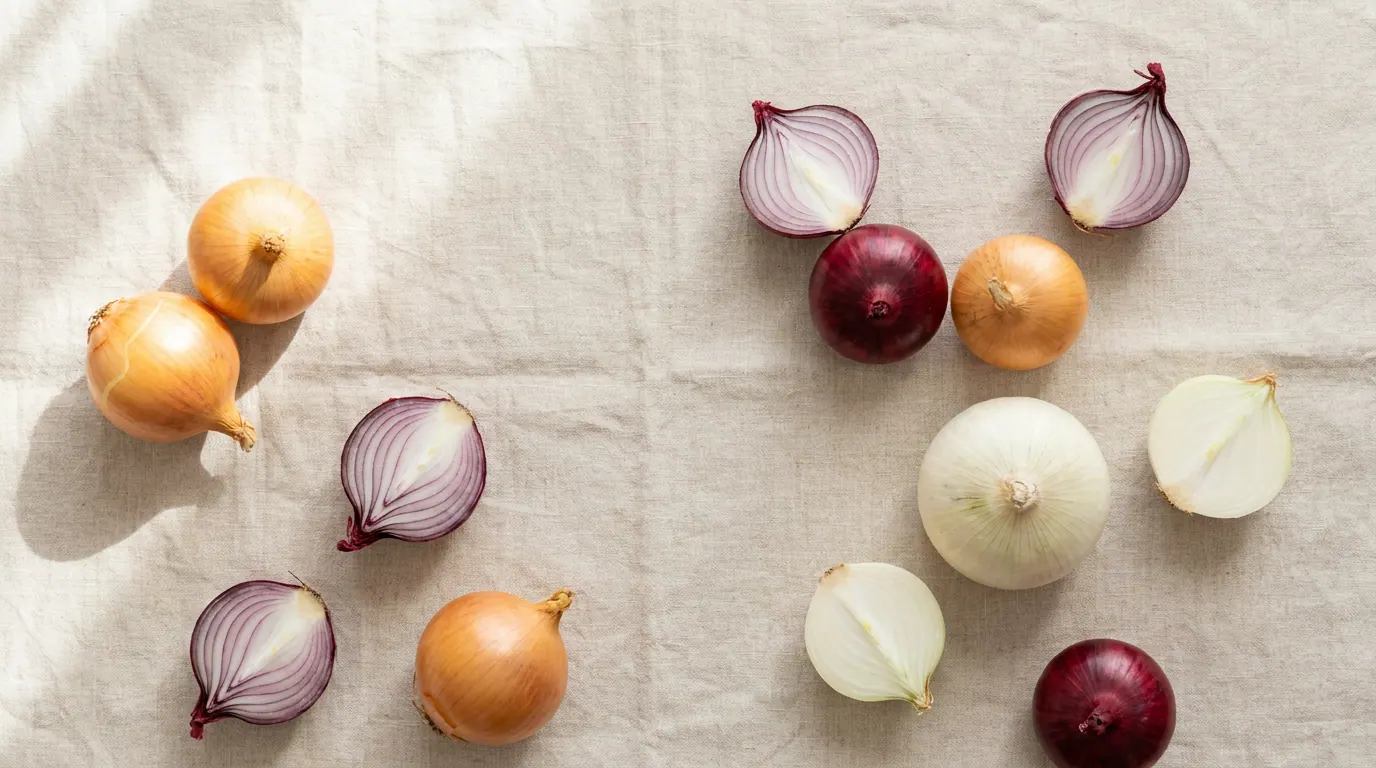
Yellow Onion
Best for long cooking and caramelizing
Red Onion
Sweetest when raw, best for salads
Saudi culinary use
Kabsa base (Kasna), crispy toppings, marinades
Key benefit
Supports blood pressure and cardiovascular health
FODMAP Note
High in fructans; can cause bloating in some
What Is an Onion?
Onions are bulbous vegetables belonging to the Allium genus, the same family as garlic and leeks. They are classified by color—Yellow, Red, and White—each offering a different balance of sharpness and sweetness. In Saudi Arabia, the Yellow onion is the workhorse of the kitchen, used to create the "Kasna" (the sautéed base of onions and spices) that gives Kabsa its signature depth.
The sharpness of a raw onion comes from its sulfur compounds. When cooked slowly, these compounds break down and the natural sugars caramelize, transforming the onion into a sweet, rich, and brown savory base.
Onion Science — Health Benefits
Heart Health
Blood pressure support
Onions contain Quercetin, a flavonoid that has been shown in human trials to help lower blood pressure in hypertensive individuals. It also helps prevent blood clots by acting as a mild natural anticoagulant.
Antioxidant Power
High in outer layers
Onions are one of the best dietary sources of antioxidants. These compounds are most concentrated in the outer layers and the skin. Using the whole onion (and even steeping the clean skins in broth) maximizes your intake.
Blood Sugar Control
Chromium & Sulfur
Specific sulfur compounds in onions (like S-methylcysteine) and their chromium content may help regulate blood sugar levels. Several small studies show reduced fasting glucose levels in type 2 diabetics who consume onions regularly.
Digestive Support
Prebiotic fibers
Onions are a rich source of inulin and fructooligosaccharides—prebiotic fibers that feed beneficial gut bacteria. This improves mineral absorption and overall immune function in the gut.
The "FODMAP" Caution
Onions are high in fructans (a type of soluble fiber). While beneficial for most, they can cause significant gas, bloating, and abdominal pain in individuals with Irritable Bowel Syndrome (IBS). If you are sensitive, choose green onion tops (the green part only) as a low-FODMAP alternative.
Kitchen Uses in Saudi & Gulf Cooking
The "Kasna" Base2 large
Finely chopped yellow onions sautéed in oil or ghee until golden brown. This is the foundation of Kabsa, providing the color and savory depth for the rice.
Crispy Topping1 cup
Thinly sliced onions deep-fried until dark brown and crispy. Essential for topping Mandi, Bukhari rice, and Sayadieh fish.
Meat Marinade1 grated
Grated onion and its juice are used to tenderize lamb and chicken before grilling. The enzymes and sulfur help break down tough meat fibers.
Raw in Salads1/2 cup
Slices of red onion soaked in ice water and sumac. This technique removes the harsh bite, leaving a sweet, crunchy accompaniment to grilled meats.
Frequently Asked Questions
Why do onions make me cry?
Cutting an onion breaks its cells, releasing an enzyme called alliinase. This reacts with sulfur compounds to form a gas that turns into a mild sulfuric acid when it hits the moisture in your eyes. To stop the tears: chill the onion in the fridge for 30 minutes before cutting.
Are raw onions healthier than cooked?
Both have benefits. Raw onions have higher levels of sulfur compounds (good for heart/anti-microbial), while cooked onions are easier to digest for those with sensitive stomachs and are often consumed in larger quantities.
How should I store onions?
In a cool, dry, well-ventilated dark place. Never store onions with potatoes, as potatoes release moisture and ethylene gas that will cause the onions to sprout and rot much faster.