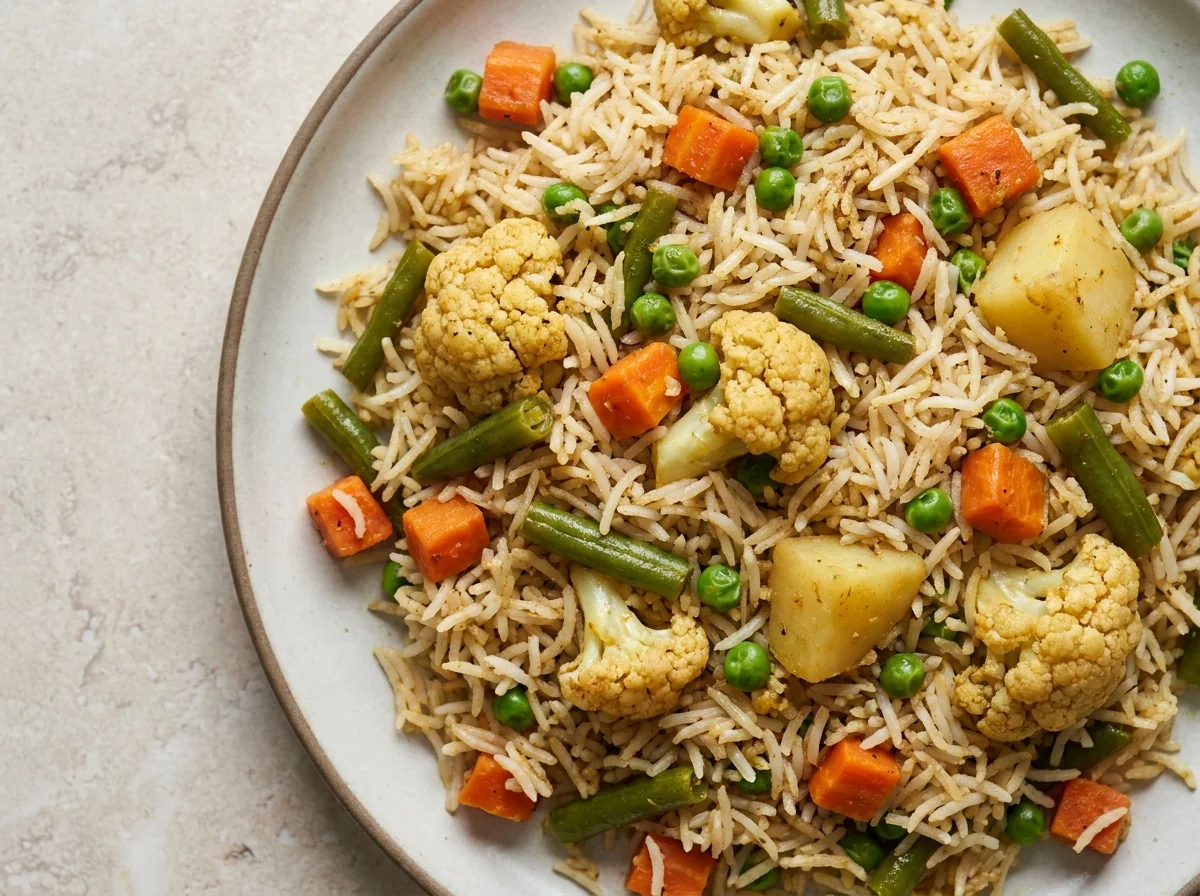
Biryani is a time-honored Indian dish that spread from the royal kitchens of the Indian subcontinent, and it is built on layering saffron-scented basmati rice over a seasoned mixture then steaming it in a sealed pot in a method called dum.
Its vegetable version is famous in India and beloved in the Gulf, and it combines the variety of vegetables with whole spices and fried onion.
Preparation Steps
Steep the saffron and wash the rice
Steep the saffron threads in the warm milk and leave it for ten minutes until its color and aroma come out. Wash the basmati rice in cold water until the water runs clear, then soak it in water for twenty minutes and drain it.
Fry the onion until golden
Heat the oil in a pot and fry the onion slices over medium heat until golden and crispy, then lift out half of them onto absorbent paper. This fried onion is called birista in Indian cooking and is the foundation of biryani's flavor.
Cook the vegetables with the spices
In the same pot, add the cardamom, cloves, cinnamon, bay leaves, and cumin, then the garlic, ginger, and hot chili, and stir them for a minute. Add the carrot, green beans, cauliflower, potato, and peas with the turmeric and salt, then the yogurt and half the mint and coriander, and cook them for ten minutes until the vegetables are half done and the sauce thickens.
Parboil the rice
Boil plenty of water with salt, add the drained rice, and parboil it for just five minutes until about seventy percent done with the core still firm, then drain it immediately. The partial boiling is essential because the rice finishes cooking by steam in the dum stage.
Layer it
Spread half the rice over the vegetables in the pot, then sprinkle half the fried onion and the rest of the mint and coriander and half the saffron milk. Add the rest of the rice over them, then the rest of the fried onion and the rest of the saffron milk until it dots the surface of the rice with golden spots.
Steam cooking (dum)
Cover the pot tightly with aluminum foil then with the lid to trap the steam, and cook it over high heat for three minutes, then over the lowest heat for forty-five minutes. Turn off the heat and leave it for ten minutes before opening, then fluff it gently from the bottom and serve it hot.
Blood Sugar Impact
The glycemic index (GI) measures how quickly a food raises blood sugar, while the glycemic load (GL) measures how much a full serving raises it. Together they give the complete picture.
Glycemic Index
GI
64Medium
Low0–55Medium56–69High70+
A low value (≤55) means a gradual rise in blood sugar — the most suitable range for diabetes and insulin resistance.
Glycemic Load
GL
67High
Low0–10Medium11–19High20+
Glycemic load reflects the impact of the full serving. To lower it: take half a serving, or pair the recipe with a source of protein and fiber.
Nutritional Information
Per ServingMakes 3 servings · one serving is about 475 g of raw ingredients
Calories665 kcal33%of Daily Value*
Protein15 g30%of Daily Value*
Carbohydrates113 g41%of Daily Value*
Fat17 g22%of Daily Value*
Fiber9 g32%of Daily Value*
Sodium471 mg20%of Daily Value*
* Percent Daily Values are based on a 2,000-calorie diet per FDA food-label reference values — your daily needs may be higher or lower. Values are derived from the recipe's ingredients via the USDA database.
Troubleshooting
The most common problems when preparing Indian Vegetable Biryani, and how to fix them:
The rice came out sticky or clumped
The cause is insufficient washing or over-boiling. Wash the rice until its water runs clear, and boil it for just five minutes until seventy percent done, then drain it immediately before layering.
The bottom of the pot burned
The heat was high in the dum stage. Lower it to the lowest setting, and you can place a metal griddle under the pot to distribute the heat.
The vegetables are too soft and mushy
They were fully cooked before the dum. Cook them only half done, as they finish cooking with the rice by steam for forty-five minutes.
The flavor is bland
The whole spices are too few or the salt is short. Toast the spices in the oil first to release their aroma, and salt the rice boiling water well.
Storage and Make-Ahead
Immediately
Served hot ten minutes after turning off the heat, with yogurt or salad.
In the refrigerator
Keeps for three days in an airtight container, and is reheated with a sprinkle of water to keep the rice moist.
Freezing
Freezes for up to a month, and is thawed in the refrigerator before reheating.
Tested Ingredient Substitutions
Original Ingredient
Tested Substitute
Ratio
Flavor Difference
Yogurt
Plant-based coconut yogurt
1:1
Makes the dish dairy-free
Potato
Sweet potato
1:1
Sweeter flavor and more fiber
Saffron
A pinch of turmeric with rose water
~
A close color and a more affordable substitute, with a difference in flavor
Fried onion
Onion browned with less oil in the oven
~
A lighter, lower-fat option with the same flavor
How Much Does It Make? Scaling Guide
Ingredient
4 servings
2 servings
8 servings
Basmati rice
300 g
150 g
600 g
Combined vegetables
650 g
325 g
1.3 kg
Onion
200 g
100 g
400 g
Yogurt
150 g
75 g
300 g
EEINA Nutrition Tip
Basmati rice has a long grain and its starch digests relatively more slowly than short-grain rice, and adding fiber-rich vegetables and yogurt to the dish slows the rise of blood sugar after eating. To control the portion, it is recommended to pair the biryani with a salad or yogurt instead of increasing the amount of rice.
Add This Recipe to Your Plan
The EEINA app saves your favorite recipes, calculates them from their real ingredients, and shows your daily numbers toward your goal. Try it free now.
What is the difference between biryani and pulao (pilaf)?
Biryani is cooked by the dum method: parboiled rice is layered over the seasoned mixture then steamed in a sealed pot. Pulao, on the other hand, has the rice and ingredients cooked together in the same pot from the start, so it is simpler and has fewer layers.
Why is the rice only parboiled?
Because it finishes cooking with the dum steam. If it were fully boiled it would turn sticky and clumped after steaming, and boiling to seventy percent keeps the grain separate and long.
Does it work with regular rice instead of basmati?
Basmati is the original for its long grain and aroma. Another long-grain rice can be used, but the result differs in texture and aroma.
How do I make it a complete balanced meal?
It is served with yogurt or cucumber raita and a green salad, which adds protein and fiber and controls the rice portion.