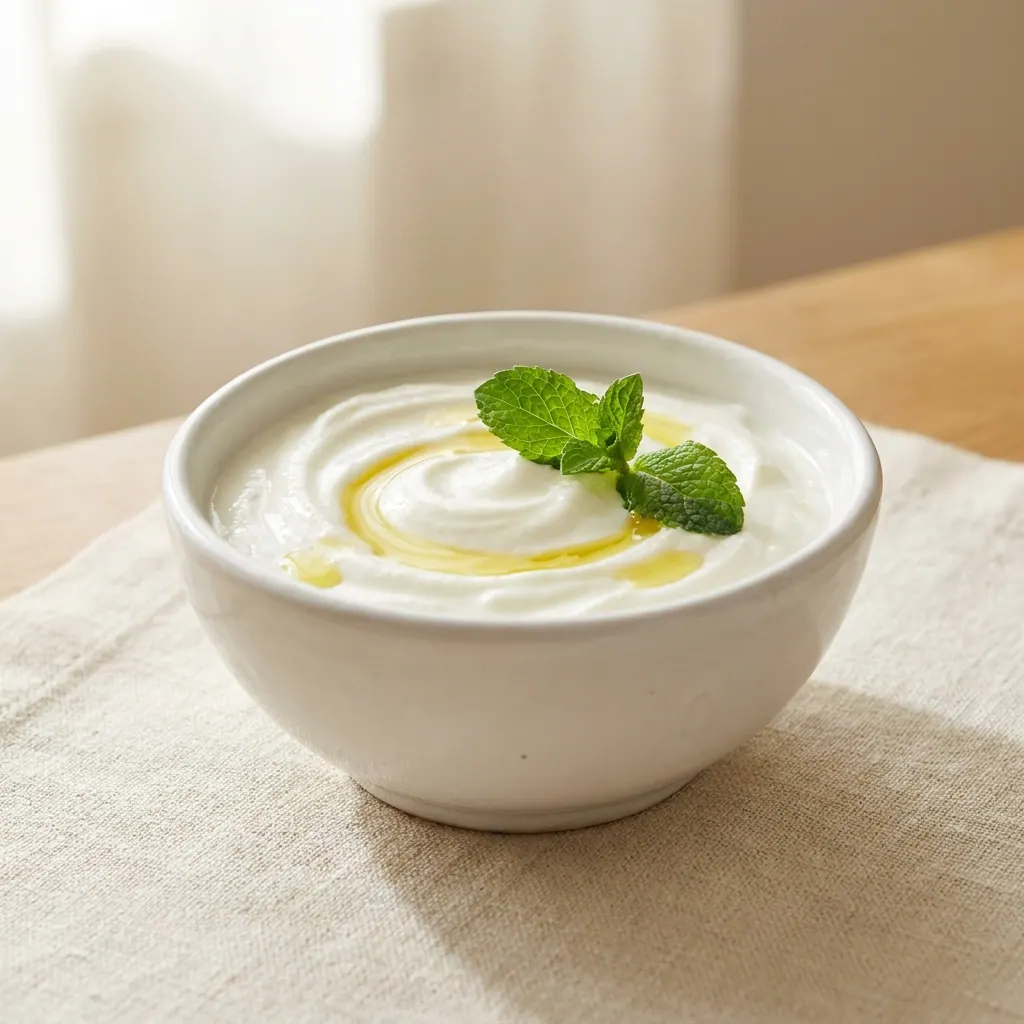
Greek yogurt—often called "Strained Yogurt"—is the high-performance evolution of a kitchen staple. By straining away the liquid whey, it becomes thicker, creamier, and packed with double the protein of regular yogurt. Whether it’s for a muscle-repairing post-workout meal or a satiating Saudi Suhoor, Greek yogurt is a scientifically-backed foundation for modern nutrition.
10gProtein per 100g
8 min readUpdated 2026-05-28Verified data
EEINA Editorial Content
Based on authoritative sources (USDA · SFDA · Sydney) and reviewed per our editorial methodology
Medical Disclaimer: The following content is a general educational reference based on peer-reviewed studies and classical medical heritage. It does not substitute professional medical advice. If you have a health condition, take chronic medications, or are pregnant or breastfeeding, consult your doctor before following any dietary recommendation.
Ingredient Profile
Product type
Fermented dairy (strained 3 times)
Active cultures
Lactobacillus bulgaricus & S. thermophilus
Protein density
High (approx. 9–10g per 100g)
Lactose content
Lower than regular yogurt (partially strained out)
Saudi use
Ramadan Suhoor, chicken marinade, dip base
Best pairing
Sukkary dates & raw honey
GI Index
Very low (approx. 11–15)
What Is Greek Yogurt?
Greek yogurt is regular yogurt that has been strained multiple times to remove the liquid whey. This process leaves behind the solid components, resulting in a thick, velvety texture that "holds the spoon." Because it is more concentrated, it contains significantly more protein and fewer carbohydrates and sugars (lactose) per serving than regular yogurt.
In the Middle East, it occupies a middle ground between regular yogurt (Zabadi) and Labneh. While Labneh is strained for 12–24 hours until it reaches a cheese-like consistency, Greek yogurt is typically strained for 4–6 hours, making it perfect for eating directly or using as a creamy, low-calorie base for sauces.
Greek Yogurt Science — Protein & Gut Health
Muscle Synthesis
High Leucine Content
Greek yogurt is rich in branched-chain amino acids, particularly leucine, which triggers muscle protein synthesis. A 200g serving provides about 20g of protein, making it as effective as many commercial protein shakes.
Satiety & Weight
Appetite Control
Studies show that the high protein content of Greek yogurt increases levels of the fullness hormone PYY. Substituting standard yogurt with Greek yogurt has been linked to greater weight loss during calorie-restricted diets.
Bone Density
Calcium & Vit D
It provides approximately 20% of the daily calcium requirement in one cup. Many Saudi dairy brands fortify Greek yogurt with Vitamin D, which is essential for calcium absorption and immune function.
Microbiome Balance
Live Cultures
Rich in probiotics that help restore the balance of the gut microbiome. This can improve digestion, reduce bloating, and may even enhance mood via the gut-brain axis.
The Lactose Factor
Many people with mild lactose intolerance can enjoy Greek yogurt. The fermentation process breaks down much of the lactose, and the straining process removes even more. It typically contains 50% less lactose than a cup of milk.
Kitchen Uses in Saudi & Gulf Cooking
The Suhoor Bowl200 g
A full bowl of plain Greek yogurt topped with 3 Sukkary dates and a teaspoon of honey. This combination provides sustained energy and prevents thirst during the fast.
Healthy Marinade4 tbsp
Used as a base for chicken or lamb marinades. The lactic acid tenderizes the meat, while the thickness of the yogurt creates a crust that seals in juices.
Mayonnaise Swap1:1 Ratio
Replace half or all of the mayo in Saudi coleslaw or potato salads with Greek yogurt. It cuts the calories by 70% while adding a massive protein boost.
Tzatziki Dip1 cup
Mix with grated cucumber, garlic, lemon, and dried mint. The perfect, protein-rich accompaniment to Saudi Falafel or grilled Kofta.
Frequently Asked Questions
Is 0%, 2%, or Full Fat best?
0% fat is best for weight loss and bodybuilding. 2% fat is the best balance for most people, as some fat helps absorb vitamins. Full fat is ideal for children under two and provides the most satiety.
Why is there liquid on top of my yogurt?
This is just whey, which contains protein and minerals. It’s natural for some to separate over time. Simply stir it back in or pour it off—the yogurt is perfectly safe.
Is "Greek Style" the same as authentic Greek yogurt?
Not always. Check the label. Authentic Greek yogurt is strained. "Greek Style" is sometimes thickened using starches or gums. Look for high protein (9g+) and few ingredients.