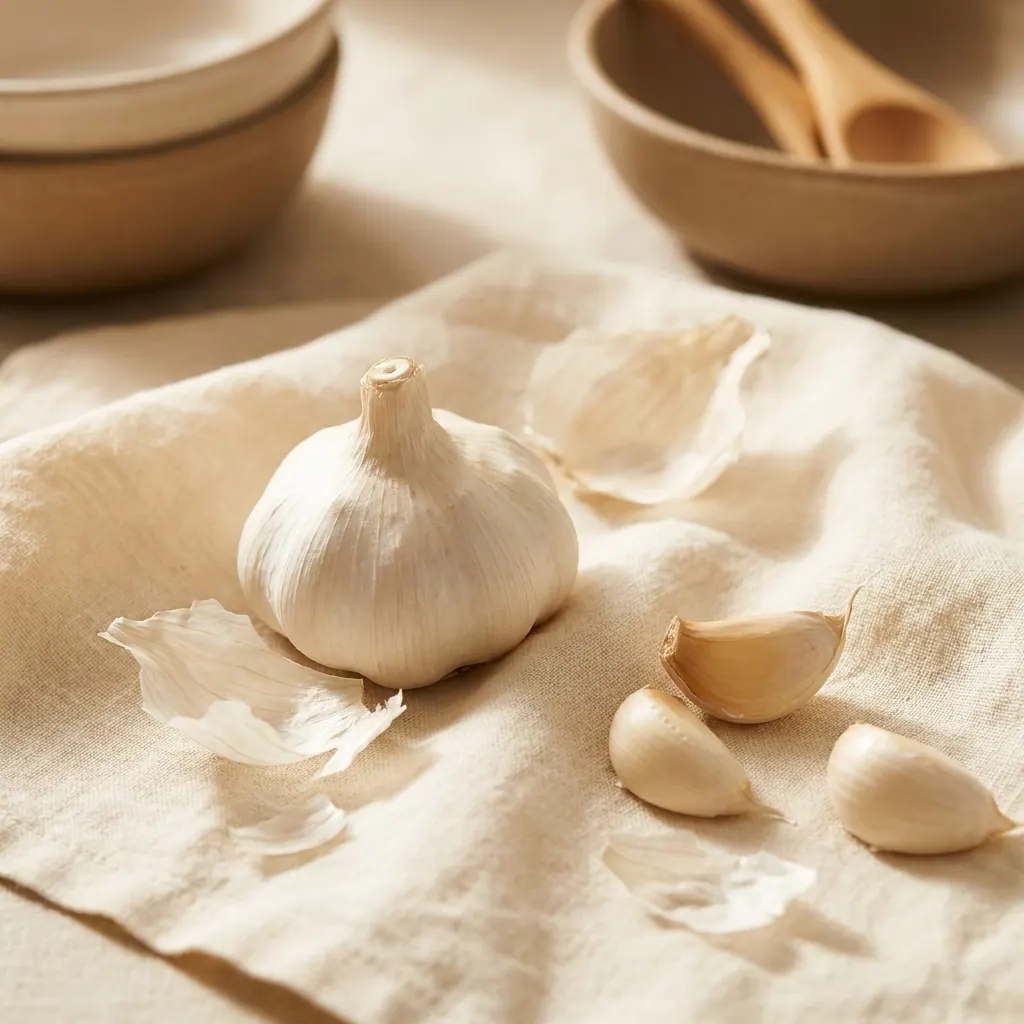
Ingredient Profile
- Scientific name
- Allium sativum, family Alliaceae
- Active compound
- Allicin (formed after crushing)
- Origin
- Central Asia
- Saudi variety
- Hassawi (Al-Ahsa) — small, potent, local
- Key benefit
- Cardiovascular support & antimicrobial
- Safe daily dose
- 1–2 raw or cooked cloves
- GI Index
- Low (approx. 30)
What Is Garlic?
Garlic is a bulbous plant closely related to onions, shallots, and leeks. Each bulb (or head) typically contains 10 to 20 individual cloves. In Saudi Arabia, the Hassawi garlic from the Al-Ahsa region is highly prized for its smaller size and much more intense, complex flavor compared to large imported varieties.
The magic of garlic is triggered by trauma. When a clove is crushed or chopped, an enzyme called alliinase converts alliin into allicin. This reaction is the plant's defense mechanism against pests, and it happens to be the source of garlic’s most potent health properties.
Garlic Science — Heart & Immunity
Meta-analyses (Ried 2020) show that garlic supplementation can lower systolic blood pressure by 5–8 mmHg in hypertensive individuals, an effect comparable to some first-line medications.
Regular garlic consumption is associated with a 5–10% reduction in total and LDL ("bad") cholesterol, particularly in those with slightly elevated levels, by inhibiting hepatic cholesterol synthesis.
Allicin has broad-spectrum antimicrobial properties against bacteria, fungi, and viruses in lab settings. While not a replacement for antibiotics, dietary garlic provides daily support for the immune system.
Clinical trials indicate that garlic may help regulate fasting blood glucose in Type 2 diabetics when used as an adjunct to standard therapy, likely by increasing insulin sensitivity.
Heat destroys the enzyme needed to create allicin. To maximize benefits: crush or chop your garlic and wait 10 minutes before adding it to the heat. This allows the allicin to fully form and become more heat-stable during cooking.