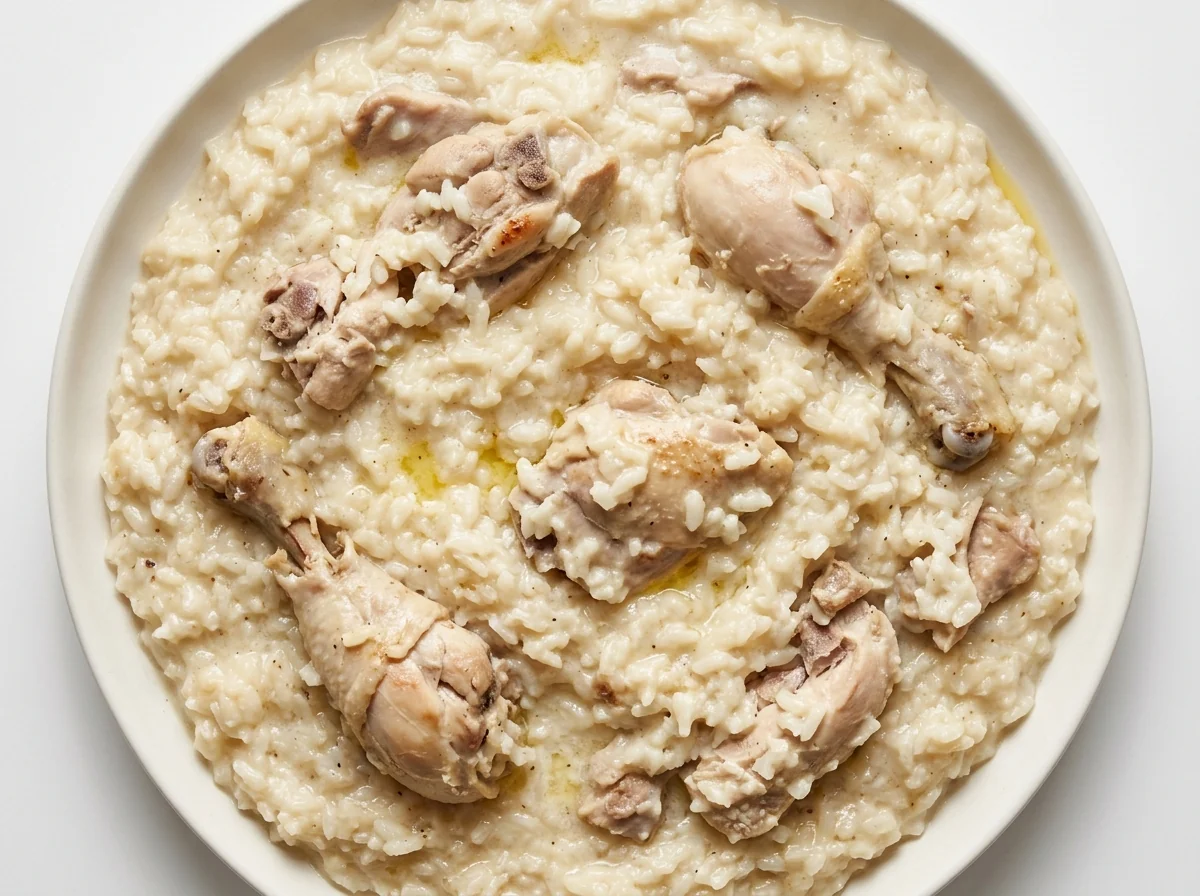
Saliq is a heritage Hijazi dish more than 300 years old, once prepared for celebrations and feasts. The chicken version is the most common at suhoor because it is richer and more flavorful than the meat version.
The milk gives it a uniquely creamy texture. In Makkah and Jeddah, it sits on every Ramadan suhoor table — the elders still remember it alongside their mothers.
Preparation Steps
Boil the chicken
In a pot, combine the chicken with the onion, garlic, cardamom, cinnamon, ginger, and a liter of water. Bring to a boil and simmer for 45 minutes until cooked through. Strain the broth and reserve one cup.
Shred the meat
Lift the chicken out, remove the bones and skin, and shred the meat by hand into medium strands.
Cook the rice
In the same pot, melt the clarified butter and sauté the rice for 3 minutes. Add the cup of reserved broth and cook for 20 minutes until most of the liquid is absorbed.
Add the milk
Pour the milk over the rice and stir over low heat for 15 minutes until the rice softens and the dish turns creamy. Season with salt and pepper.
Fold in the chicken
Stir in the shredded chicken, cover, and rest for 5 minutes so the meat absorbs the flavors.
Serve
Plate the saliq, drizzle with melted samna, and garnish with the toasted almonds and cilantro. Serve hot.
Blood Sugar Impact
The glycemic index (GI) measures how quickly a food raises blood sugar, while the glycemic load (GL) measures how much a full serving raises it. Together they give the complete picture.
Glycemic Index
GI
64Medium
Low0–55Medium56–69High70+
A low value (≤55) means a gradual rise in blood sugar — the most suitable range for diabetes and insulin resistance.
Glycemic Load
GL
48High
Low0–10Medium11–19High20+
Glycemic load reflects the impact of the full serving. To lower it: take half a serving, or pair the recipe with a source of protein and fiber.
Nutritional Information
Per ServingMakes 4 servings · one serving is about 805 g of raw ingredients
Calories1016 kcal51%of Daily Value*
Protein67 g134%of Daily Value*
Carbohydrates77 g28%of Daily Value*
Fat46 g59%of Daily Value*
Fiber2 g7%of Daily Value*
Sodium1055 mg46%of Daily Value*
* Percent Daily Values are based on a 2,000-calorie diet per FDA food-label reference values — your daily needs may be higher or lower. Values are derived from the recipe's ingredients via the USDA database.
Troubleshooting
The most common problems when preparing Chicken Saliq (Hijazi Rice Pudding with Chicken), and how to fix them:
The saliq is dry
Add half a cup of warm milk and stir. High heat dries it out fast.
The rice is sticky
Lower the heat and stir more. Milk scorches easily over high heat.
The meat is dry
Boil it with more water and keep it covered.
The flavor feels flat
Double the cardamom and add an extra spoon of samna before serving.
Storage and Make-Ahead
Refrigerator (4°C)
Two days. Reheat with a splash of milk.
Freezer (-18°C)
Up to one month. Freeze the milk separately and stir it back in when reheating.
Tested Ingredient Substitutions
Original Ingredient
Tested Substitute
Ratio
Flavor Difference
Chicken
Lamb
1:1
Add 45 minutes to the cooking time.
Whole milk
Low-fat milk
1:1
Lighter and less rich.
Egyptian rice
Basmati rice
1:1
Does not dissolve into a creamy texture; the result is lighter.
How Much Does It Make? Scaling Guide
Ingredient
4 people
8 people
12 people
Chicken
1200 g
2400 g
3600 g
Rice
300 g
600 g
900 g
Milk
1 L
2 L
3 L
Ghee
60 g
120 g
180 g
EEINA Nutrition Tip
Choose short-grain Egyptian rice — it dissolves in the milk and yields that signature creamy texture. Pour the milk in gradually with constant stirring to prevent sticking. Toasted almonds add a crunch that elevates the dish.
Add This Recipe to Your Plan
The EEINA app saves your favorite recipes, calculates them from their real ingredients, and shows your daily numbers toward your goal. Try it free now.