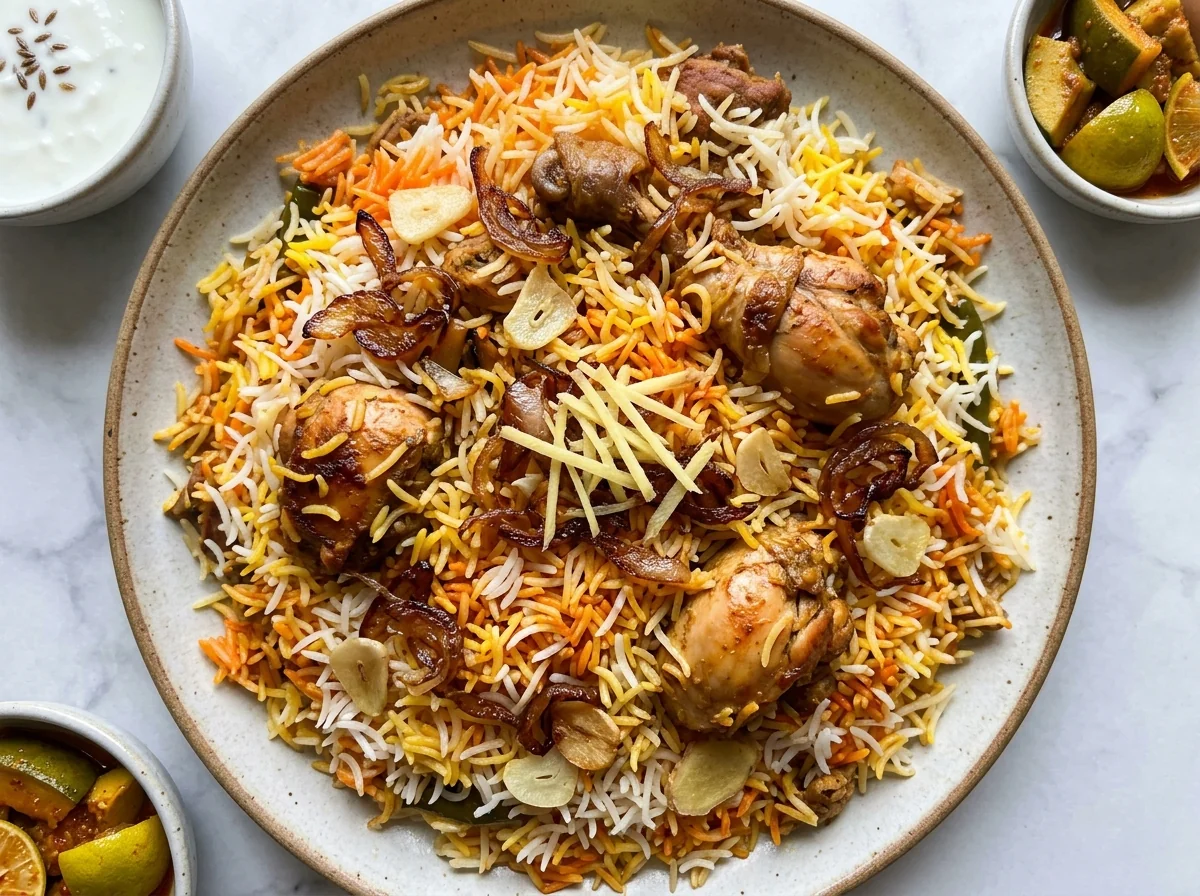
Pakistani chicken biryani made with basmati rice cooked in chicken broth flavored with cardamom, cinnamon, bay leaves, turmeric, and cumin, with boiled chicken, potatoes, and tomato sauce. The top layer is drizzled with soaked saffron and left over low heat to absorb the flavors.
Biryani is the national dish of Pakistan, originating in Persian centuries (rice with spiced meat), then adopted by the Mughal dynasties in the Indian subcontinent, who added the layers and spices.
The Pakistani version is richer in potatoes than the Indian one, and differs in the final low-heat steaming 'dam'.
Preparation Steps
Parboil the rice
Bring 10 cups of water to a boil with a tablespoon of salt and oil. Add the basmati rice and leave it to boil for 6 minutes until partially cooked. Drain and set aside.
Soak the saffron
Soak the saffron in half a cup of warm water. This releases its strong color and flavor before adding it at the end.
Prepare the biryani base
In a large pot, heat 4 tablespoons of oil and sauté the onion until it wilts and turns golden. Add the ginger, garlic, and hot pepper and stir for two minutes. Add the spices, turmeric, salt, pepper, cinnamon, bay leaves, cardamom, cumin, and coriander seeds. Pour in a cup of water and leave the mixture to reduce until it becomes a thick sauce.
Add the chicken and potato
Add the tomatoes, tomato paste, chicken pieces, and potato. Pour in an additional cup of water and cover the pot and leave it over medium heat for 30 minutes until the chicken is cooked.
Add the yogurt and cilantro
Remove the pot from the heat and add the yogurt and fresh cilantro. Stir until the mixture is combined.
Build the layers
In a wide pot, grease the bottom with a little oil. Spread half the rice, then the chicken mixture, then the rest of the rice. Pour the saffron infusion over the top artistically.
Steam over low heat
Cover the pot and place it over very low heat (or on a saj griddle) for 25 minutes. This steam seasons the rice with the chicken flavor. Flip the pot onto a large platter and serve with laban and pickles.
Blood Sugar Impact
The glycemic index (GI) measures how quickly a food raises blood sugar, while the glycemic load (GL) measures how much a full serving raises it. Together they give the complete picture.
Glycemic Index
GI
66Medium
Low0–55Medium56–69High70+
A low value (≤55) means a gradual rise in blood sugar — the most suitable range for diabetes and insulin resistance.
Glycemic Load
GL
59High
Low0–10Medium11–19High20+
Glycemic load reflects the impact of the full serving. To lower it: take half a serving, or pair the recipe with a source of protein and fiber.
Nutritional Information
Per ServingMakes 4 servings
Calories1048 kcal52%of Daily Value*
Protein73 g146%of Daily Value*
Carbohydrates94 g34%of Daily Value*
Fat40 g51%of Daily Value*
Fiber4 g14%of Daily Value*
Sodium1965 mg85%of Daily Value*
* Percent Daily Values are based on a 2,000-calorie diet per FDA food-label reference values — your daily needs may be higher or lower. Values are derived from the recipe's ingredients via the USDA database.
Troubleshooting
The most common problems when preparing Pakistani Chicken Biryani, and how to fix them:
The biryani is dry
Low-heat cooking was not enough. Re-steam for 15 minutes with an additional cup of water.
Storage and Make-Ahead
Biryani in the refrigerator
Keeps for 3 days. Reheat in a pot with a spoon of butter and a spoon of water.
Tested Ingredient Substitutions
Original Ingredient
Tested Substitute
Ratio
Flavor Difference
chicken
lamb
1:1
Add 30 extra minutes of cooking.
EEINA Nutrition Tip
The low-heat 'dam' cooking (rice under steam pressure from the meat) is the essence of biryani. Place the pot on a hot saj griddle or a metal ring between the pot and the heat. Do not lift the lid for 25 minutes.
Add This Recipe to Your Plan
The EEINA app saves your favorite recipes, calculates them from their real ingredients, and shows your daily numbers toward your goal. Try it free now.