Haleem is one of the oldest South Asian dishes, documented in the 10th century in Baghdad and Persia. It reached Pakistan with the Islamic conquests and developed into a national dish.
It requires long cooking that breaks the meat down into fine fibers. At suhoor it works as a full high-calorie meal that keeps the faster full for 8 hours.
Preparation Steps
Boil the meat
In a pressure cooker, place the meat with the onion, ginger, garlic, and dry spices. Add two liters of water and cook under pressure for 90 minutes until the meat separates from the bone completely.
Add the wheat and lentils
Add the wheat and lentils and continue cooking for 60 more minutes. The wheat softens and gives a natural sticky texture.
Shred the meat
Take the bones out and discard them. Shred the meat with a fork or the back of a spoon until it turns into fine fibers. Return it to the pot.
Add the tomato
Add the chopped tomato and leave on low heat for 15 minutes. The haleem should take on a thick creamy texture. If it is liquid, keep cooking.
Brown the onion
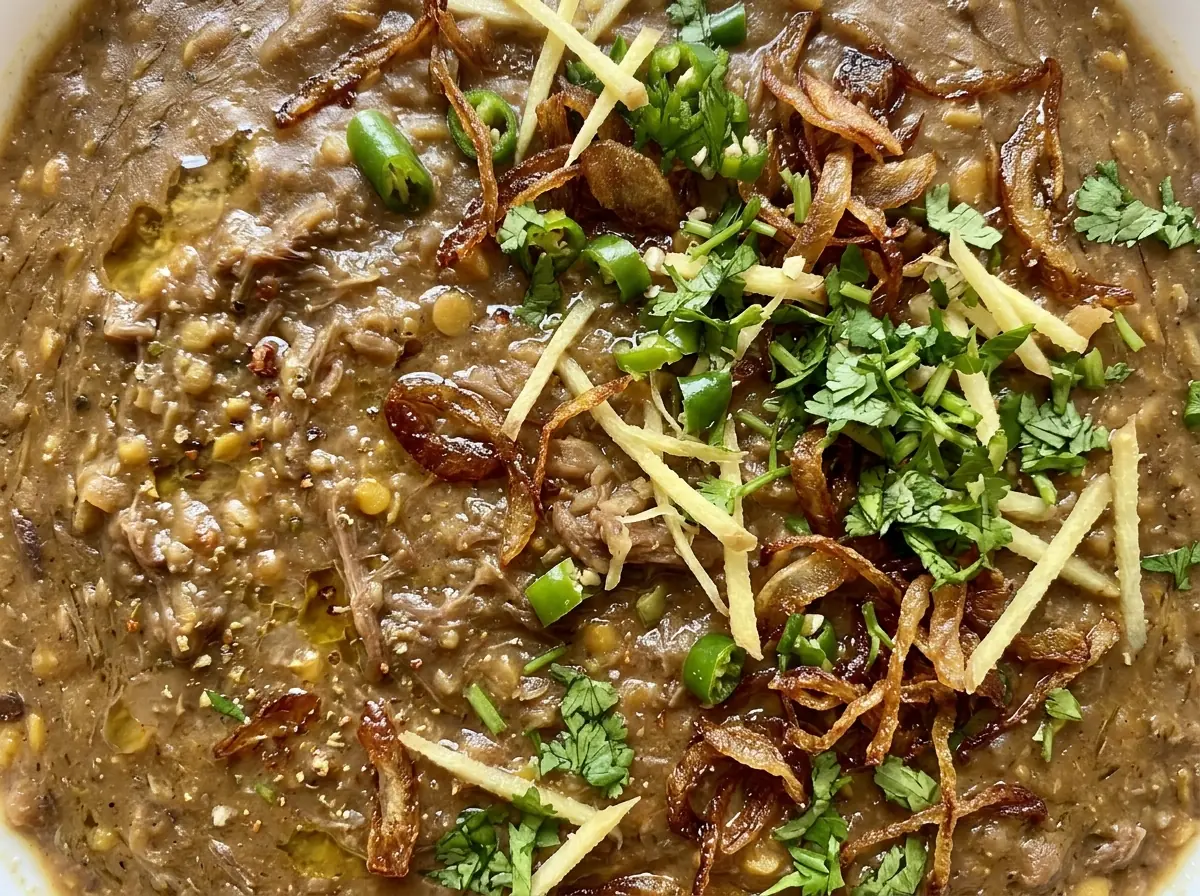
In a small pan, brown chopped onion in ghee until it turns a deep golden color. The browned onion is the secret to the deep flavor.
Serve
Pour the haleem into deep plates and garnish with the browned onion, cilantro, hot pepper, ginger slices, and lemon juice. The dish is one of the most famous suhoor dishes in Pakistan and India.
Blood Sugar Impact
The glycemic index (GI) measures how quickly a food raises blood sugar, while the glycemic load (GL) measures how much a full serving raises it. Together they give the complete picture.
Glycemic Index
GI
39Low
Low0–55Medium56–69High70+
A low value (≤55) means a gradual rise in blood sugar — the most suitable range for diabetes and insulin resistance.
Glycemic Load
GL
11Medium
Low0–10Medium11–19High20+
Glycemic load reflects the impact of the full serving. To lower it: take half a serving, or pair the recipe with a source of protein and fiber.
Nutritional Information
Per ServingMakes 6 servings · one serving is about 230 g of raw ingredients
Calories443 kcal22%of Daily Value*
Protein24 g48%of Daily Value*
Carbohydrates36 g13%of Daily Value*
Fat24 g31%of Daily Value*
Fiber8 g29%of Daily Value*
Sodium720 mg31%of Daily Value*
* Percent Daily Values are based on a 2,000-calorie diet per FDA food-label reference values — your daily needs may be higher or lower. Values are derived from the recipe's ingredients via the USDA database.
Troubleshooting
The most common problems when preparing Pakistani Haleem, and how to fix them:
The meat is tough
Cook it an extra hour in the pressure cooker. Bone-in meat needs longer than cut meat.
The texture is liquid
Cook 15 more minutes uncovered. The wheat blends in with time.
The flavor is flat
Double the browned onion and add a spoon of local ghee at the end. Fat opens the flavors.
The wheat is undercooked
Soak it an hour before cooking and double the cooking water. Dry wheat needs time.
Storage and Make-Ahead
Refrigerator (4°C)
Three days. Reheat with a spoon of water over low heat.
Freezer (-18°C)
Two months. Freeze in individual portions.
Tested Ingredient Substitutions
Original Ingredient
Tested Substitute
Ratio
Flavor Difference
Lamb
Beef
Same weight
Cook an extra hour.
Wheat
Fine bulgur
Same weight
Different flavor.
Lentils
Foul medames
100 g
Deeper flavor.
How Much Does It Make? Scaling Guide
Ingredient
6 people
12 people
18 people
Meat
700 g
1400 g
2100 g
Wheat
200 g
400 g
600 g
Onion
100 g
200 g
300 g
Oil
60 ml
120 ml
180 ml
EEINA Nutrition Tip
Use a pressure cooker to speed up cooking the meat. Without it the meat needs 4 hours. Shred the meat while it is hot so it combines with the wheat. Prepare the haleem a day ahead and reheat it on the suhoor day.
Add This Recipe to Your Plan
The EEINA app saves your favorite recipes, calculates them from their real ingredients, and shows your daily numbers toward your goal. Try it free now.