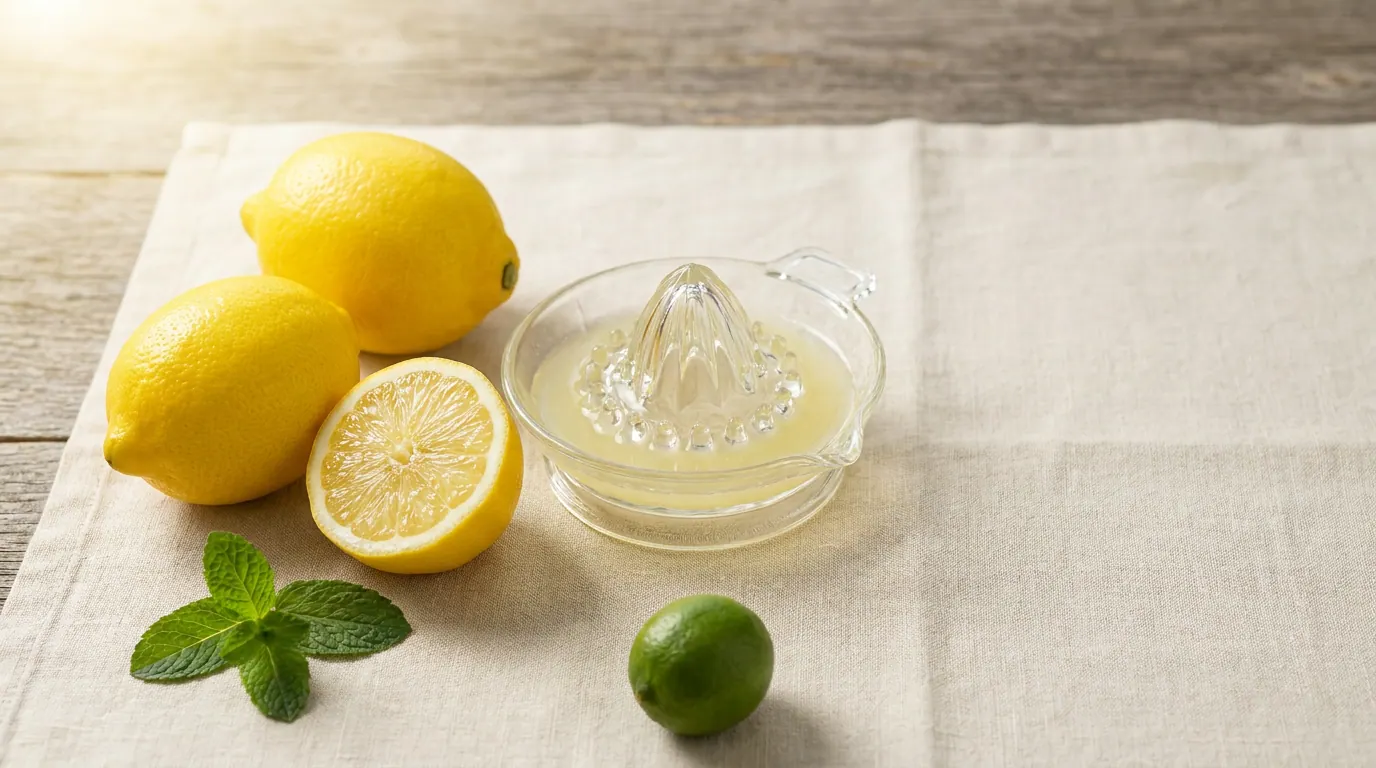
The humble lemon is a nutritional powerhouse with a pH of 2.0. Beyond its bright flavor, it contains high concentrations of citric acid and Vitamin C, compounds that play critical roles in preventing kidney stones and boosting iron absorption from plant-based meals.
53mgVit C per 100g
9 min readUpdated 2026-05-28Verified data
EEINA Editorial Content
Based on authoritative sources (USDA · SFDA · Sydney) and reviewed per our editorial methodology
Medical Disclaimer: The following content is a general educational reference based on peer-reviewed studies and classical medical heritage. It does not substitute professional medical advice. If you have a health condition, take chronic medications, or are pregnant or breastfeeding, consult your doctor before following any dietary recommendation.
Ingredient Profile
Scientific name
Citrus limon (Yellow), Citrus aurantifolia (Lime)
Active compounds
Citric acid (5–7%), Vitamin C, D-Limonene
Saudi variety
Hassawi Bezahir (Key Lime)
Primary origin
South Asia (India/Burma)
Culinary use
Salad dressing, seafood, Kabsa, tea
Key synergy
Lemon + Plant Iron = 3x better absorption
Safe daily dose
1–2 lemons (juice/zest)
What Is Lemon?
Lemon is a citrus fruit known for its intense acidity and high essential oil content in the peel. In Saudi Arabia, the "Hassawi" or Bezahir lime (Key Lime) is a prized local variety grown in the Al-Ahsa oasis. While the common yellow lemon (Eureka or Lisbon) is widely available, the smaller green Hassawi lime is famous for its concentrated aroma and sharp acidity, essential for authentic Gulf Kabsa and Machboos.
The juice of a lemon consists of about 5–7% citric acid, giving it a sour taste. The peel (zest) contains the highest concentration of antioxidants and Vitamin C—often triple the amount found in the juice alone.
Lemon Science — What the Research Says
Kidney Stones
Mayo Clinic Protocol
Clinical trials show that consuming 60ml of fresh lemon juice twice daily increases urinary citrate levels. This helps prevent the crystallization of calcium oxalate and uric acid stones, reducing recurrence by up to 50%.
Iron Absorption
Critical for Vegetarians
Vitamin C converts non-heme iron (from plants like lentils and spinach) into a form that the body can easily absorb. Adding a squeeze of lemon to your lentil soup can triple the iron you absorb from that meal.
Heart Health
Flavonoid Protection
Hesperidin and eriocitrin are flavonoids in lemons that support blood vessel function and reduce systemic inflammation. Regular citrus consumption is linked to a lower risk of stroke and cardiovascular disease.
Immune Support
Antioxidant Defense
While it won't "prevent" a cold, the Vitamin C in lemons helps maintain the epithelial integrity of the respiratory tract and supports the production of white blood cells during infection.
Skin Warning: Lemons & Sunlight
Be careful when squeezing lemons outdoors. Phytophotodermatitis (also known as "Margarita Burn") occurs when lemon juice on the skin reacts with UV light, causing a red, blistering rash 24–48 hours later. Always wash your hands after handling citrus in the sun.
Kitchen Uses in Saudi & Gulf Cooking
Kabsa Squeeze1 lemon
A fresh squeeze of lemon over Kabsa rice cuts through the richness of the meat and fat, brightening the spices and balancing the dish.
Lentil Soup1/2 lemon
Always add lemon at the end. Boiling lemon juice destroys Vitamin C. A fresh squeeze in the bowl preserves the nutrients and the flavor.
Mint Lemonade2 lemons
The quintessential Saudi summer drink. Blend 2 peeled lemons, a handful of fresh mint, water, and a touch of honey for a hydrating electrolyte boost.
Zest for Baking1 tsp
Grated lemon peel (zest) contains 3x more Vitamin C than the juice. Add it to cakes, cookies, or even over grilled fish for a concentrated citrus aroma.
Frequently Asked Questions
Does lemon water burn belly fat?
No. There is no evidence that lemon water directly burns fat. It helps with weight loss indirectly by promoting hydration and acting as a low-calorie alternative to sugary drinks, but it is not a "magic" fat burner.
Is lemon juice bad for my teeth?
Yes, if overused. The high acidity (pH 2.0) can erode tooth enamel. To protect your teeth: drink lemon water through a straw, rinse your mouth with plain water afterward, and wait 30 minutes before brushing.
Fresh vs. Bottled lemon juice?
Always choose fresh. Bottled lemon juice is pasteurized and often contains preservatives, losing up to 70% of its Vitamin C and most of its beneficial enzymes compared to a freshly squeezed fruit.