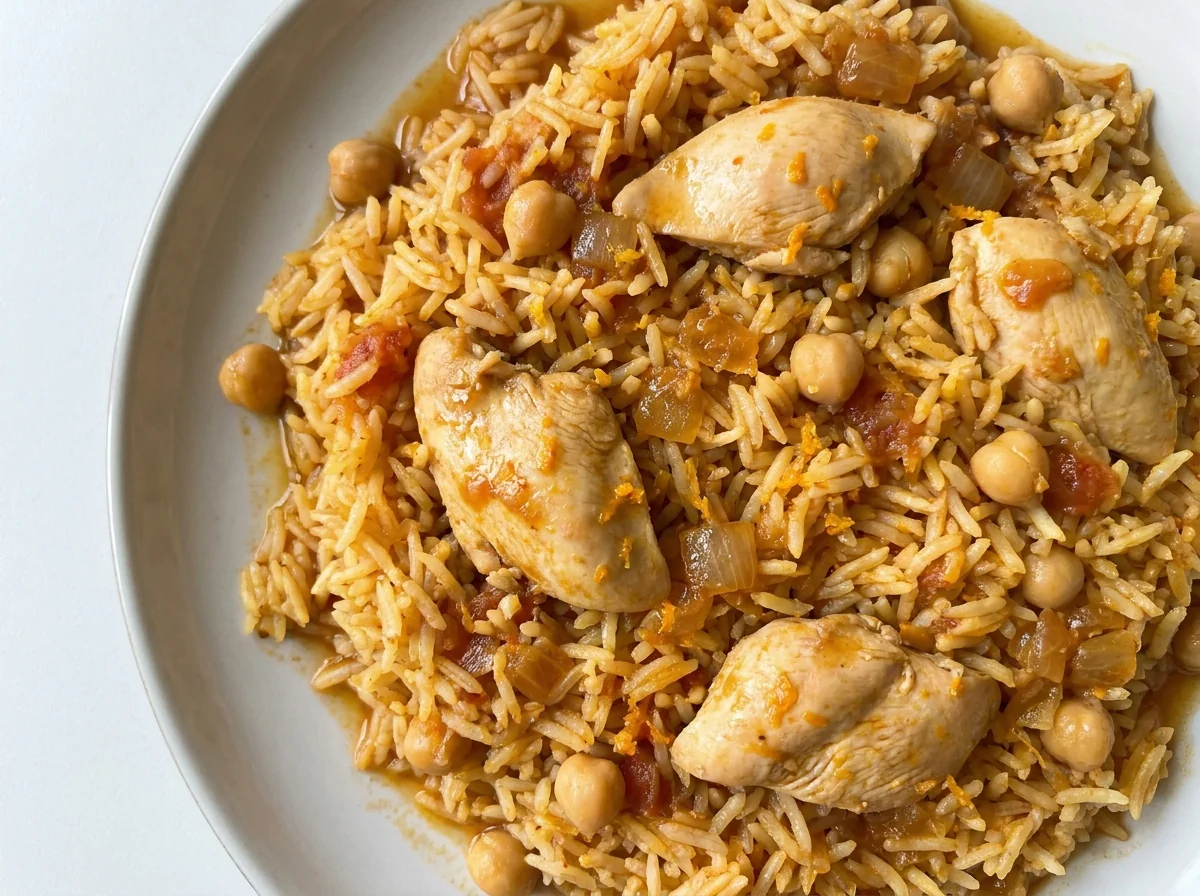
We cook Hijazi Kabli the way the households of Mecca and Jeddah have always made it for weddings and celebrations: basmati rice that soaks up a broth scented with orange zest, dried lime, and cinnamon, crowned with golden chicken, chickpeas, and raisins.
In our version we add more chickpeas for protein and fiber, lighten the oil, and do away with the bouillon cube, so the dish stays warm and creamy yet lighter on the table.
Preparation Steps
Sautéing the chicken and onion
Heat the olive oil in a wide pot over medium heat, and sauté the onion until it wilts and turns golden, then add the garlic and the chicken pieces and stir them until their color changes.
Toasting the spices
Add the cinnamon stick, cardamom, cloves, bay leaves, dried lime, cumin, ginger, black pepper, and half the salt, and stir for a minute until the aroma of the spices rises.
Building the broth
Add the grated tomatoes, orange juice, orange zest, and hot water, bring the pot to a boil, then lower the heat and cover it for about twenty minutes until the chicken cooks through and a fragrant broth forms.
Adding the rice and chickpeas
Drain the soaked rice and add it with the boiled chickpeas, raisins, and the remaining salt, making sure the broth rises a finger's width above the rice, then sprinkle the steeped saffron over it.
Gentle cooking
Cover the pot and leave it over gentle heat for about fifteen minutes until the rice absorbs the broth and its grains separate, then turn off the heat and leave it covered for five minutes to rest.
Serving
Fluff the rice gently and pour it into a wide platter, distribute the chicken pieces over it, and serve it hot with yogurt salad or spicy daqous.
Blood Sugar Impact
The glycemic index (GI) measures how quickly a food raises blood sugar, while the glycemic load (GL) measures how much a full serving raises it. Together they give the complete picture.
Glycemic Index
GI
63Medium
Low0–55Medium56–69High70+
A low value (≤55) means a gradual rise in blood sugar — the most suitable range for diabetes and insulin resistance.
Glycemic Load
GL
40High
Low0–10Medium11–19High20+
Glycemic load reflects the impact of the full serving. To lower it: take half a serving, or pair the recipe with a source of protein and fiber.
Nutritional Information
Per ServingMakes 6 servings · one serving is about 400 g of raw ingredients
Calories480 kcal24%of Daily Value*
Protein30 g60%of Daily Value*
Carbohydrates68 g25%of Daily Value*
Fat9 g12%of Daily Value*
Fiber4 g14%of Daily Value*
Sodium428 mg19%of Daily Value*
* Percent Daily Values are based on a 2,000-calorie diet per FDA food-label reference values — your daily needs may be higher or lower. Values are derived from the recipe's ingredients via the USDA database.
Troubleshooting
The most common problems when preparing Hijazi Kabli Rice with Chicken, and how to fix them:
The rice is stodgy and sticky
Reduce the water and rinse the rice well before cooking, and leave it covered over gentle heat without stirring until it cooks through.
The chicken is dry
Do not overcook it and leave it in the broth until tender, for chicken breast dries out if left too long on the heat.
The flavor is bland
Make sure to toast the spices with the onion before adding the water, and add more dried lime and orange zest, for they are the secret of Kabli's aroma.
Storage and Make-Ahead
Refrigerator
Keep it in an airtight container for up to three days, and reheat it with a splash of water so it turns tender again.
Freezing
Freeze it for up to a month in an airtight container, and thaw it in the refrigerator before reheating.
Tested Ingredient Substitutions
Original Ingredient
Tested Substitute
Ratio
Flavor Difference
chicken breasts
diced lamb or mutton
same weight, 600 g
The flavor is richer and it takes a little longer to cook until the meat is tender
basmati rice
brown rice
same weight, 375 g
It raises the fiber, takes longer to cook, and needs more water
boiled chickpeas
boiled fava beans or black-eyed peas
same weight, 180 g
The dish stays rich in fiber and plant protein
raisins
chopped dried apricots
same amount, 30 g
A softer sweetness that suits the spices
How Much Does It Make? Scaling Guide
Ingredient
Half amount
Base amount (base)
Double
Chicken breasts
300 g
600 g
1200 g
Basmati rice
188 g
375 g
750 g
Boiled chickpeas
90 g
180 g
360 g
Onion
100 g
200 g
400 g
Olive oil
15 ml
30 ml
60 ml
Salt
2 g
4 g
8 g
EEINA Nutrition Tip
Rinse the rice until the water runs clear and soak it for fifteen minutes before cooking, for this keeps the grains long and separate, and be careful not to add too much water so the rice does not turn stodgy.
Add This Recipe to Your Plan
The EEINA app saves your favorite recipes, calculates them from their real ingredients, and shows your daily numbers toward your goal. Try it free now.
Kabli is Hijazi and relies on orange, dried lime, chickpeas, and raisins, so a sweet, fragrant flavor prevails, whereas Kabsa is closer to savory-spicy with tomatoes and spices.
How can I lower the dish's calories further?
Replace part of the rice with grated cauliflower and keep the skinless chicken breast, so the starches drop while the protein stays high.
Where does the name Kabli come from?
It is attributed to the city of Kabul and entered Hijazi cuisine through the routes of pilgrimage and trade, becoming an authentic Hijazi dish for special occasions.