Winter's Daily Sunshine

Orange

Every winter the orange returns to rule the region's fruit bowls — and with it the household's eternal question: whole fruit or juice glass? This page settles it with numbers. The whole orange keeps its 3 grams of fiber, lands at a low glycemic index around 43, gets chewed slowly, and satisfies with one fruit for 62 calories. The glass squeezes two to three oranges, discards their fiber entirely, and goes down in a minute — which is why nutrition authorities count even fresh 100% juice among "free sugars." Add roughly 70 mg of vitamin C per fruit (about eighty percent of a day), the documented C-plus-plant-iron absorption partnership that completes our lentils page, the hesperidin hiding in the white pith people needlessly peel away, and the name itself — "burtuqal," from Portugal, whose traders brought the sweet orange west — and you have winter's most quietly interesting fruit.

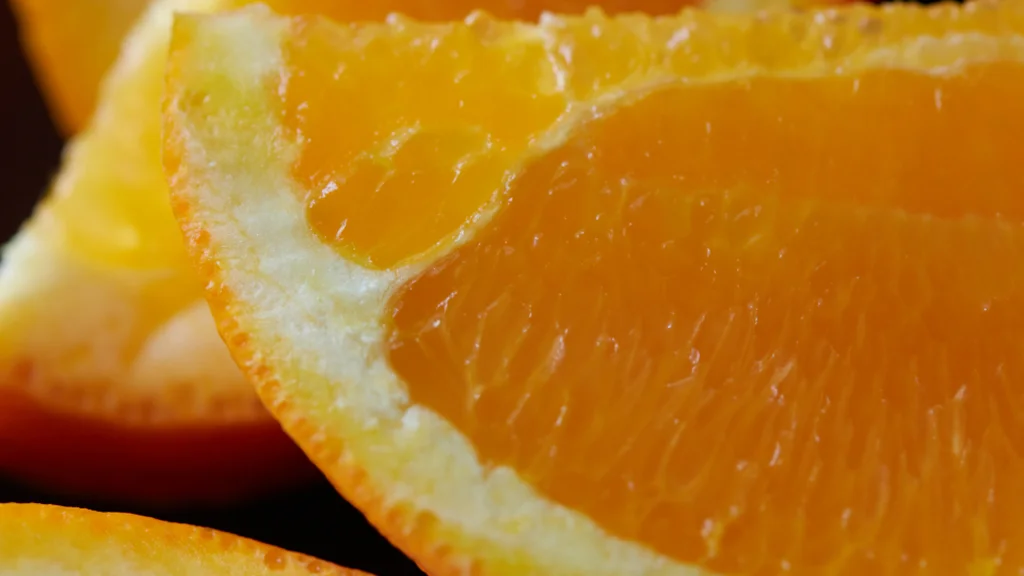
Fresh orange quarters with juicy vesicles exposed in warm light
~43Glycemic index (low)
~70 mgVitamin C per medium fruit
62Calories per fruit
3 gFiber the juicer throws away
8 min read Updated 2026-09-21 Verified data
EEINA Editorial Content
Based on authoritative sources (USDA · University of Sydney · NIH · FDA) and reviewed per our editorial methodology
Medical Disclaimer: The following content is a general educational reference based on peer-reviewed studies and classical medical heritage. It does not substitute professional medical advice. If you have a health condition, take chronic medications, or are pregnant or breastfeeding, consult your doctor before following any dietary recommendation. If your medication carries a grapefruit warning, ask your pharmacist about your citrus specifically.

Nutritional Profile — one medium orange (~131 g, peeled)

Calories
62 kcal
Carbohydrates
~15 g — close to a standard fruit serving
Dietary fiber
3.1 g (pectin-rich — much of it in the white albedo)
Vitamin C
~70 mg ≈ eighty percent of the daily value
Folate
~40 mcg — a welcome bonus in pregnancy
Potassium
~237 mg
Fat & protein
negligible
Glycemic index
~43 whole fruit (low); juice ~50 with a faster, larger load per glass

Whole Fruit vs the Juice Glass — the Full Accounting

The page's central verdict, in one table of logic:

The Whole Orange
62 kcal · 3 g fiber · chewing & satiety

Fiber intact, eaten slowly, one fruit satisfies. GI ~43 — low. The daily default, no hesitation. Eat your fruit; don't drink it.

Fresh Juice (240 ml)
~110 kcal from 2–3 fruits, zero fiber

Even 100% fresh juice counts as free sugars in nutrition guidance: the fiber stays in the juicer, the sugar of several fruits arrives in one minute. Hospitality exception, not a morning habit — and pediatric guidance restricts juice sharply in the early years.

Navel vs Valencia
SAR 3–7/kg in season

Navel (the "belly button" base): seedless, easy-peel, the eating orange. Valencia: thin-skinned and juice-heavy, the classic juicer — and the late-season variety that stretches citrus toward summer.

Blood Orange & Bitter Orange
One for plates, one for jams

Blood orange's crimson anthocyanins develop in cold winter nights — berry-tinged and salad-worthy. Bitter (Seville) orange is for marmalade, not eating — and it shares the grapefruit drug-interaction caution below.

Nutrition Science — C, Iron, and the Pith You Shouldn't Peel

Three mechanisms carry the orange's file:

  • Vitamin C, stated precisely: per NIH references it supports normal immune function, collagen formation and iron absorption; regular intake may modestly shorten cold duration — it neither prevents colds nor cures one after symptoms start. A daily winter orange is an excellent habit, minus the myths
  • The iron partnership: vitamin C enhances absorption of plant (non-heme) iron from lentils, spinach and legumes — orange segments after a lentil dish, or a citrus squeeze over it, is chemistry before garnish. This completes the rule our lentils page opens
  • Hesperidin in the albedo: the white pith concentrates citrus flavonoids (hesperidin foremost, studied in reviews for vascular health) plus a good share of the fiber — stop peeling it off to the last thread
For Blood-Sugar Watchers
The fruit, not the glass

A whole orange (~15 g carbs, GI ~43) fits most plans as a counted fruit serving. The juice glass is the one to defer — and in gestational diabetes the same rule holds, with your care team setting portions.

The Grapefruit Question
FDA-documented interaction

The famous drug interaction concerns grapefruit and bitter (Seville) orange — usually not the sweet orange. Still, if your medication carries the warning, ask your pharmacist about your citrus by name; one minute settles it.

Family Kitchen Uses

Carrot-Orange SaladThe Moroccan classic
Whole segments with their fiber over grated carrot, a light orange-juice dressing and cinnamon — natural sweetness, no added sugar. Recipe in the EEINA library.
Zest Before You PeelFree aroma, daily discarded
The colored outer peel is an essential-oil treasure: zest it before peeling or juicing and freeze the zest for bakes and hot drinks — our baked cinnamon apples run on it.
Cinnamon Orange RoundsTwo-minute winter dessert
Cross-cut rounds dusted with cinnamon (rosewater optional) — an old Levantine hospitality dessert: elegant, cold, zero added sugar, zero oven.
Segments Over GreensC meets leafy iron
Orange segments over arugula or spinach with olive oil: sweetness balancing leafy bitterness — and vitamin C riding alongside the leaves' iron, the absorption partnership on a plate.
Kitchen tip

Buy by weight, not color: the heavier orange for its size is the juicier one, and a light, shiny fruit is an empty jacket. Roll a fridge-cold orange under your palm for ten seconds before juicing — the vesicles open and give up their full juice. Room temperature for days, the crisper drawer for weeks, and never a sealed plastic bag (trapped moisture invites mold).
Frequently Asked Questions

Do oranges spike blood sugar?
The whole fruit is among the gentler choices: GI ~43, ~15 g of counted carbs, fiber slowing arrival. Spikes come from the juice glass — several fruits' sugar, no fiber, one minute.
Whole orange or juice?
Whole, every time: fiber intact, chewed slowly, one fruit satisfies. Even fresh 100% juice counts as free sugars in nutrition guidance. Make juice the hospitality exception.
Does vitamin C prevent colds?
No — regular intake may modestly shorten symptom duration for some, and a rescue dose after onset is not a cure. A daily winter orange is a great habit without the folklore.
Should I remove the white pith?
Keep it: the albedo holds fiber and citrus flavonoids (hesperidin foremost). Its faint bitterness is a cheap price for a free nutritional bonus.
My medication warns against grapefruit — are oranges okay?
The interaction mainly concerns grapefruit and bitter (Seville) orange, usually not sweet oranges — but ask your pharmacist about your specific citrus with your specific drug. One minute settles it.
How do I store oranges?
Days at room temperature in an airy basket, weeks in the fridge crisper. No sealed bags (mold), and remove any moldy fruit immediately before it spreads.