Somali Spiced Ful Bowl with Hawaij and Caramelised Onion
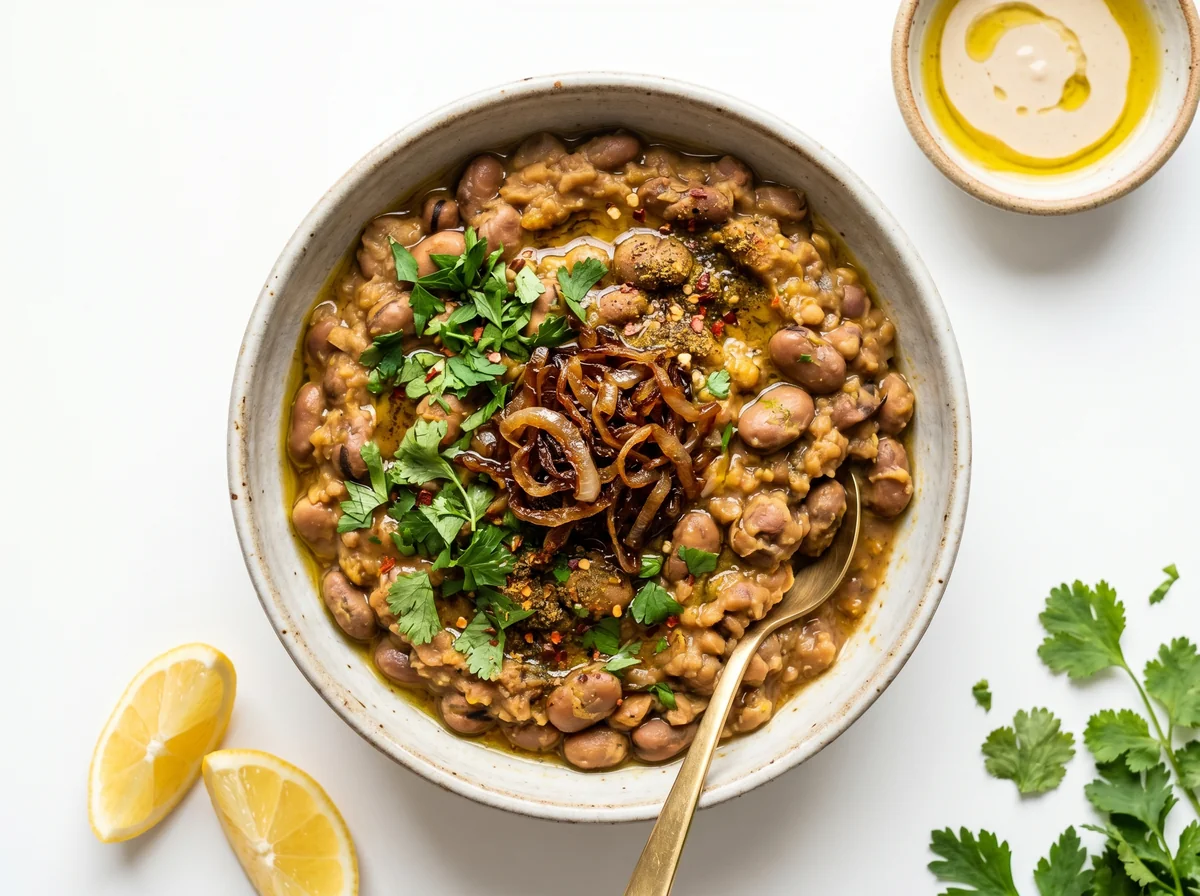
Canned Ful (stewed fava beans) cooked in a spiced tomato sauce with Yemeni hawaij, golden turmeric, and slow-caramelised onion — a Somali-Yemeni breakfast bowl, no tahini, no mashing.
In the ports of Somalia and the coastal cities of Yemen facing the Red Sea, the spice trade met the breakfast table and gave birth to a single dish with two souls.
The Ful here is not mashed in the Levantine style nor doused with tahini; instead it is cooked in a pot in a tomato sauce spiced with Yemeni hawaij and golden turmeric, crowned with slowly caramelised onion that lends a quiet sweetness to break the edge of the green chilli. It is a simple everyday breakfast in its ingredients, deep in its flavour — a story of how spices travel across the sea and redraw a familiar dish in a new colour and taste.
Preparation Steps
Caramelise the onion
Heat the olive oil in a wide frying pan over medium-low heat, add the sliced white onion, and stir every few minutes for about 12 minutes until it softens, turns golden amber, and becomes fragrant and sweet. A low flame draws out the onion's sugars gradually, giving the dish depth of flavour without burning.
Bloom the spices
Push the onion to one side of the pan and add the garlic, ginger, and green chilli to the hot oil. Stir for 1 minute until fragrant but not browned, then scatter in the hawaij, turmeric, and cumin and stir for 30 seconds. Heating spices in fat dissolves their aromatic oils, making the flavour deeper.
Cook the sauce
Add the grated tomatoes and stir over medium heat for about 5 minutes until the water evaporates and the sauce becomes thick, with a little oil beginning to separate at the edges. This reduction concentrates the sweetness of the tomatoes and removes the raw flavour.
Finish the beans
Add the drained beans and the water or stock, then leave the mixture to gently simmer over low heat for about 12 minutes, stirring lightly from time to time, until the beans have absorbed the flavour and the consistency is cohesive — not watery. Slow cooking allows the beans to take up the spices without turning to mush.
Final seasoning
Turn off the heat, add the lemon juice and salt to taste, give a single stir, then taste and adjust. Adding the acidity at the end preserves its fresh, bright flavour rather than letting it fade under prolonged heat.
Serve
Spoon the beans into bowls, scatter over the fresh coriander, spring onions, and a drizzle of olive oil, and serve warm alongside bread or eggs as desired. The fresh garnish adds an aromatic layer and a crunchy texture that breaks the softness of the beans.
Blood Sugar Impact
The glycemic index (GI) measures how quickly a food raises blood sugar, while the glycemic load (GL) measures how much a full serving raises it. Together they give the complete picture.
Glycemic Index
GI
24Low
Low0–55Medium56–69High70+
A low value (≤55) means a gradual rise in blood sugar — the most suitable range for diabetes and insulin resistance.
Glycemic Load
GL
6Low
Low0–10Medium11–19High20+
Glycemic load reflects the impact of the full serving. To lower it: take half a serving, or pair the recipe with a source of protein and fiber.
Nutritional Information
Per ServingMakes 4 servings · one serving is about 325 g of raw ingredients
Calories238 kcal12%of Daily Value*
Protein11 g22%of Daily Value*
Carbohydrates34 g12%of Daily Value*
Fat7 g9%of Daily Value*
Fiber8 g29%of Daily Value*
Sodium401 mg17%of Daily Value*
* Percent Daily Values are based on a 2,000-calorie diet per FDA food-label reference values — your daily needs may be higher or lower. Values are derived from the recipe's ingredients via the USDA database.
Troubleshooting
The most common problems when preparing Somali Spiced Ful Bowl with Hawaij and Caramelised Onion, and how to fix them:
The onion burnt and turned bitter before caramelising.
The heat was too high. Lower it to medium-low and add a splash of water if it starts to stick, stirring every 2 minutes. True caramelisation takes patience — about 12 minutes, not a rush.
The dish is watery and thin, not cohesive.
Not enough liquid has evaporated. Raise the heat slightly and leave it to boil uncovered for a few extra minutes until it thickens, or mash one spoonful of beans against the back of the spoon to naturally thicken the consistency.
The flavour is dull and lacks vibrancy.
Usually a lack of acidity or salt. Add fresh lemon juice at the end and salt gradually while tasting — acidity wakes up all the other spices.
The beans turned into a very soft mush.
They were cooked too long or stirred too often. Reduce the simmering time to about 10 minutes and stir gently and intermittently to keep the beans intact.
The spices taste raw and earthy.
The spices were not bloomed in the fat. Be sure to fry them for 30 seconds in the hot oil before adding any liquids so their flavour fully opens up.
Storage and Make-Ahead
Fridge (4 °C)
Store in a sealed container for up to 3 days. Reheat gently over low heat with a splash of water to restore the consistency.
Freezer (-18 °C)
Freeze for up to 2 months in a sealed container. Thaw overnight in the fridge before reheating, and add fresh coriander and lemon after reheating.
At room temperature
Do not leave it outside the fridge for more than 2 hours (or 1 hour if the ambient temperature exceeds 32 °C) to avoid bacterial growth, per the Danger Zone rule.
Tested Ingredient Substitutions
Original Ingredient
Tested Substitute
Ratio
Flavor Difference
Canned fava beans
Dried fava beans, soaked and boiled
180 g dry, soaked overnight and boiled to yield about 480 g cooked
Lowers sodium and gives a firmer texture, but adds several hours of soaking and boiling time.
Yemeni hawaij spice blend
Mix of turmeric, cumin, coriander, black pepper, and cardamom
1 teaspoon of the mix in place of the hawaij
Yemeni hawaij is a ready blend of these same spices — the substitute approximates but does not perfectly replicate it.
Olive oil
Avocado oil or plant-based ghee
Same amount — 30 ml
Avocado oil is flavour-neutral and tolerates higher heat; ghee adds a richer, nuttier flavour.
Fresh grated tomatoes
Canned crushed tomatoes
200 g — same amount
Choose a variety with no added salt and reduce subsequent seasoning to manage the sodium.
Hot green chilli
Mild green bell pepper
Same amount — 30 g
Preserves the green flavour and colour without heat — suitable for those who prefer a mild dish.
How Much Does It Make? Scaling Guide
Ingredient
2 servings
4 servings
8 servings
Drained fava beans
240 g
480 g
960 g
Sliced white onion
100 g
200 g
400 g
Grated tomatoes
100 g
200 g
400 g
Water or stock
125 ml
250 ml
500 ml
Hawaij spice
1/2 tsp
1 tsp
2 tsp
EEINA Nutrition Tip
Cook the onion over a gentle flame and give it its full time to caramelise without burning — the resulting sweetness enriches the dish without any added sugar and balances the acidity of the tomatoes and lemon. To lower the sodium, rinse the canned beans well under water before cooking and add the salt at the end in a measured amount.
Add This Recipe to Your Plan
The EEINA app saves your favorite recipes, calculates them from their real ingredients, and shows your daily numbers toward your goal. Try it free now.
What is the difference between this dish and Levantine Ful Medames or Ful with tahini?
This dish is cooked in a pot in a tomato sauce spiced with hawaij and turmeric and crowned with caramelised onion — it contains no tahini and is not mashed. The distinction lies in the Yemeni-Somali spice blend, the caramelisation technique, and the pot method, not just the main ingredient.
Can I prepare it in advance for weekday breakfasts?
Yes — the flavour actually improves the next day as the spices meld. Keep it in the fridge for up to 3 days and reheat with a splash of water, adding fresh coriander and lemon at serving.
How hot is hawaij, and is this dish spicy?
Yemeni hawaij is warmly aromatic rather than sharp or fiery — the heat in this dish comes from the green chilli. Swap it for mild green bell pepper to get a dish that is entirely mild.
Is this dish suitable for vegans and those avoiding animal products?
Yes, all the ingredients are completely plant-based and it contains no animal products provided water or vegetable stock is used instead of meat stock. It is also free from gluten and dairy.
What should I serve alongside it for a complete breakfast?
The bean protein is complemented by a slice of whole-grain bread or a boiled egg for those who want it, plus a plate of green salad or cucumber and tomato slices. This variety adds fibre and micronutrients and rounds out the meal.