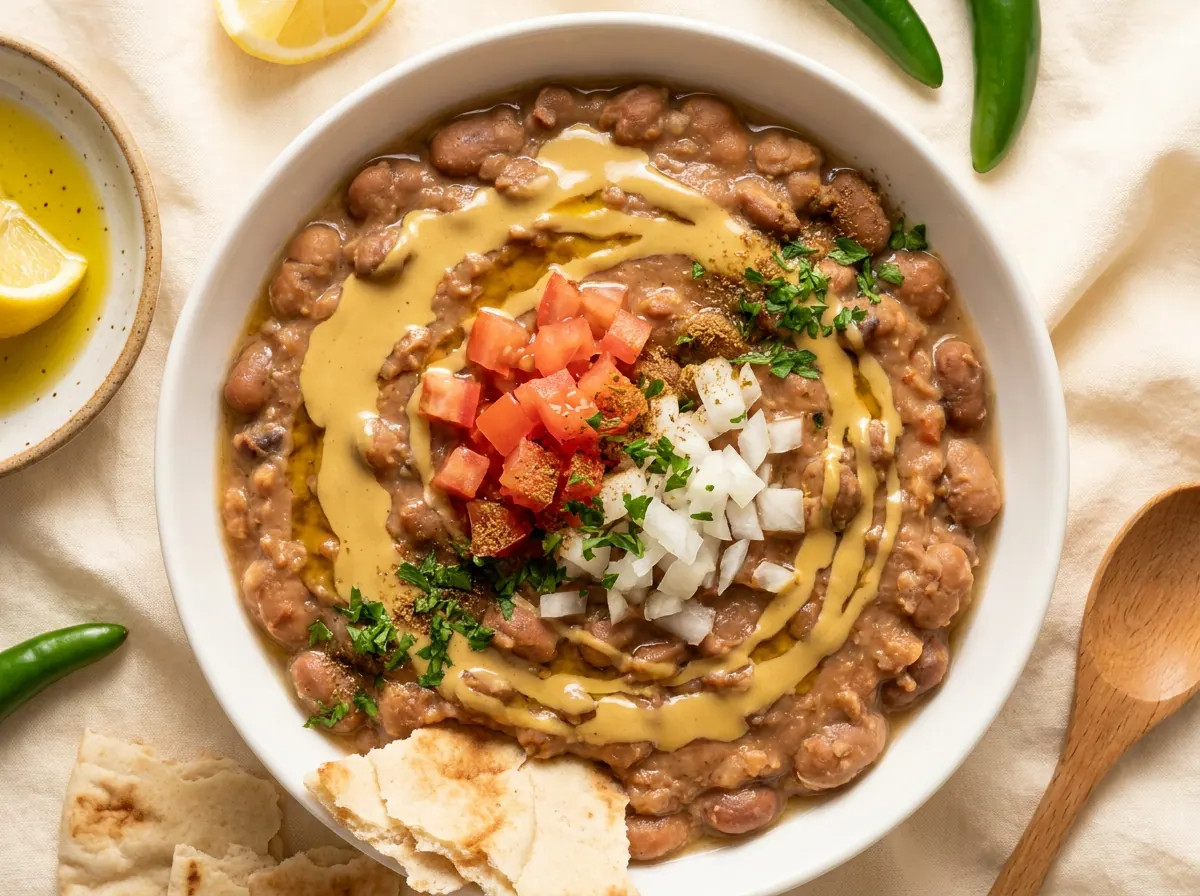
A popular Saudi breakfast · ful medames with tahini, lemon, and garlic · rich in protein and fiber · low GI · suitable for the whole family, including people with diabetes.
Ful medames is not just a breakfast. It is a ritual. It is the aroma you wake up to at dawn on Friday, the dish that gathers the father and his children before prayer.
Saudi popular restaurants have perfected it generation after generation · until it acquired a distinct taste that no one mistakes. This recipe preserves that taste. The creamy tahini, the cumin that opens the appetite, the lemon that wakes up every flavor. But it is precisely measured: only 320 calories for a full serving, 16 grams of protein, and 11 grams of fiber · which makes it one of the best breakfast choices for people with diabetes and those watching their weight.
Preparation Steps
Heat the ful
Drain the canning liquid from the ful (if using canned), put it in a pot with half a cup of water, and heat it over gentle heat for 5-7 minutes.
Partially mash
Mash half the amount with a fork and leave the other half whole for a varied texture.
Add the flavorings
Add the crushed garlic, cumin, red pepper, and salt. Stir over gentle heat for 2 minutes.
Mix the tahini and lemon
In a small bowl, mix the tahini with the lemon juice and 3 tablespoons of cold water. It will darken then loosen as you stir.
Serve
Place the ful in a serving dish, pour the tahini mixture over it, and drizzle the olive oil. Garnish with the tomato, parsley, and green onion. Serve with whole-wheat tamees bread.
Blood Sugar Impact
The glycemic index (GI) measures how quickly a food raises blood sugar, while the glycemic load (GL) measures how much a full serving raises it. Together they give the complete picture.
Glycemic Index
GI
21Low
Low0–55Medium56–69High70+
A low value (≤55) means a gradual rise in blood sugar — the most suitable range for diabetes and insulin resistance.
Glycemic Load
GL
5Low
Low0–10Medium11–19High20+
Glycemic load reflects the impact of the full serving. To lower it: take half a serving, or pair the recipe with a source of protein and fiber.
Nutritional Information
Per ServingMakes 4 servings · one serving is about 260 g of raw ingredients
Calories291 kcal15%of Daily Value*
Protein12 g24%of Daily Value*
Carbohydrates34 g12%of Daily Value*
Fat13 g17%of Daily Value*
Fiber9 g32%of Daily Value*
Sodium509 mg22%of Daily Value*
* Percent Daily Values are based on a 2,000-calorie diet per FDA food-label reference values — your daily needs may be higher or lower. Values are derived from the recipe's ingredients via the USDA database.
Troubleshooting
The most common problems when preparing Ful Medames with Tahini, Saudi Style, and how to fix them:
The ful is hard and did not turn creamy
The cooking time was not enough, or the beans were not soaked. Dry fava beans need a full overnight soak in cold water, then long cooking over gentle heat (two to three hours) until the bean collapses easily between two fingers. If time is short: use a pressure cooker (40 minutes after reaching pressure). Ready canned ful skips this whole stage.
The taste is bland, without the soul of authentic Egyptian ful
The cumin is missing, or the lemon is not fresh. Authentic ful needs freshly ground cumin, squeezed lemon, crushed garlic, and extra-virgin olive oil on top. This quartet cannot be replaced. Adjust the salt last.
The ful is watery and too runny
Too much water, or none of the beans were mashed. Mash a third of the beans with a fork at the bottom, and the consistency becomes naturally uniform. If it stays watery: lift the lid and leave the ful over gentle heat for a few minutes until the excess liquid evaporates.
The ful is dry and dense like dough
Too little water, or it was cooked too long after the liquid evaporated. Add hot water a spoon at a time until it reaches the desired creamy consistency, then adjust the cumin, lemon, and salt, since water dilutes the taste.
The tahini separates and does not blend with the ful
The tahini was not mixed with cold water before being added. Tahini on its own is thick and clumps. The correct technique: whisk the tahini in a small cup with very cold water gradually until it reaches a creamy, sauce-like consistency. Then add it to the warm ful and stir.
The ful is heavy on the stomach and causes bloating
The skins were not removed, or the amount is large. A long soak (12 hours) then changing the soaking water before cooking reduces the hard-to-digest compounds in legumes. The common Levantine technique: adding a little baking soda to the soak helps soften the skins.
Storage and Make-Ahead
Refrigerator (4°C)
Cooked ful without tahini: four days in an airtight container. Ful with tahini: three days, as the tahini oxidizes faster.
Freezer (-18°C)
Cooked ful: three months in a freezer container. Thaw it overnight in the fridge before reheating. Individual batches: in small containers to thaw daily portions.
Make ahead
Soaking the beans: a full night (10-12 hours) in cold water. Cooking: a day ahead in an airtight container in the fridge. Tahini, lemon, and garlic: added only minutes before serving.
Reheating
Over gentle heat with a quarter cup of hot water, stirring constantly. Do not leave it more than two hours out of the fridge after reheating, per USDA [1].
Tested Ingredient Substitutions
Original Ingredient
Tested Substitute
Ratio
Flavor Difference
Dry soaked fava beans
Ready canned fava beans
1 cup dry beans ≈ two 400 g cans
Similar consistency, saves two hours of cooking, slightly higher sodium
Fava beans alone
Fava beans and boiled chickpeas (mixed medames)
Half fava beans, half chickpeas
Deeper consistency, complete protein from combining legumes [2]
Tahini
Almond butter with a pinch of cumin
Same amount
An almondy flavor instead of sesame, better for those who dislike the bitterness of tahini
Ground cumin
Whole roasted and ground cumin
Same amount
Deeper, smokier flavor; whole cumin keeps longer
Fresh lemon
Diluted white vinegar
Half the amount
A sharper bite, without the lemon aroma, better for those who like strong sourness
How Much Does It Make? Scaling Guide
Number of servings
Dried fava beans
Water
Tahini
Cooking time
2 (individual × 2)
0.5 cup
2 cups
2 tbsp
2 hours
4 (base)
1 cup
4 cups
4 tbsp
2–3 hours
8 (large family)
2 cups
8 cups
8 tbsp
3 hours
12 (large gathering)
3 cups
12 cups
12 tbsp
3 hours in a large pot
EEINA Nutrition Tip
For people with diabetes: this ful is one of the best breakfast choices. The combination of protein and fiber keeps blood sugar stable for 4-5 hours. Serve it with half a cup of plain yogurt to boost the protein, or with half an avocado to boost the healthy fats.
Add This Recipe to Your Plan
The EEINA app saves your favorite recipes, calculates them from their real ingredients, and shows your daily numbers toward your goal. Try it free now.
Is canned the same as boiled in nutritional value?
Very close. The main difference is in sodium: canned contains double the amount. To reduce the sodium, drain the water and rinse the beans with cold water before heating — this cuts the sodium by 40%.
Does it work as a daily breakfast for someone with diabetes?
Yes, excellently. The low GI, high fiber, and plant protein · an ideal trio for stabilizing blood sugar. It is recommended at least three times a week.
How long does it stay good in the fridge?
3 days in an airtight container. But the tahini mixture is prepared fresh at serving — if you mix it ahead it separates and the flavor changes.
What is the alternative to tahini for those with a sesame allergy?
Use half a cup of plain Greek yogurt instead of the tahini. The nutritional value is close, the flavor is slightly different but consistent with the ful.
Does it help with weight loss?
Yes · the feeling of fullness for 4-5 hours reduces the urge to snack. But watch the tamees bread served with it — a moderate portion (a quarter cup) per dish.