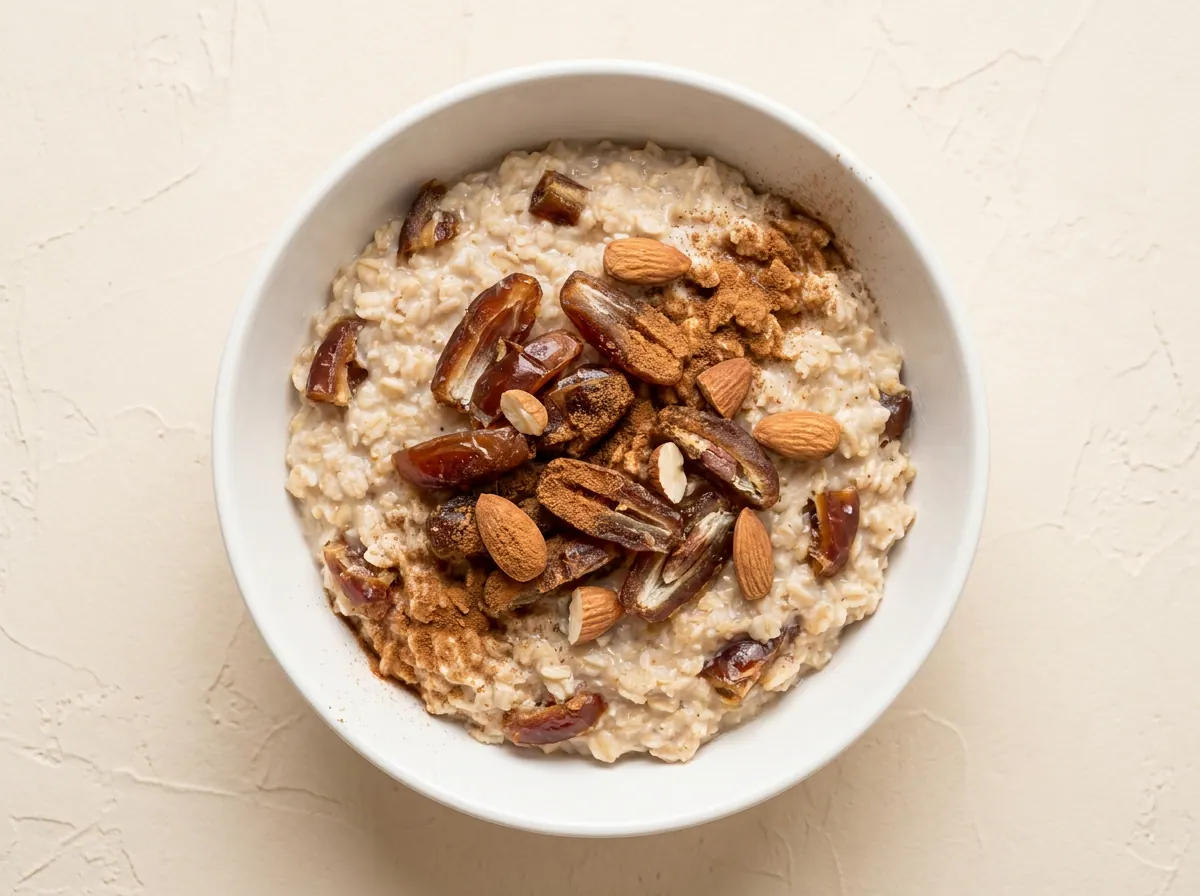
Warm rolled oats cooked with milk and naturally sweetened with Saudi dates — a filling breakfast with no added sugar, providing fibre, slow-release carbohydrates and a touch of natural sweetness.
Oats with dates is one of those breakfasts that seems almost too simple for how satisfying it is. The idea borrows from two traditions: the Scottish porridge bowl and the Saudi date tray that sits on every table at breakfast.
When they meet in a single pot, the result is a warm, spiced bowl that smells of cardamom and needs nothing else — no sugar, no syrup, no elaborate topping. The dates dissolve gently into the oats, sweetening each spoonful from within. It is a breakfast that travels well to offices, suits Ramadan suhoor, and serves just as well for a child's school morning.
Preparation Steps
Heat the liquid
Bring the water or milk to a boil in a small saucepan over medium-high heat. Using milk gives a richer, creamier result; water is lighter. Watch carefully — milk can boil over quickly.
Add the oats and dates
Reduce the heat to medium and stir in the rolled oats and chopped dates. Stir well so the oats do not clump at the bottom. The dates will soften and dissolve slightly into the oats, releasing their natural sweetness throughout.
Cook, stirring occasionally
Cook for 5 minutes, stirring every minute or so, until the oats have absorbed most of the liquid and reached your preferred consistency. If you like thinner oats, add a little more liquid; for thicker oats, cook for an extra minute or two.
Season and serve
Remove from the heat and stir in the cardamom, cinnamon, vanilla (if using) and a pinch of salt. Spoon into bowls, top with additional chopped dates and a sprinkle of cinnamon, and serve immediately while hot.
Blood Sugar Impact
The glycemic index (GI) measures how quickly a food raises blood sugar, while the glycemic load (GL) measures how much a full serving raises it. Together they give the complete picture.
Glycemic Index
GI
50Low
Low0–55Medium56–69High70+
A low value (≤55) means a gradual rise in blood sugar — the most suitable range for diabetes and insulin resistance.
Glycemic Load
GL
29High
Low0–10Medium11–19High20+
Glycemic load reflects the impact of the full serving. To lower it: take half a serving, or pair the recipe with a source of protein and fiber.
Nutritional Information
Per ServingMakes 1 servings · one serving is about 330 g of raw ingredients
Calories481 kcal24%of Daily Value*
Protein19 g38%of Daily Value*
Carbohydrates66 g24%of Daily Value*
Fat16 g21%of Daily Value*
Fiber8 g29%of Daily Value*
Sodium107 mg5%of Daily Value*
Potassium753 mg16%of Daily Value*
Phosphorus568 mg45%of Daily Value*
* Percent Daily Values are based on a 2,000-calorie diet per FDA food-label reference values — your daily needs may be higher or lower. Values are derived from the recipe's ingredients via the USDA database.
Troubleshooting
The most common problems when preparing Oats with Dates, and how to fix them:
The oats are gluey and thick
Too little liquid or overcooked. Add a splash of hot water or milk, stir vigorously, and remove from the heat. Rolled oats continue thickening even after the heat is off.
The oats are watery
Too much liquid or not cooked for long enough. Continue cooking over medium heat, stirring, until the oats absorb the liquid to your preference.
The dates did not dissolve and are chewy
Chop them more finely before adding, or use a softer variety. Medjool and Ajwa dates dissolve well; drier varieties stay firmer.
The oats taste flat
Do not skip the pinch of salt — it amplifies the sweetness of the dates. Add the cardamom and cinnamon off the heat so the volatile flavours do not cook away.
The milk scorched at the bottom
The heat was too high. Use medium heat and stir frequently, especially in the first two minutes. A non-stick or heavy-bottomed saucepan helps prevent scorching.
Storage and Make-Ahead
Refrigerator
Store in an airtight container for up to 3 days. The oats will thicken into a solid — add a splash of milk or water when reheating and stir well over gentle heat.
Overnight oats
For a no-cook option, combine the raw oats, chopped dates, spices and milk in a jar the night before, cover and refrigerate overnight. Eat cold or warm in the morning.
Freezer
Cooked oats can be frozen in portions for up to 1 month. Thaw overnight in the fridge and reheat with a little added liquid.
Safety
Do not leave cooked oats with milk at room temperature for more than 2 hours to prevent bacterial growth.
Tested Ingredient Substitutions
Original Ingredient
Tested Substitute
Ratio
Flavor Difference
Dates
Raisins or dried figs
Same weight (60 g)
A different natural sweetness. Dried figs add more fibre; raisins are more commonly available.
Cardamom
Mixed spice or allspice
1/4 tsp
A non-Gulf flavour profile. Cardamom is the traditional choice for this Saudi-style bowl.
Low-fat milk
Unsweetened oat milk
1:1
Dairy-free and adds an extra oat flavour. Oat milk makes the bowl slightly sweeter.
Rolled oats
Steel-cut oats
3/4 cup (75 g)
Chewier texture; needs 20 to 30 minutes of cooking or overnight soaking. Lower GI than rolled oats.
Rolled oats (standard)
Certified gluten-free rolled oats
1:1
For those with coeliac disease or wheat sensitivity who want to avoid cross-contamination.
How Much Does It Make? Scaling Guide
Number of servings
Oats
Liquid
Dates
1 (base)
4 tbsp
1 cup
2
2 (individual × 2)
8 tbsp
2 cups
4
4 (small family)
1.5 cups
4 cups
8
6 (large family)
2.25 cups
6 cups
12
EEINA Nutrition Tip
Ajwa dates from Madinah are a popular choice for this breakfast — they have a naturally deep, caramel sweetness that requires no additions. For people managing blood sugar, use 3 dates per serving rather than 6, and cook with water rather than milk to keep the calorie count lower.
Add This Recipe to Your Plan
The EEINA app saves your favorite recipes, calculates them from their real ingredients, and shows your daily numbers toward your goal. Try it free now.
Dates contain natural sugars but also significant fibre that moderates the glucose rise. Use 3 dates per serving rather than 6, and pair the oats with a protein source like Greek yogurt. Consult your dietitian for personalised advice.
Which oats work best for this recipe?
Rolled oats give the best balance between cooking time (5 minutes) and creaminess. Quick-cook oats work in 2 to 3 minutes but can become mushy. Steel-cut oats give a chewier result but need 20 to 30 minutes.
Can I eat this cold?
Yes — the overnight oats method (see storage section) lets you combine everything the night before and eat it cold the next morning. It is a popular no-cook breakfast option.
Does this recipe work for Ramadan suhoor?
It is ideal for suhoor: oats digest slowly and sustain energy throughout the fasting day. The dates provide a natural energy kick and follow the prophetic Sunnah of breaking fast with dates.
Can I add more toppings?
Yes — sliced banana, a spoonful of peanut butter, a few walnuts or a drizzle of honey all work well. Bear in mind that each addition changes the calorie and sugar content.