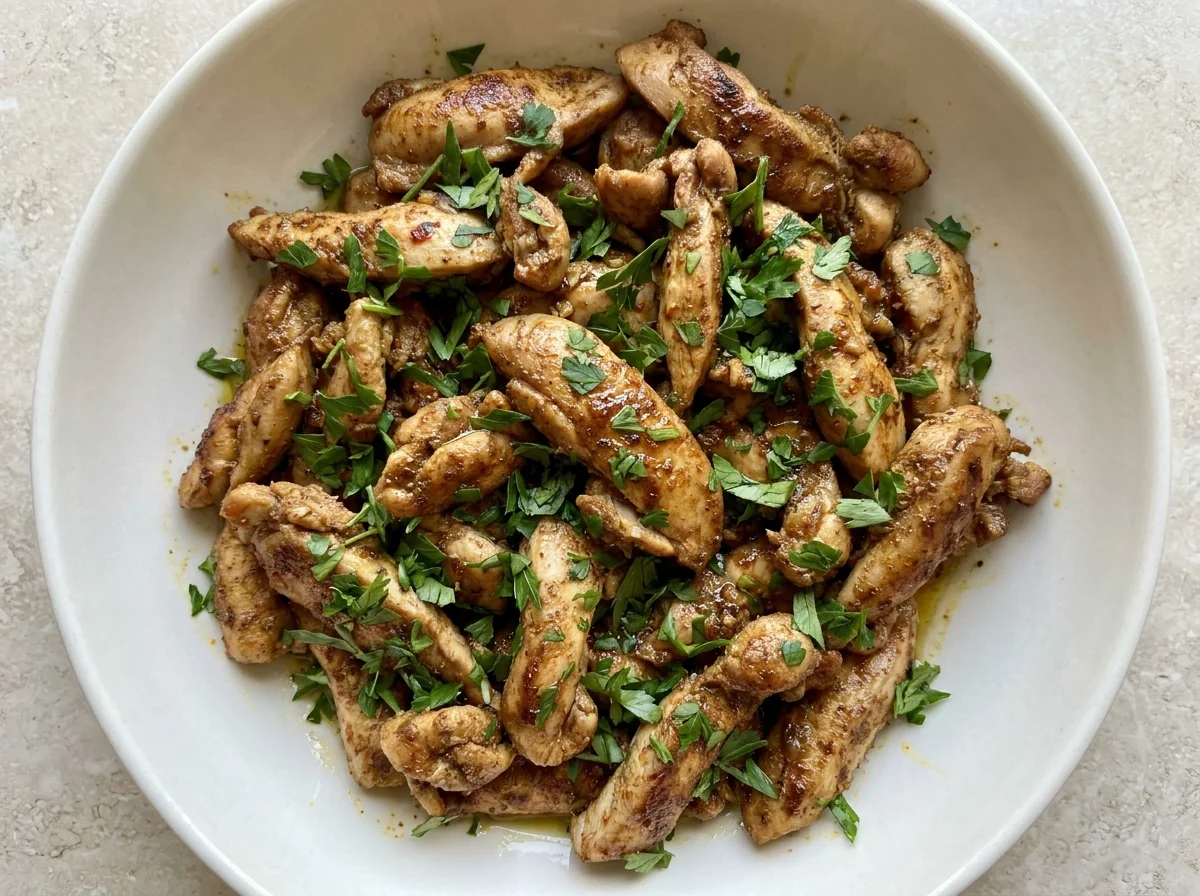
We take the beloved flavor of shawarma and serve it as a complete salad without bread: chicken seasoned with Middle Eastern spices, fresh vegetables, and a tahini-yogurt sauce.
A balanced dish that satisfies while staying light.
Preparation Steps
The marinade
Mix the olive oil, lemon, garlic, paprika, cumin, cardamom, cinnamon, pepper, and salt, so the shawarma spices come together in a single blend.
Marinate the chicken
Coat the chicken strips in the marinade and chill them for at least an hour (and up to a full night) so the flavor penetrates and the meat tenderizes.
Cook the chicken
Sear the chicken in a skillet over medium-high heat, stirring, until it cooks through, turns golden, and reaches an internal temperature of 74°C for chicken safety.
The tahini sauce
Whisk the tahini, yogurt, and lemon with the cold water gradually until you reach a pourable consistency, as the water loosens the tahini's thickness.
Assembly
Distribute the lettuce, tomatoes, cucumber, and onion in the bowls and place the warm chicken over them, then drizzle the tahini sauce and parsley and serve right away.
Blood Sugar Impact
The glycemic index (GI) measures how quickly a food raises blood sugar, while the glycemic load (GL) measures how much a full serving raises it. Together they give the complete picture.
Glycemic Index
GI
9Low
Low0–55Medium56–69High70+
A low value (≤55) means a gradual rise in blood sugar — the most suitable range for diabetes and insulin resistance.
Glycemic Load
GL
1Low
Low0–10Medium11–19High20+
Glycemic load reflects the impact of the full serving. To lower it: take half a serving, or pair the recipe with a source of protein and fiber.
Nutritional Information
Per ServingMakes 4 servings · one serving is about 435 g of raw ingredients
Calories398 kcal20%of Daily Value*
Protein30 g60%of Daily Value*
Carbohydrates18 g7%of Daily Value*
Fat24 g31%of Daily Value*
Fiber6 g21%of Daily Value*
Sodium438 mg19%of Daily Value*
Potassium980 mg21%of Daily Value*
Phosphorus439 mg35%of Daily Value*
* Percent Daily Values are based on a 2,000-calorie diet per FDA food-label reference values — your daily needs may be higher or lower. Values are derived from the recipe's ingredients via the USDA database.
Troubleshooting
The most common problems when preparing Chicken Shawarma Salad, and how to fix them:
The chicken is dry
Do not overcook it past 74°C, and thighs hold their moisture better than breasts.
The sauce is too thick
Add the cold water a spoon at a time until it becomes pourable.
The sauce is bitter
Add a little more lemon or a pinch of salt to balance the tahini's bitterness.
The salad is watery
Dry the vegetables well and dress them only at serving time.
Storage and Make-Ahead
Refrigerator (the chicken)
Up to 3 days in a sealed container, separate from the vegetables.
Tahini sauce
Up to 4 days; it firms up when chilled, so loosen it with a little water.
Chopped vegetables
Keep them separate and assemble at eating time so they stay fresh.
Tested Ingredient Substitutions
Original Ingredient
Tested Substitute
Ratio
Flavor Difference
Chicken thighs
Chicken breasts
Less fat and more protein
Watch the cooking so they do not dry out
Tahini
Full Greek yogurt
A lighter-fat sauce
Add garlic and lemon for flavor
Romaine lettuce
Arugula or baby spinach
Leaves with a richer taste
They wilt faster, so add them last
Red onion
Green onion
Milder sharpness
Add it raw and chopped
How Much Does It Make? Scaling Guide
Ingredient
2 servings
4 servings (base)
8 servings
Chicken
225 g
450 g
900 g
Romaine lettuce
200 g
400 g
800 g
Tomato
150 g
300 g
600 g
Tahini
30 g
60 g
120 g
EEINA Nutrition Tip
Marinating the chicken for a full night gives the deepest flavor and most tender texture, so we recommend preparing it the night before.
Add This Recipe to Your Plan
The EEINA app saves your favorite recipes, calculates them from their real ingredients, and shows your daily numbers toward your goal. Try it free now.