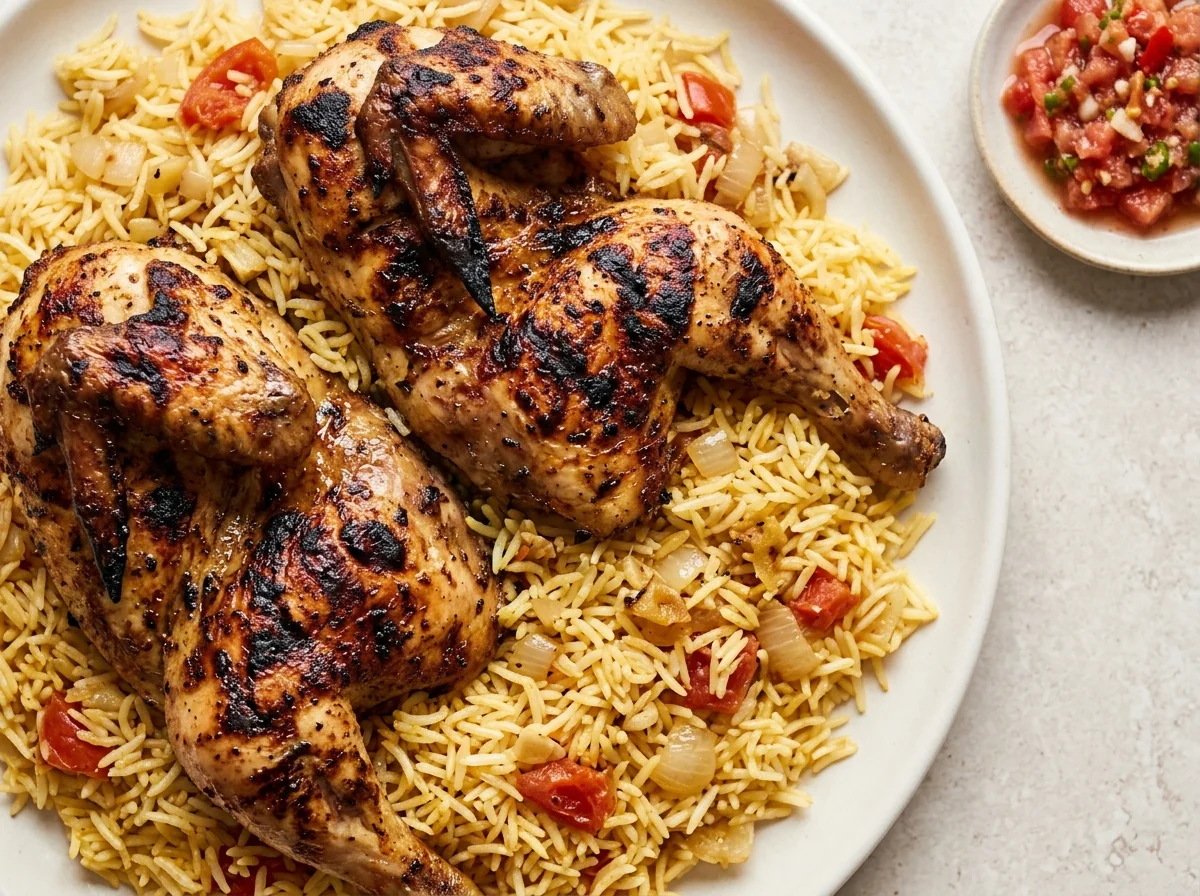
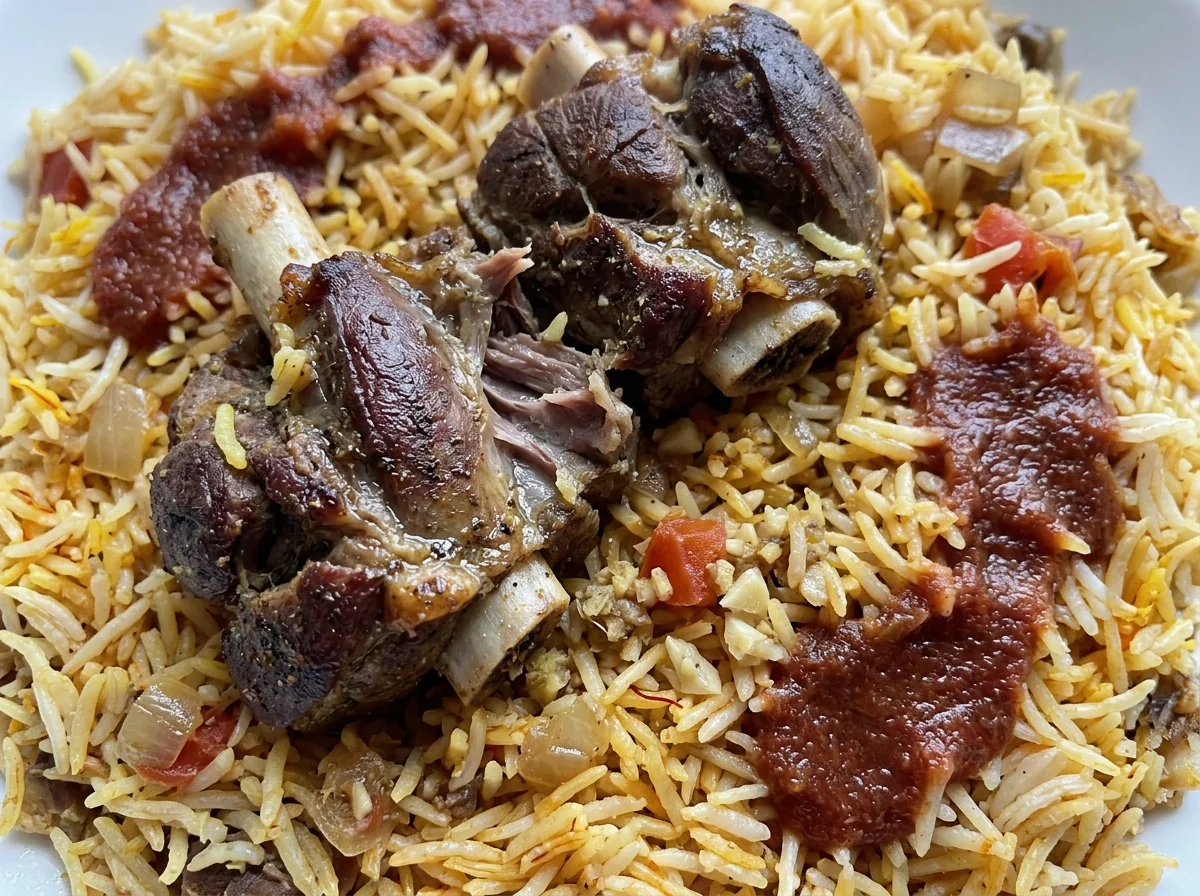
Whole chicken marinated with garlic, ginger, Yemeni madbi spice, dried black lime, and salt, then steam-cooked on an onion bed, browned in the oven, and served over basmati rice with toasted almonds, pine nuts, and cilantro.
Madbi is one of Yemen's original dishes, traditionally cooked for hours in an underground clay taboon. The home version uses a heavy pot with a steaming technique for the same result.
During Ramadan it is cooked at suhoor for those who enjoy traditional cooking. The steam gives the meat a unique tenderness, and the caramelized onion at the bottom gives the rice a smoky flavor. The dish is a symbol of Yemeni generosity.
Preparation Steps
Season the chicken
Rub the chicken with the garlic, ginger, madbi spice, dried lime, and salt. Marinate for 30 minutes.
Prepare the alternative taboon
In a heavy pot, place a thin layer of chopped onion at the bottom. Place the chicken on top. Cover with a lid and cook on very low heat for an hour and 15 minutes. The steam cooks the chicken (the taboon technique).
Brown the chicken
Lift the chicken and preheat the oven to 200°C. Brown the chicken for 10 minutes until it takes on a golden color.
Cook the rice
In the same pot, sauté the remaining onion for 5 minutes. Add the tomato, remaining spices, and broth. Add the rice and cook for 20 minutes until it absorbs the liquid.
Assemble the madbi
Return the chicken over the rice and cover for 10 minutes. Melt the saffron and sprinkle it.
Serve
Invert it onto a large plate and garnish with the almonds, pine nuts, and cilantro. Serve with hot daqqus.
Blood Sugar Impact
The glycemic index (GI) measures how quickly a food raises blood sugar, while the glycemic load (GL) measures how much a full serving raises it. Together they give the complete picture.
Glycemic Index
GI
62Medium
Low0–55Medium56–69High70+
A low value (≤55) means a gradual rise in blood sugar — the most suitable range for diabetes and insulin resistance.
Glycemic Load
GL
48High
Low0–10Medium11–19High20+
Glycemic load reflects the impact of the full serving. To lower it: take half a serving, or pair the recipe with a source of protein and fiber.
Nutritional Information
Per ServingMakes 6 servings · one serving is about 680 g of raw ingredients
Calories881 kcal44%of Daily Value*
Protein56 g112%of Daily Value*
Carbohydrates80 g29%of Daily Value*
Fat35 g45%of Daily Value*
Fiber3 g11%of Daily Value*
Sodium1164 mg51%of Daily Value*
* Percent Daily Values are based on a 2,000-calorie diet per FDA food-label reference values — your daily needs may be higher or lower. Values are derived from the recipe's ingredients via the USDA database.
Troubleshooting
The most common problems when preparing Home-Style Yemeni Madbi, and how to fix them:
The chicken is tough
Add 15 minutes of steam. Frozen chicken needs longer.
The rice is tough
Add a cup of broth and leave for 10 minutes. Rice absorbs slowly.
The flavor is flat
Double the madbi spice and add extra dried lime.
The chicken is dry
Moisten it with hot broth after steaming. Excess steam dries it out.
Storage and Make-Ahead
In the refrigerator
Three days. Reheat with a spoon of broth.
In the freezer
Two months. Freeze the chicken separately from the rice.
Tested Ingredient Substitutions
Original Ingredient
Tested Substitute
Ratio
Flavor Difference
chicken
lamb
1:1
one hour longer steaming time.
basmati rice
Egyptian rice
1:1
thicker texture.
habaht
cumin + turmeric
1:1
a homemade version.
How Much Does It Make? Scaling Guide
Ingredient
6 people
12 people
18 people
Chicken
1500 g
3000 g
4500 g
Rice
500 g
1000 g
1500 g
Onion
200 g
400 g
600 g
Broth
1.4 L
2.8 L
4.2 L
EEINA Nutrition Tip
Use a heavy pot with a tight-fitting lid to prevent steam from escaping. The onion at the bottom burns slightly and gives a smoky flavor. Brown the chicken in the oven after steaming to give it color.
Add This Recipe to Your Plan
The EEINA app saves your favorite recipes, calculates them from their real ingredients, and shows your daily numbers toward your goal. Try it free now.