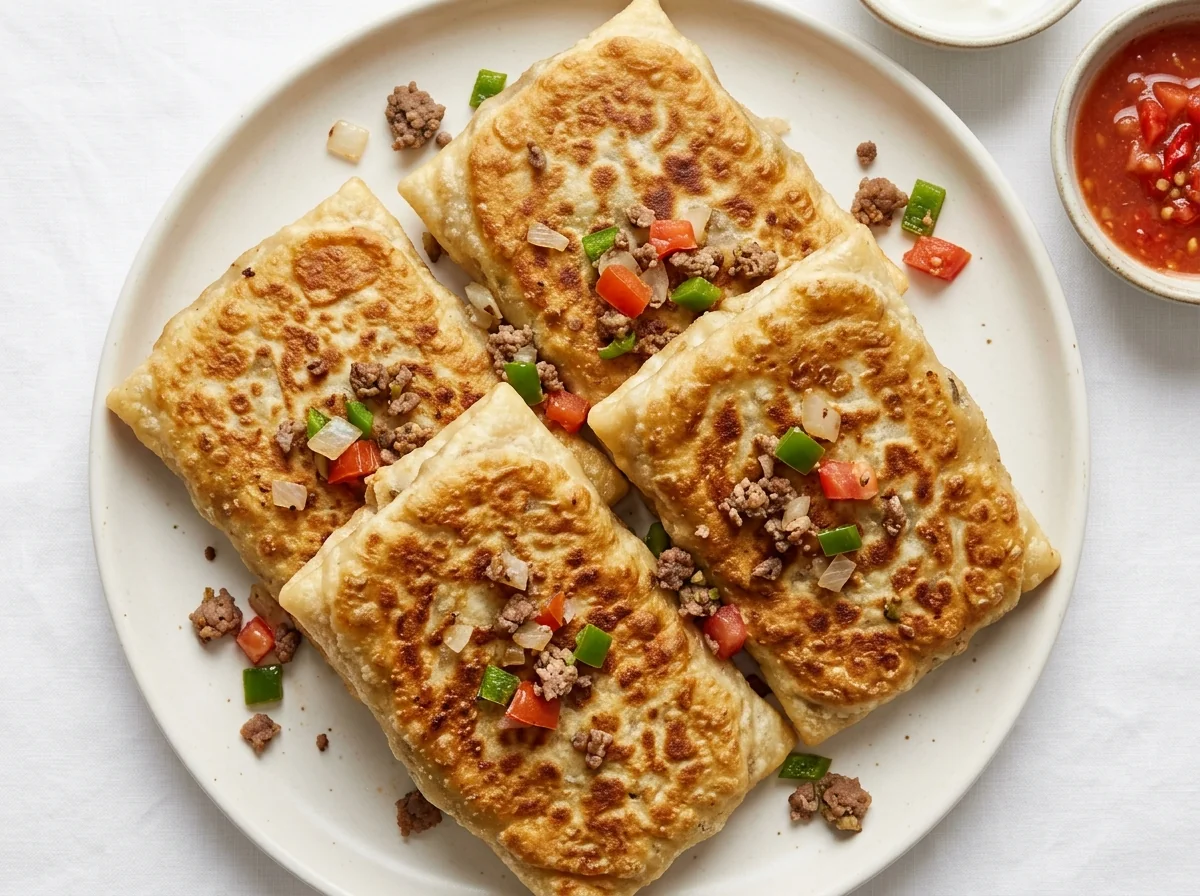
Yemeni matbuq — a popular street-food stuffed flatbread with seasoned ground meat, folded into a half-moon and fried until crisp and golden. A favorite suhoor across the Gulf.
Matbuq is one of the popular street foods in Yemen, cooked by street vendors and in homes during Ramadan. This version is delicious with ground meat and Yemeni spices.
In Ramadan it is cooked at suhoor as 'street suhoor' because of its fame and easy portability. The dish is loved across the Gulf, and travelers find it at every Gulf restaurant.
Preparation Steps
Knead the dough
Combine the flour, yeast, sugar, and salt, and gradually add the warm water. Knead for 10 minutes until cohesive. Cover and leave for an hour.
Prepare the filling
In a pan, heat a spoon of oil and sauté the onion for 5 minutes. Add the ground meat and cook for 7 more minutes. Add the tomato, pepper, garlic, cumin, turmeric, and salt. Leave for 10 minutes until cooked through.
Cut the dough
Divide the dough into 8 balls. Roll each ball out very thin (30 cm diameter).
Stuff and fry
Place a spoon of filling on one half of the dough and fold it into a half circle. Seal the edges by pressing with a fork. Fry in hot oil for 4 minutes per side until golden.
Serve
Drain the matbuq on absorbent paper and serve it hot with hot sauce, daqqus, or yogurt.
Blood Sugar Impact
The glycemic index (GI) measures how quickly a food raises blood sugar, while the glycemic load (GL) measures how much a full serving raises it. Together they give the complete picture.
Glycemic Index
GI
69Medium
Low0–55Medium56–69High70+
A low value (≤55) means a gradual rise in blood sugar — the most suitable range for diabetes and insulin resistance.
Glycemic Load
GL
41High
Low0–10Medium11–19High20+
Glycemic load reflects the impact of the full serving. To lower it: take half a serving, or pair the recipe with a source of protein and fiber.
Nutritional Information
Per ServingMakes 4 servings · one serving is about 380 g of raw ingredients
Calories913 kcal46%of Daily Value*
Protein29 g58%of Daily Value*
Carbohydrates64 g23%of Daily Value*
Fat59 g76%of Daily Value*
Fiber4 g14%of Daily Value*
Sodium401 mg17%of Daily Value*
* Percent Daily Values are based on a 2,000-calorie diet per FDA food-label reference values — your daily needs may be higher or lower. Values are derived from the recipe's ingredients via the USDA database.
Troubleshooting
The most common problems when preparing Yemeni Stuffed Matbuq, and how to fix them:
The dough is sticky
Add flour spoon by spoon until it comes together. Excess water makes it sticky.
The matbuq opens in the oil
Press the fork deeper and make sure the edges are well sealed.
The filling is watery
Drain it before stuffing. Tomatoes release a lot of liquid.
The flavor is flat
Double the cumin and add red pepper before serving.
Storage and Make-Ahead
In the refrigerator
Two days. Reheat in an oven at 180°C for 10 minutes.
In the freezer
One month before frying. Freeze the stuffed matbuq and fry when needed.
Tested Ingredient Substitutions
Original Ingredient
Tested Substitute
Ratio
Flavor Difference
Lamb
Ground chicken
1:1
Different but acceptable flavor.
Meat
Cheese + parsley
1:1
A plant-based version.
Eggs
Without eggs
1:1
Can be skipped.
How Much Does It Make? Scaling Guide
Ingredient
4 people
8 people
12 people
Flour
300 g
600 g
900 g
Minced meat
400 g
800 g
1200 g
Onion
100 g
200 g
300 g
Oil
200 ml
400 ml
600 ml
EEINA Nutrition Tip
Roll the dough very thin (30 cm diameter) so it crisps up when fried. The filling should be dry, not watery, so it does not soak the dough. Seal the edges by pressing with a fork to prevent the matbuq from opening in the oil.
Add This Recipe to Your Plan
The EEINA app saves your favorite recipes, calculates them from their real ingredients, and shows your daily numbers toward your goal. Try it free now.