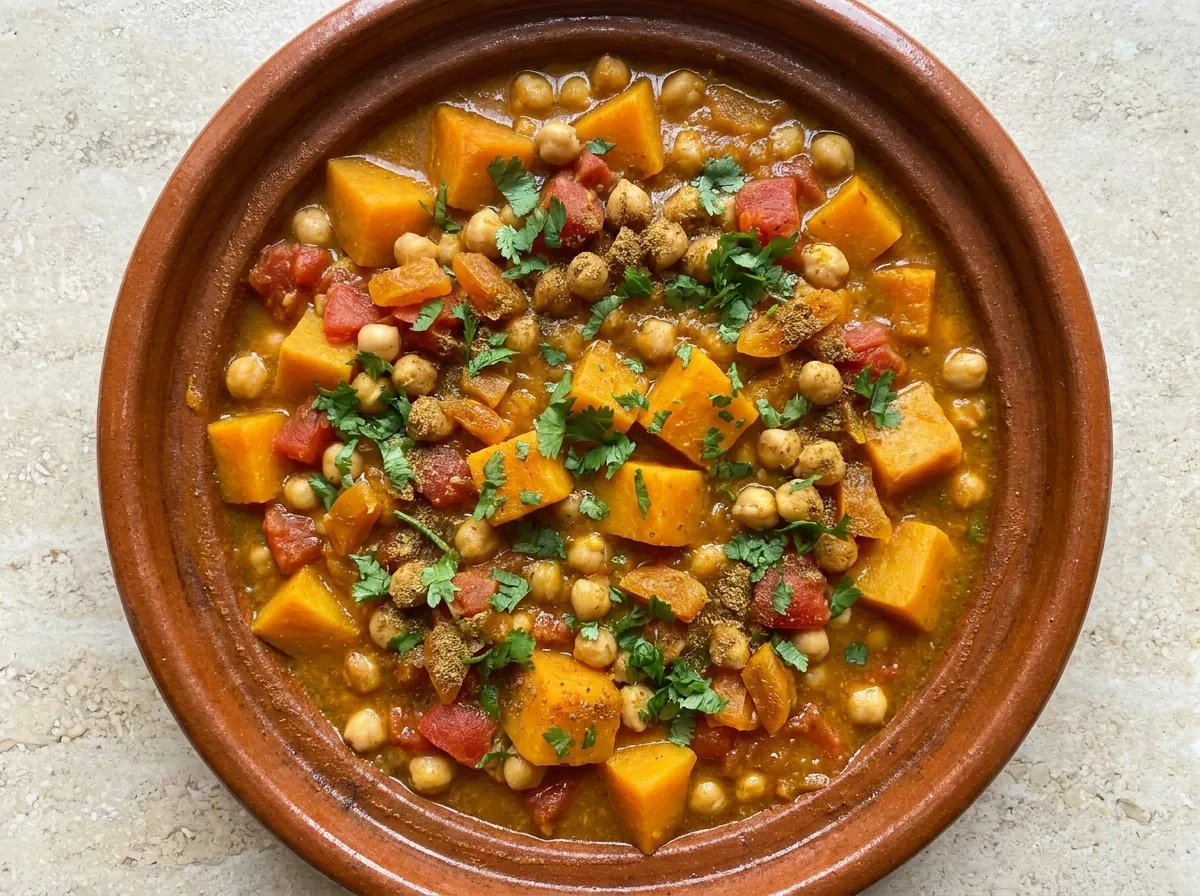
The tagine is a venerable Moroccan dish slow-cooked in a conical clay vessel of the same name.
The butternut and chickpea version combines seasonal vegetables, legumes, dried fruit, and spices such as ras el hanout (a Moroccan spice blend); it is a well-known way in Moroccan cuisine to make a complete vegetarian dish that pairs the light sweetness of the apricots with the warmth of the spices.
Preparation Steps
Sauté the onion, garlic, and ginger
In a wide pot heat the olive oil and stir the chopped onion for five minutes until it softens, then add the minced garlic and grated ginger and stir for one minute until fragrant.
Toast the spices
Add the ras el hanout, cumin, and cinnamon and stir them for one minute with the onion until the spices toast and their flavor opens up in the oil. Ras el hanout (a Moroccan spice blend) is the flavor base of the tagine.
Add the squash, tomatoes, and broth
Add the butternut squash cubes, the diced tomatoes, the drained chickpeas, and the chopped dried apricots, then pour in the vegetable broth, salt, and black pepper, and stir until everything is combined.
Simmer until the squash is tender
Raise the heat until the mixture boils, then lower it, cover the pot, and let it cook for twenty-five minutes until the squash softens and the broth thickens. Stir gently from time to time so the bottom does not stick.
Serving
Turn off the heat, add the lemon juice, and adjust the salt. Scatter the chopped fresh cilantro over the tagine and serve it hot with couscous or bread.
Blood Sugar Impact
The glycemic index (GI) measures how quickly a food raises blood sugar, while the glycemic load (GL) measures how much a full serving raises it. Together they give the complete picture.
Glycemic Index
GI
31Low
Low0–55Medium56–69High70+
A low value (≤55) means a gradual rise in blood sugar — the most suitable range for diabetes and insulin resistance.
Glycemic Load
GL
14Medium
Low0–10Medium11–19High20+
Glycemic load reflects the impact of the full serving. To lower it: take half a serving, or pair the recipe with a source of protein and fiber.
Nutritional Information
Per ServingMakes 4 servings · one serving is about 535 g of raw ingredients
Calories375 kcal19%of Daily Value*
Protein12 g24%of Daily Value*
Carbohydrates58 g21%of Daily Value*
Fat13 g17%of Daily Value*
Fiber12 g43%of Daily Value*
Sodium856 mg37%of Daily Value*
* Percent Daily Values are based on a 2,000-calorie diet per FDA food-label reference values — your daily needs may be higher or lower. Values are derived from the recipe's ingredients via the USDA database.
Troubleshooting
The most common problems when preparing Moroccan Butternut and Chickpea Tagine, and how to fix them:
The squash fell apart and turned to mush
It was cooked longer than needed or cut too small. Cut the squash into bite-sized cubes and test its doneness after twenty minutes with a fork.
The broth is thin and did not thicken
Cook the pot uncovered for the last five minutes over medium heat, or mash a few pieces of squash with the back of the spoon to thicken the broth naturally.
The taste is sweeter than it should be
The amount of apricots is too much for your taste. Reduce it to 50 g and add an extra splash of lemon juice to balance the sweetness.
The spices taste raw
They were not toasted enough. Be sure to stir them in the oil with the onion for a full minute before adding the liquids.
Storage and Make-Ahead
Immediately
Serve hot with couscous or bread, topped with the green cilantro.
In the fridge
Keeps three days in an airtight container, and its flavor improves the next day. Reheat on low heat with a splash of water.
Freezing
Freezes up to two months. Thaw in the fridge then reheat; the squash may soften a little after freezing.
Tested Ingredient Substitutions
Original Ingredient
Tested Substitute
Ratio
Flavor Difference
Butternut squash
Sweet potato
1:1
A close substitute in sweetness and texture
Dried apricots
Raisins or chopped dates
~
Gives the same sweetness with a different flavor
Ras el hanout
A blend of cumin, cinnamon, coriander, and turmeric
~
A homemade substitute when ready-made ras el hanout is not available
Chickpeas
Boiled white beans
1:1
Another legume with the same protein role
How Much Does It Make? Scaling Guide
Ingredient
4 servings
2 servings
8 servings
Butternut squash
600 g
300 g
1200 g
Chickpeas
400 g
200 g
800 g
Dried apricots
80 g
40 g
160 g
Vegetable broth
400 ml
200 ml
800 ml
EEINA Nutrition Tip
Legume proteins like chickpeas and grain proteins like couscous and bread complement each other, so serving the tagine with one of them raises the protein quality of the meal. And the fiber in the chickpeas and squash slows the rise in blood sugar after eating.
Add This Recipe to Your Plan
The EEINA app saves your favorite recipes, calculates them from their real ingredients, and shows your daily numbers toward your goal. Try it free now.
No. A wide pot with a thick base gives a good result. The clay tagine vessel prolongs the slow cooking and concentrates the flavor, but it is not a requirement.
Should I use canned or dried chickpeas?
Both work. Canned is faster and is drained and rinsed before use. Dried is soaked overnight and boiled until soft before adding it.
What is served with the tagine?
Couscous is the classic Moroccan accompaniment, and country bread or rice also work. Serving it with grains complements the chickpea protein.
Is the recipe fully vegetarian?
Yes, the dish is purely plant-based with no animal ingredient, relying on chickpeas as a protein source and olive oil as a fat source.