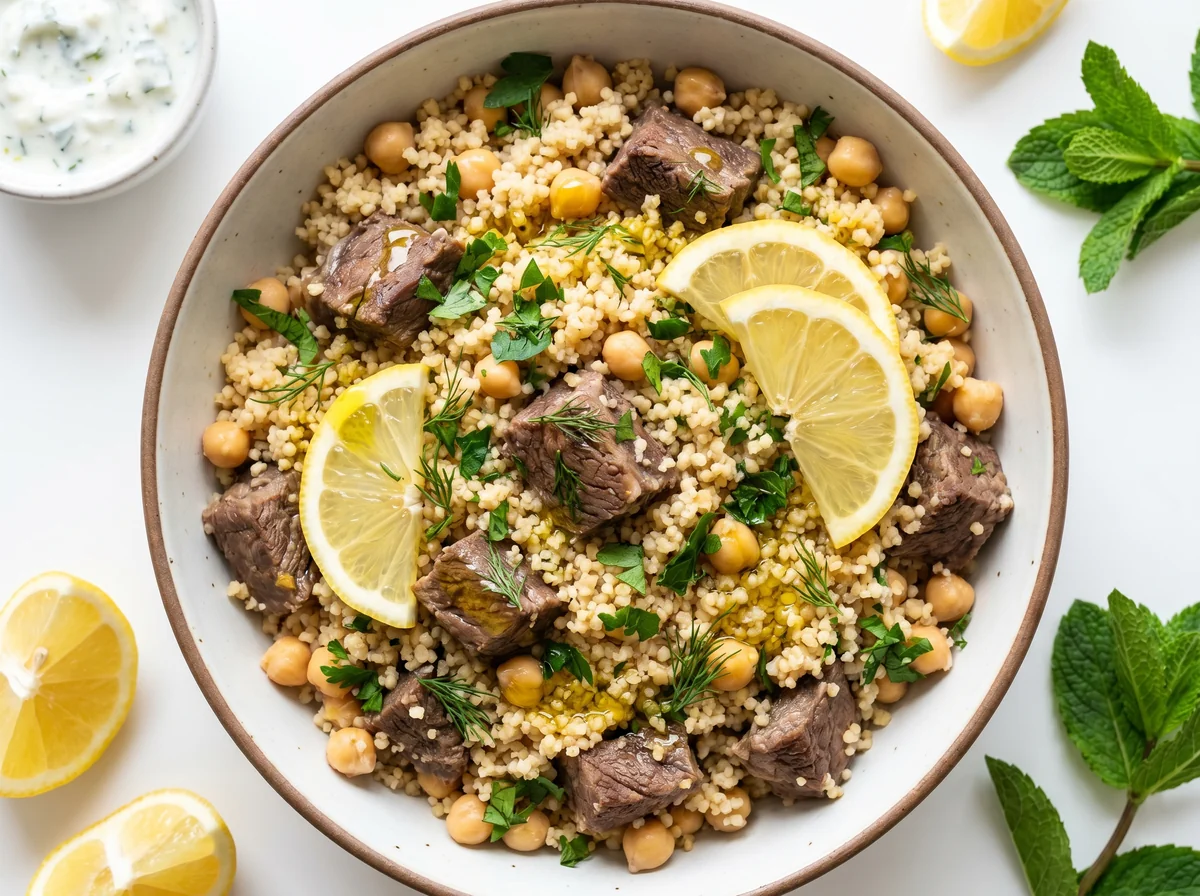
This meal prep box unites two worlds at the Arab table: Maghrebi couscous with its golden whole grain, and beef strips seasoned with cumin and coriander in a Middle Eastern style. The idea was born from a practical need on a busy week — instead of ordering takeout, cook one batch on a Friday evening and get four balanced meals to carry you through the start of the week.
Whole-wheat couscous was chosen over white for longer-lasting fullness, chickpeas to add plant protein and fiber, and the harissa sauce is kept in a side container to stay vibrant when reheated. A meal that respects your time and your body at once.
Preparation Steps
Season the beef
Rub the beef strips with half the cumin, coriander, and paprika plus a pinch of salt and black pepper. Leave for 10 minutes at room temperature to absorb the marinade — dry spices cling better to a dry surface and give you a good brown crust when searing.
Prep the vegetables for roasting
Preheat the oven to 220°C. Toss the zucchini, peppers, onion, and carrots with 20 ml olive oil and a pinch of salt in a wide baking tray in a single layer, so each piece is evenly coated and will brown rather than steam.
Roast the vegetables
Roast for 22 to 25 minutes with one turn halfway through, until the vegetables are tender and the edges are lightly caramelized — a sign that the natural sugars have concentrated and the flavor has deepened without burning.
Prepare the couscous
Pour the boiling water or hot broth over the dry couscous in a bowl. Cover tightly and leave for 5 minutes without stirring, then fluff with a fork until the grains separate. The trapped steam is what fully cooks each grain without stickiness.
Sear the beef
Heat 10 ml olive oil in a pan over high heat and sear the beef strips for 2 to 3 minutes per side until the internal temperature reaches 71°C for ground beef, or until just lightly pink for whole strips if preferred. High heat seals the juices inside.
Make the harissa sauce
In the same pan after removing the beef, add the minced garlic and stir for 30 seconds until fragrant but not burnt. Add the harissa, tomato paste, and the remaining cumin and coriander with 60 ml water. Simmer for 2 minutes until the sauce thickens and turns glossy. Remove from the heat and stir in the lemon juice.
Pack the boxes
Divide the couscous among four airtight containers, then arrange the drained chickpeas, roasted vegetables, and beef strips in separate sections. Pour the harissa sauce into a small side container inside each box so it does not soak the couscous before reheating.
Cool and seal
Leave the boxes open until the steam escapes and they reach room temperature within less than two hours, then seal and garnish with the parsley at serving time. Sealing a hot box traps moisture and speeds up spoilage.
Blood Sugar Impact
The glycemic index (GI) measures how quickly a food raises blood sugar, while the glycemic load (GL) measures how much a full serving raises it. Together they give the complete picture.
Glycemic Index
GI
45Low
Low0–55Medium56–69High70+
A low value (≤55) means a gradual rise in blood sugar — the most suitable range for diabetes and insulin resistance.
Glycemic Load
GL
27High
Low0–10Medium11–19High20+
Glycemic load reflects the impact of the full serving. To lower it: take half a serving, or pair the recipe with a source of protein and fiber.
Nutritional Information
Per ServingMakes 4 servings · one serving is about 530 g of raw ingredients
Calories687 kcal34%of Daily Value*
Protein37 g74%of Daily Value*
Carbohydrates71 g26%of Daily Value*
Fat28 g36%of Daily Value*
Fiber12 g43%of Daily Value*
Sodium611 mg27%of Daily Value*
* Percent Daily Values are based on a 2,000-calorie diet per FDA food-label reference values — your daily needs may be higher or lower. Values are derived from the recipe's ingredients via the USDA database.
Troubleshooting
The most common problems when preparing Beef Meal Prep with Whole-Wheat Couscous and Chickpeas, and how to fix them:
Couscous clumped and sticky after cooling
Too much water or fluffed while still too hot. Stick to the ratio of 200 g couscous per 240 ml liquid. Let it rest the full 5 minutes before fluffing with a fork, and drizzle a few drops of olive oil while fluffing to separate the grains.
Beef is tough and rubbery
Usually overcooked or cooked over low heat, which poached it rather than searing. Use high heat and a short time, and slice the strips thinly against the grain to shorten the fibers and make chewing easier.
Vegetables are soggy and pale with no browning
The baking tray was crowded so they steamed rather than roasted. Spread the vegetables in a single layer in a wide tray — use two trays if needed — and confirm the oven has reached 220°C before putting them in.
Harissa sauce is too spicy
Harissa heat varies by brand. Start with half the amount and taste. Soften the heat with a small teaspoon of honey or an extra squeeze of lemon, or stir in a spoonful of yogurt at serving for anyone who dislikes the heat.
Meal is dry when reheated
Drizzle a tablespoon of water or broth over the couscous and beef before reheating and cover the container — the steam brings the moisture back without drying out the protein.
Storage and Make-Ahead
Refrigerator
Keeps in airtight containers for up to four days at 4°C or colder. Keep the harissa sauce in a separate container for best longevity.
Freezer
The beef, couscous, and chickpeas freeze for up to two months at -18°C. Roasted vegetables lose their texture after freezing, so freeze only the other components if possible.
Reheating
Microwave for 2 to 3 minutes with a stir halfway through until the internal temperature exceeds 74°C, or over low heat in a pan with a splash of water.
Safety rule
Do not leave cooked food unrefrigerated for more than two hours (or one hour in summer heat above 32°C), and do not reheat more than once.
Tested Ingredient Substitutions
Original Ingredient
Tested Substitute
Ratio
Flavor Difference
Lean beef
Turkey breast or skinless chicken
Same weight 480 g
A lower saturated fat alternative. Cook poultry to 74°C internal temperature.
Whole-wheat couscous
Coarse bulgur or freekeh
Same dry weight with liquid adjusted per package instructions
Whole-grain alternatives with a moderate glycemic index and a chewier texture.
Cooked chickpeas
White beans or cooked brown lentils
Same weight 320 g
Still a source of plant protein and fiber with a slightly different flavor.
Harissa paste
Red bell pepper paste with a pinch of chili
20 g with heat adjusted to taste
A milder alternative for those who cannot handle the full heat of traditional harissa.
Whole-wheat couscous (for gluten-free)
Cooked quinoa or millet
200 g dry with liquid adjusted
A gluten-free option that makes the recipe suitable for wheat sensitivity.
How Much Does It Make? Scaling Guide
Ingredient
4 containers
6 containers
8 containers
Lean beef
480 g
720 g
960 g
Dry whole-wheat couscous
200 g
300 g
400 g
Cooking liquid
240 ml
360 ml
480 ml
Cooked chickpeas, drained
320 g
480 g
640 g
Vegetables for roasting (total)
750 g
1125 g
1500 g
Harissa paste
20 g
30 g
40 g
EEINA Nutrition Tip
Always keep the sauce separate from the couscous in meal prep — starches absorb moisture quickly and turn soggy and watery after two days. A small separate container for the sauce added at reheating time preserves both the grain texture and the harissa flavor.
Add This Recipe to Your Plan
The EEINA app saves your favorite recipes, calculates them from their real ingredients, and shows your daily numbers toward your goal. Try it free now.
How many days does this meal keep in the refrigerator?
Up to four days in airtight containers at 4°C or colder, provided it is cooled within two hours of cooking and the sauce is kept separate.
Can it be made fully vegetarian?
Yes — omit the beef and double the chickpeas to about 500 g, or add marinated and roasted tofu pieces. The protein and fiber remain at a good level.
Is whole-wheat couscous better than white here?
For meal prep, yes — the whole grain is richer in fiber for longer fullness and a calmer blood sugar response, and it holds up to refrigeration and reheating without breaking down quickly.
What if my family finds the harissa too spicy?
Start with half the amount and serve the sauce on the side so each person can control how much they use, or soften it with honey or yogurt. The sauce is already separate in this recipe for exactly that reason.
Does it contain gluten?
Yes — couscous is made from wheat and contains gluten. For a gluten-free option swap it with the quinoa or millet listed in the substitutions, and check the harissa label for possible additives.