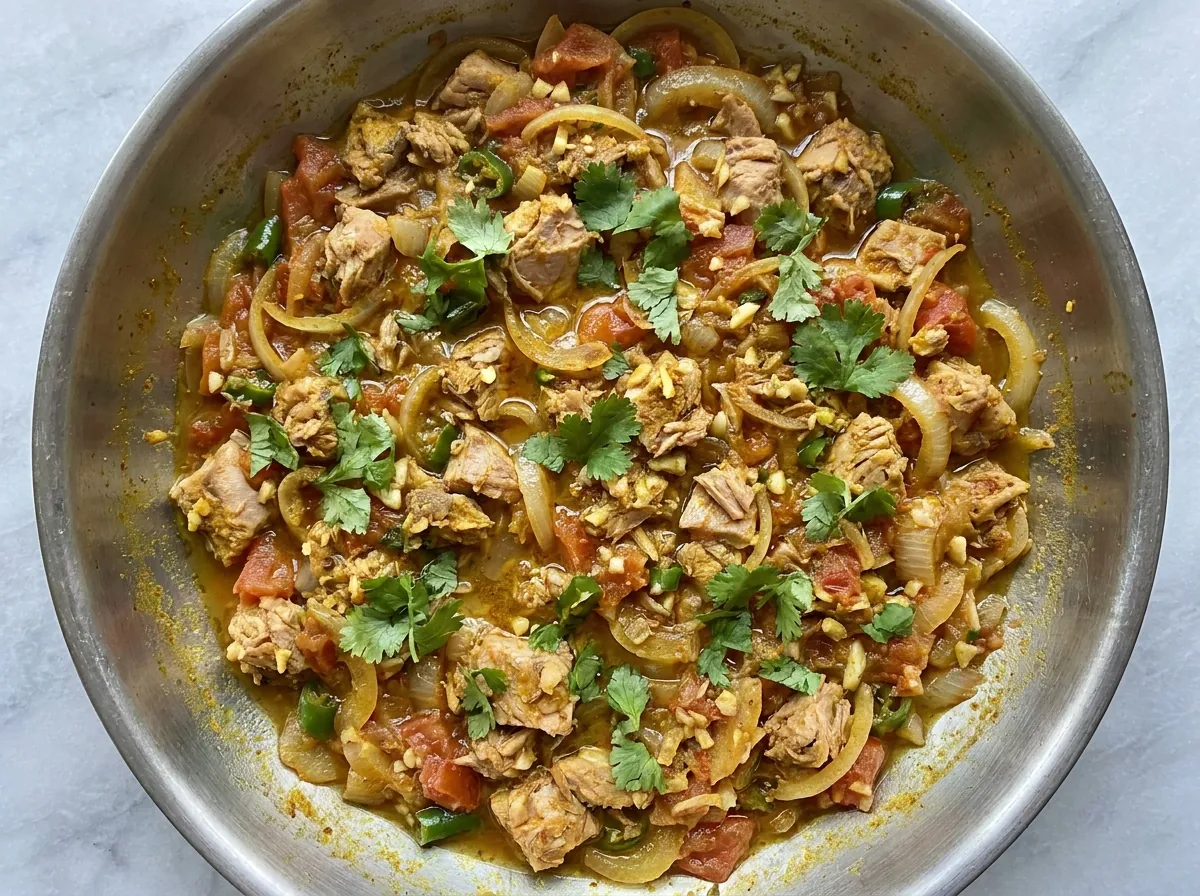
Tuna hamsa is the first emergency dinner in the homes of the Gulf and the Arabian Peninsula.
The ever-present shelf can meets onion, tomato, and spices to emerge as a hot dish scooped up with bread. The recipe that has rescued end-of-month nights in countless homes.
Preparation Steps
Soften the onion until it sweetens
In a wide skillet, heat the oil and stir the onion slices for four minutes until they soften, turn translucent, and their edges sweeten. The hamsa's onion is generous, almost rivaling its tuna: it is what turns a shelf can into a dish with a story.
Perfume with garlic and spices
Add the garlic, hot chili, cumin, coriander, and turmeric and stir for half a minute, during which an aroma rises that tells the whole house dinner is near.
Cook the tomato until it breaks down
Add the chopped tomato and salt and cook for four minutes until it melts and sets into a light sauce.
Fold in the tuna with respect
Add the drained tuna in large chunks and fold it gently for two minutes, in which it warms and absorbs. Do not rub it into crumbs: large tuna chunks are the hamsa's dignity.
Finish with lemon and cilantro
A genuine squeeze of lemon and fresh cilantro, then lift it off the heat. Eaten with bread straight from its skillet in the tradition of quick dinners: two cans of tuna turned into a family dinner in a quarter of an hour.
Blood Sugar Impact
The glycemic index (GI) measures how quickly a food raises blood sugar, while the glycemic load (GL) measures how much a full serving raises it. Together they give the complete picture.
Glycemic Index
GI
43Low
Low0–55Medium56–69High70+
A low value (≤55) means a gradual rise in blood sugar — the most suitable range for diabetes and insulin resistance.
Glycemic Load
GL
12Medium
Low0–10Medium11–19High20+
Glycemic load reflects the impact of the full serving. To lower it: take half a serving, or pair the recipe with a source of protein and fiber.
Nutritional Information
Per ServingMakes 2 servings · one serving is about 390 g of raw ingredients
Calories420 kcal21%of Daily Value*
Protein39 g78%of Daily Value*
Carbohydrates32 g12%of Daily Value*
Fat15 g19%of Daily Value*
Fiber4 g14%of Daily Value*
Sodium987 mg43%of Daily Value*
* Percent Daily Values are based on a 2,000-calorie diet per FDA food-label reference values — your daily needs may be higher or lower. Values are derived from the recipe's ingredients via the USDA database.
Troubleshooting
The most common problems when preparing Tuna Hamsa with Onion and Tomato, and how to fix them:
It came out dry and crumbly
Tuna rubbed too long over the heat. Two minutes of warming with gentle folding. It is already cooked and asks for warmth, not cooking.
The tuna smell took over
A can drained timidly. Full draining, a final squeeze of lemon, and cumin. The taming trio.
The sauce is watery
Tomato that did not get its minutes. Four minutes to break down before the tuna so it sets.
Too spicy for the children
The hot chili is bold. Leave it out and serve a chili sauce on the side for those who want it. The home hamsa serves both camps.
Storage and Make-Ahead
Immediately
Hot with its bread, from the skillet.
In the refrigerator
Two days in a container, eaten cold as a spiced tuna salad or gently reheated.
Not suitable for freezing
Cooked tuna dries out when thawed.
Tested Ingredient Substitutions
Original Ingredient
Tested Substitute
Ratio
Flavor Difference
Oil-packed tuna
Water-packed tuna
1:1
Lighter, and the olive oil in the skillet makes up for it
Bread for dipping
Fluffy white rice
~
Turns into a quick rice-and-stew meal
A common addition
Two eggs whisked in at the end
~
Tuna hamsa with egg. The famous satiety upgrade
Hot chili
Bell pepper
~
The texture of the chili without its sting
How Much Does It Make? Scaling Guide
Ingredient
2 servings
1 serving
4 servings
Tuna
280 g
140 g
560 g
Onion
150 g
80 g
300 g
Tomatoes
200 g
100 g
400 g
EEINA Nutrition Tip
The onion is generous and the tuna is folded in last and gently. These are the hamsa's two contracts: the sweet, melted onion is the dish's real body, and the tuna added last in large chunks stays tuna to be eaten, not crumbs lost in the sauce.
Add This Recipe to Your Plan
The EEINA app saves your favorite recipes, calculates them from their real ingredients, and shows your daily numbers toward your goal. Try it free now.
That one is cold, with mayonnaise or lemon, to be stuffed and spread; the hamsa is hot, with softened onion and spices, scooped up with bread. One can, two moods, two chapters.
Is it a complete meal?
Sea protein, cooked vegetables, and bread. The triangle is complete, and a side green salad rounds it out handsomely.
Canned tuna, how often per week?
Light canned tuna is among the lowest-mercury fish. Two to three servings per week is where guidelines reassure for the generally healthy.
How do I elevate it for a surprise guest?
Two eggs whisked in, generous cilantro, and toasted bread. It turns from an emergency dinner into a dish whose recipe is asked for.