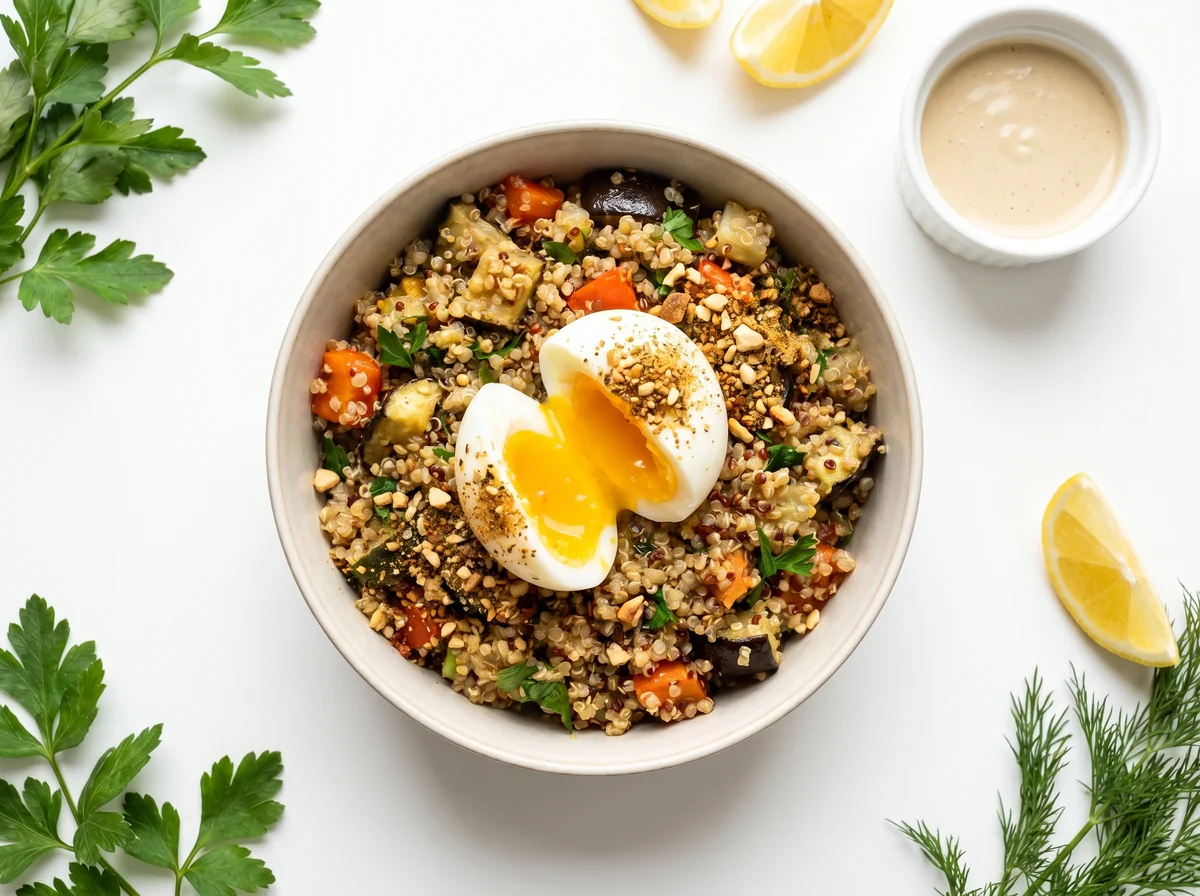
Quinoa is an ancient South American seed that entered our kitchens recently, but it found a natural home in a Gulf breakfast that loves savory flavours. Here we paired it with dukkah — that Levantine and Egyptian blend of sesame, coriander, and cumin that bread is dipped into at breakfast — so the neutral quinoa base became a platform for a familiar flavour.
The vegetables are roasted in the oven rather than fried, gaining the sweetness of golden edges without generous oil, and the soft-boiled egg keeps its yolk runny to become a natural sauce that ties the bowl together. It is a calm breakfast prepared in under an hour, filling with a whole-grain base and protein, leaving heavy pastries aside without the feeling of deprivation.
Preparation Steps
Rinse the quinoa
Wash the quinoa in a fine sieve under cold running water for a full minute until the water runs clear, as the grain's surface carries a bitter saponin layer that disappears with rinsing so the flavour is clean and not bitter.
Cook the quinoa
Combine the rinsed quinoa, water, and a pinch of salt in a saucepan over medium heat and bring to the boil. Cover and reduce to the lowest heat and leave for 15 minutes until the water is fully absorbed and a small white ring appears around each grain — that is the sign of complete cooking.
Rest the quinoa
Remove the pan from the heat and leave the quinoa covered without stirring for five minutes, then fluff with a fork. Resting allows the steam to finish the cooking and prevents clumping so the grains separate and are light.
Roast the vegetables
Toss the courgette, pepper, onion, and tomatoes with the roasting olive oil, ground cumin, and a pinch of salt. Spread in a single layer on a baking tray and roast in an oven preheated to 220°C for 18 to 20 minutes until the edges are golden. High heat concentrates the natural sugars and gives a deep roasted flavour.
Soft-boil the eggs
Lower the cold eggs gently into boiling water and set a timer for exactly seven minutes for a fully set white and a soft, glossy yolk. This timing gives a safely cooked texture while the yolk remains runny.
Cool and peel the eggs
Transfer the eggs immediately to iced water for two minutes, then peel and halve them. The cold shock stops cooking at the right point and separates the shell from the white so it peels cleanly.
Assemble the bowl
Divide the quinoa between two bowls, arrange the roasted vegetables over the top, then place the egg halves on each bowl. Layering in this order keeps the soft egg visible and preserves the crispness of the vegetables above the warm base.
Season and serve
Drizzle with the serving olive oil and lemon juice, then scatter the dukkah (sesame, coriander, cumin blend), parsley, and black pepper over the top. Serve the bowl warm immediately. Dukkah is added last to keep its granules crisp and prevent them absorbing moisture.
Blood Sugar Impact
The glycemic index (GI) measures how quickly a food raises blood sugar, while the glycemic load (GL) measures how much a full serving raises it. Together they give the complete picture.
Glycemic Index
GI
45Low
Low0–55Medium56–69High70+
A low value (≤55) means a gradual rise in blood sugar — the most suitable range for diabetes and insulin resistance.
Glycemic Load
GL
24High
Low0–10Medium11–19High20+
Glycemic load reflects the impact of the full serving. To lower it: take half a serving, or pair the recipe with a source of protein and fiber.
Nutritional Information
Per ServingMakes 2 servings · one serving is about 585 g of raw ingredients
Calories561 kcal28%of Daily Value*
Protein21 g42%of Daily Value*
Carbohydrates64 g23%of Daily Value*
Fat25 g32%of Daily Value*
Fiber10 g36%of Daily Value*
Sodium285 mg12%of Daily Value*
Potassium1024 mg22%of Daily Value*
Phosphorus563 mg45%of Daily Value*
* Percent Daily Values are based on a 2,000-calorie diet per FDA food-label reference values — your daily needs may be higher or lower. Values are derived from the recipe's ingredients via the USDA database.
Troubleshooting
The most common problems when preparing Savory Quinoa Bowl with Soft-Boiled Egg, Roasted Vegetables, and Dukkah, and how to fix them:
The quinoa tastes bitter
It was not rinsed thoroughly before cooking. Wash for a full minute in a fine sieve until the rinsing water runs completely clear. The bitterness comes from the saponin layer on the surface and disappears with rinsing.
The quinoa is sticky and clumped
Too much water was used or it was stirred during cooking. Keep to a ratio of one part quinoa to approximately two and a half parts water, do not stir while boiling, rest covered for five minutes, then fluff with a fork.
The egg yolk is solid, not runny
The cooking time was too long. Keep to exactly seven minutes from the moment the egg enters the boiling water and transfer immediately to iced water to stop cooking at the soft yolk stage.
The vegetables are soft and watery rather than roasted
The tray was too crowded and the moisture steamed slowly. Spread the vegetables in a single layer with space between pieces at 220°C so they caramelise rather than steam in their own moisture.
The dukkah got soggy and lost its crunch
It was added too early with the wet ingredients. Scatter it in the last step just before serving directly over the bowl and serve immediately before it absorbs moisture from the vegetables.
The bowl cools down quickly
The components were cooled before assembly. Warm the bowls with hot water and dry them, assemble the components while they are warm, and serve immediately as quinoa loses heat faster than rice.
Storage and Make-Ahead
Cooked quinoa alone
In an airtight container in the refrigerator for up to four days. Reheat with a sprinkle of water to restore moisture.
Roasted vegetables
In an airtight container in the refrigerator for up to three days. Reheat in the oven rather than the microwave to restore some crispness.
Boiled egg in shell
In the refrigerator for up to five days. Best to soft-boil fresh in the morning as the runny yolk does not reheat well.
Assembled bowl
Not recommended for storage once assembled with the egg and dukkah. Keep the components separate and assemble at serving time.
Tested Ingredient Substitutions
Original Ingredient
Tested Substitute
Ratio
Flavor Difference
Quinoa
Coarse bulgur wheat or cracked freekeh
same dry weight approximately
Bulgur and freekeh are familiar whole grains in our cooking and give a similar warm base, with different cooking times — follow the packet instructions. Note that both contain gluten, unlike quinoa.
Soft-boiled egg
Roasted chickpeas or low-salt cottage cheese
about 60 g per egg
A plant-based option or for those avoiding eggs, while maintaining protein. Roasted chickpeas add crunch; cottage cheese adds a creamy softness.
Dukkah
Za'atar spice mix with sesame or a blend of toasted sesame and cumin
same quantity 16 g
If ready-made dukkah is unavailable, za'atar spice mix is a close, familiar flavour. Note that both contain sesame, which is an allergen.
Courgette and bell pepper
Aubergine and mushrooms or diced sweet potato
same total vegetable weight
Any firm vegetable that can withstand roasting works well. Sweet potato raises the carbohydrate content slightly so adjust the quantity if monitoring starch.
Olive oil
Neutral vegetable oil with a high smoke point
same quantity
Olive oil is preferred for flavour and heart benefit, but any neutral oil suits roasting. Keep olive oil for the finishing drizzle if you wish to reduce the amount used.
How Much Does It Make? Scaling Guide
Ingredient
2 servings
4 servings
6 servings
Dry quinoa
150 g
300 g
450 g
Cooking water
360 ml
720 ml
1080 ml
Eggs
2
4
6
Vegetables for roasting, total
490 g
980 g
1470 g
Olive oil, total
25 ml
50 ml
75 ml
Dukkah
16 g
32 g
48 g
EEINA Nutrition Tip
Cook the quinoa the evening before and refrigerate it. In the morning you only need to roast the vegetables and boil the egg, making breakfast ready in ten minutes. Cooling cooked quinoa also increases its resistant starch content, which supports the feeling of satiety — just control the salt and olive oil according to your needs.
Add This Recipe to Your Plan
The EEINA app saves your favorite recipes, calculates them from their real ingredients, and shows your daily numbers toward your goal. Try it free now.
Yes — quinoa is a seed, not a wheat grain, and is naturally gluten-free, making it suitable for those who avoid gluten. Just be aware of possible cross-contamination during packaging, and choose a pack labelled gluten-free if you are sensitive.
Why is the quinoa savory here and not sweet?
We wanted a savory breakfast that matches the Gulf breakfast mood, so we paired it with dukkah, roasted vegetables, egg, and olive oil. This distinguishes it from sweet quinoa bowls made with chia and fruit, and makes it an alternative to a heavy savory breakfast.
Can I prepare it in advance for work?
Yes, partially. Cook the quinoa and roast the vegetables in advance and store them separately in the refrigerator. In the morning, soft-boil a fresh egg, assemble the bowl, and scatter the dukkah at the last moment to keep it crisp.
What can I use if I cannot find ready-made dukkah?
Use za'atar spice mix with sesame, or mix toasted sesame seeds with ground cumin and ground coriander and a pinch of salt. The flavour is close, and all the ingredients are available in local grocery stores.
Is the recipe suitable for people with diabetes?
We have not added a diabetes label because confirming the glycaemic load requires precise blood sugar calculations not performed here. The recipe uses whole grains, vegetables, and protein — a generally balanced choice — but consult your dietitian before including it in a treatment plan.