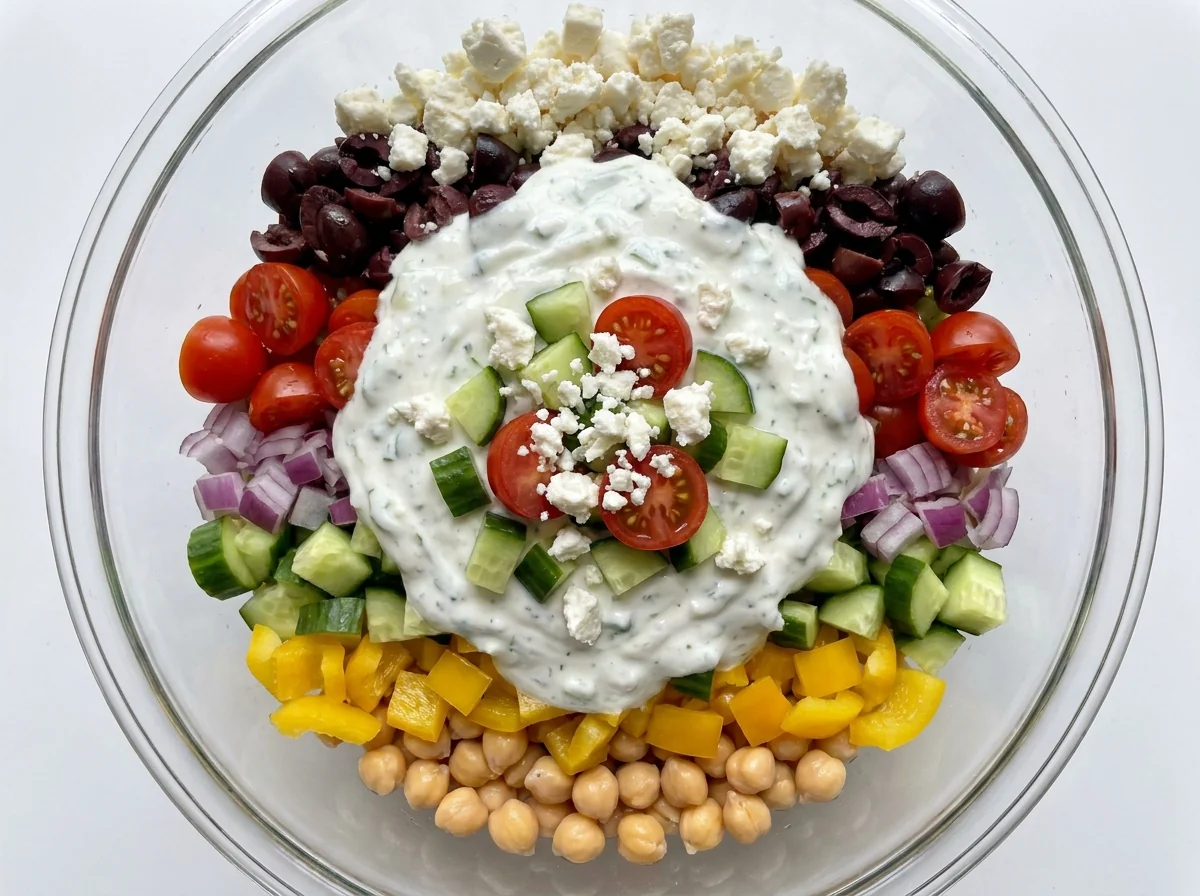
This salad relies on the idea of layers arranged in a clear bowl, so it looks neat and striking on the table, and the vegetables stay crunchy because the dressing is added at the moment of serving.
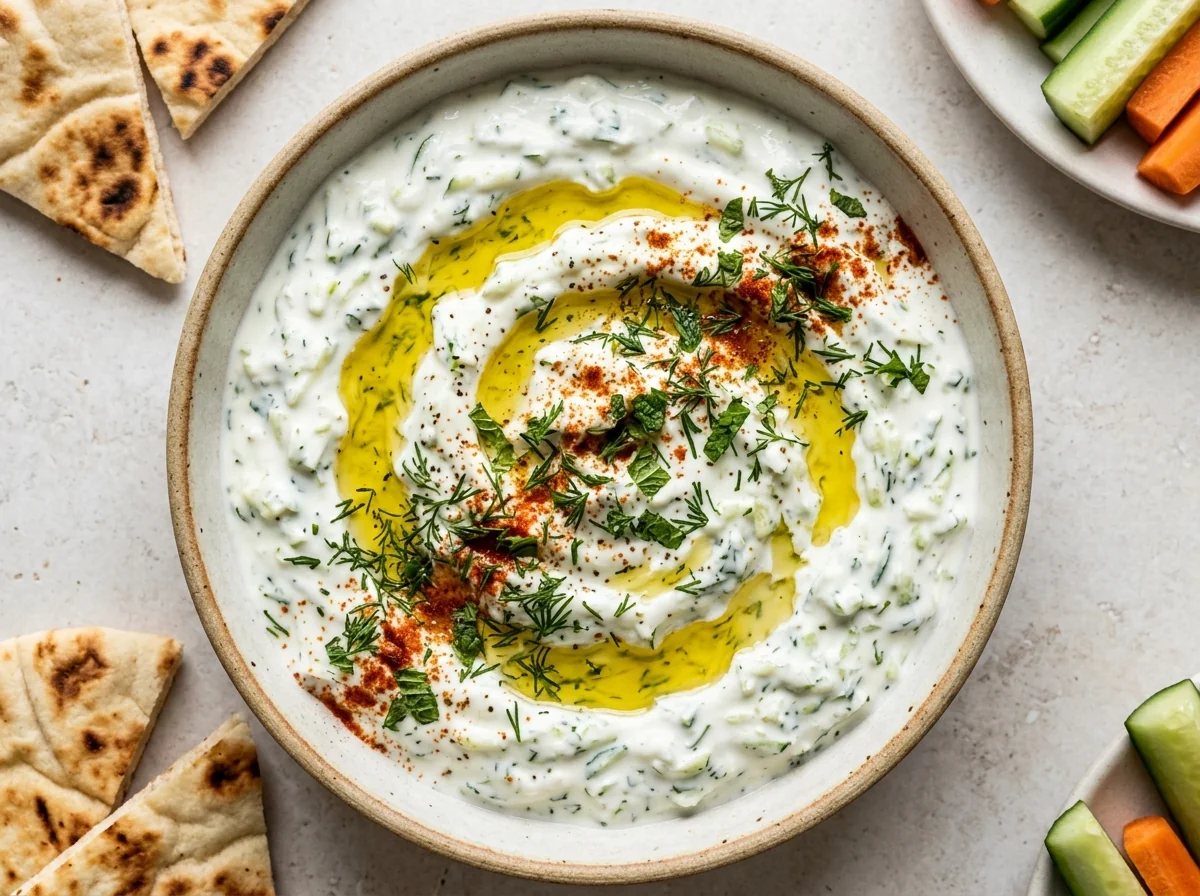
The yogurt and cucumber dressing gives it a refreshing Mediterranean character that balances the crunch of the vegetables.
Preparation Steps
The dressing
Whisk the yogurt, mayonnaise, olive oil, dill, lemon, garlic, salt, and pepper in a bowl until you get a smooth, creamy texture.
Chilling
Place the dressing in the refrigerator while you prepare the rest of the ingredients so it firms up and the flavors blend.
The first layer
Spread the chickpeas in the bottom of a clear glass bowl to be the steady base and to show the gradient.
Vegetable layers
Arrange the pepper on top, then the cucumber, then the onion, then the tomatoes in neat layers so each ingredient stays crunchy and distinct.
Sealing
Cover the bowl and keep it in the refrigerator until serving to keep the layers separate and fresh.
Serving
Pour the dressing over the layers at the moment of serving, sprinkle with the feta and olives, then toss at the table right away so the vegetables do not wilt.
Blood Sugar Impact
The glycemic index (GI) measures how quickly a food raises blood sugar, while the glycemic load (GL) measures how much a full serving raises it. Together they give the complete picture.
Glycemic Index
GI
23Low
Low0–55Medium56–69High70+
A low value (≤55) means a gradual rise in blood sugar — the most suitable range for diabetes and insulin resistance.
Glycemic Load
GL
4Low
Low0–10Medium11–19High20+
Glycemic load reflects the impact of the full serving. To lower it: take half a serving, or pair the recipe with a source of protein and fiber.
Nutritional Information
Per ServingMakes 6 servings · one serving is about 210 g of raw ingredients
Calories292 kcal15%of Daily Value*
Protein10 g20%of Daily Value*
Carbohydrates24 g9%of Daily Value*
Fat18 g23%of Daily Value*
Fiber7 g25%of Daily Value*
Sodium671 mg29%of Daily Value*
* Percent Daily Values are based on a 2,000-calorie diet per FDA food-label reference values — your daily needs may be higher or lower. Values are derived from the recipe's ingredients via the USDA database.
Troubleshooting
The most common problems when preparing Layered Mediterranean Salad with Yogurt and Cucumber Dressing, and how to fix them:
The layers mix together
The dressing was added too early; keep it aside and pour it only at the table so the layers stay clear.
The dressing is runny
The yogurt is thin; use strained Greek yogurt or strain the regular kind with a cloth for an hour before whisking.
The onion tastes sharp
Soak the onion slices in cold water for ten minutes, then drain them so the sharpness calms down without losing the crunch.
Storage and Make-Ahead
Refrigerator
The layers keep without dressing for up to two days in an airtight container, and the dressing separately for up to three days.
After tossing
After adding the dressing and tossing, eat within a day because the vegetables start to release their water.
Tested Ingredient Substitutions
Original Ingredient
Tested Substitute
Ratio
Flavor Difference
mayonnaise
extra Greek yogurt
same amount, 30 g
A lighter, egg-free option for those who avoid it.
Persian cucumber
local cucumber, cored
same amount, 120 g
Remove the watery core so the layers do not get wet.
feta cheese
low-salt Nabulsi cheese
same amount, 100 g
A locally available alternative; soak it briefly to reduce its saltiness.
dill
parsley or mint
same amount, 15 g
If dill is not available, replace it with another fresh herb for flavor.
How Much Does It Make? Scaling Guide
Ingredient
2 servings
4 servings (base)
8 servings
cooked chickpeas
160 g
320 g
640 g
Greek yogurt
27 g
53 g
107 g
feta cheese
33 g
67 g
133 g
Cherry tomatoes
50 g
100 g
200 g
olive oil
15 ml
30 ml
60 ml
EEINA Nutrition Tip
Choose a tall glass bowl to highlight the color gradient, and drain the chickpeas well before layering so they do not wet the bottom layer.
Add This Recipe to Your Plan
The EEINA app saves your favorite recipes, calculates them from their real ingredients, and shows your daily numbers toward your goal. Try it free now.