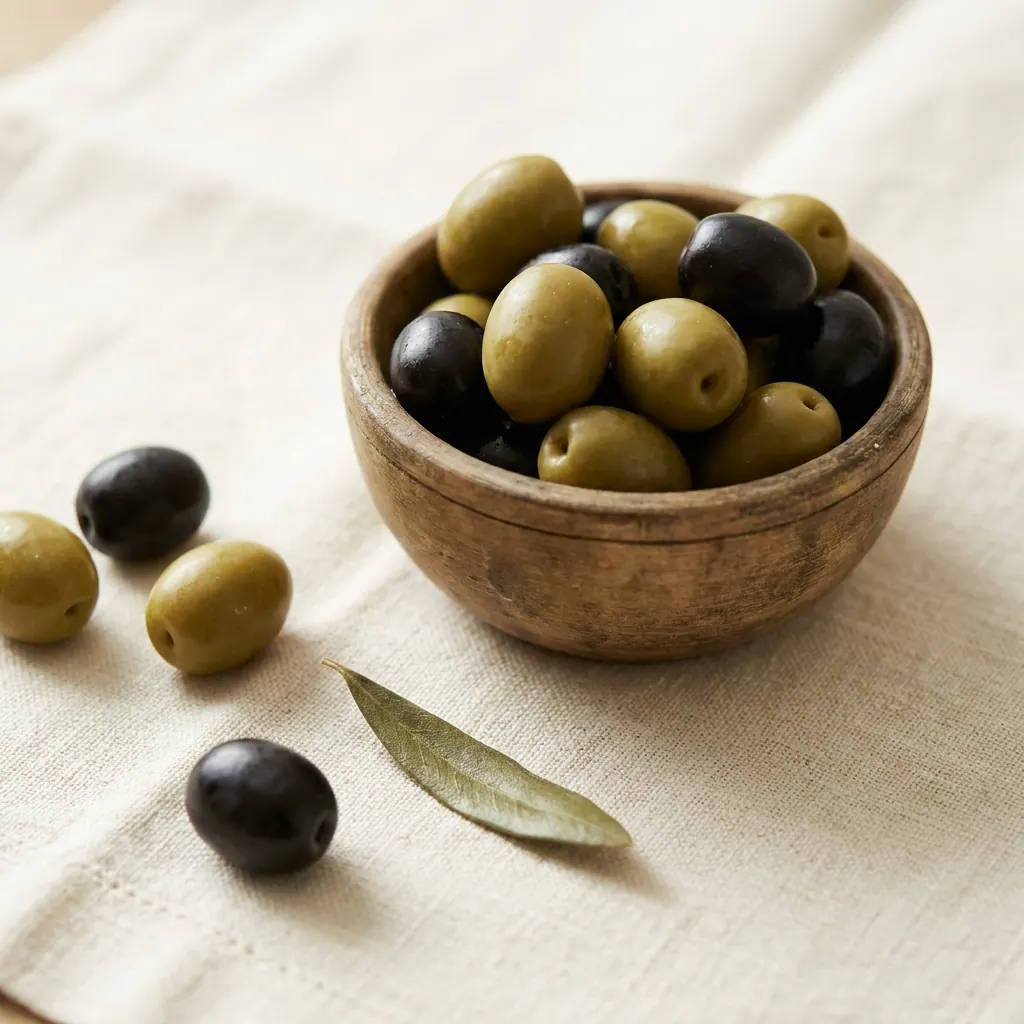
Ingredient Profile
- Scientific name
- Olea europaea
- Main fat type
- Monounsaturated (Oleic Acid)
- Saudi production
- Al-Jouf, Tabuk, Northern Borders
- Curing methods
- Brine, Salt, Water, or Lye
- Culinary use
- Mezze, salads, toppings, olive oil
- Key benefit
- Reduces systemic inflammation
- Daily portion
- 5–10 large olives
What Is an Olive?
Olives are small drupes (stone fruits) that grow on olive trees. Fresh olives are intensely bitter due to a compound called oleuropein and cannot be eaten straight from the tree. They must be "cured"—a process of fermentation or soaking that removes the bitterness and develops the fruit's complex, savory flavor.
In Saudi Arabia, olive cultivation has exploded in the northern regions. The Al-Jouf oasis is now home to the world’s largest organic olive farm, producing both table olives and extra virgin oil that compete on the global stage. Whether green (unripe) or black (fully ripe), olives are a nutrient-dense addition to any Saudi table.
Olive Science — Health Benefits
Olives are rich in monounsaturated fats (Oleic Acid), which help lower "bad" LDL cholesterol and raise "good" HDL. Regular consumption is linked to a 30% reduction in heart attack and stroke risk.
Table olives contain high levels of hydroxytyrosol and tyrosol. These compounds protect your blood lipids from oxidative stress and have been shown to reduce DNA damage in cells.
Polyphenols in olives may help prevent bone loss by reducing inflammation and oxidative stress that leads to bone resorption. Mediterranean populations show lower rates of osteoporosis.
Olives have a glycemic index of effectively zero. They slow the absorption of carbohydrates in the meal, helping to stabilize blood sugar levels after eating, making them an ideal snack for diabetics.
Because olives are cured in brine, they can be high in sodium. If you are managing high blood pressure, rinse your olives under cold water before eating to remove excess salt, and limit your portion to 5–7 olives per day.