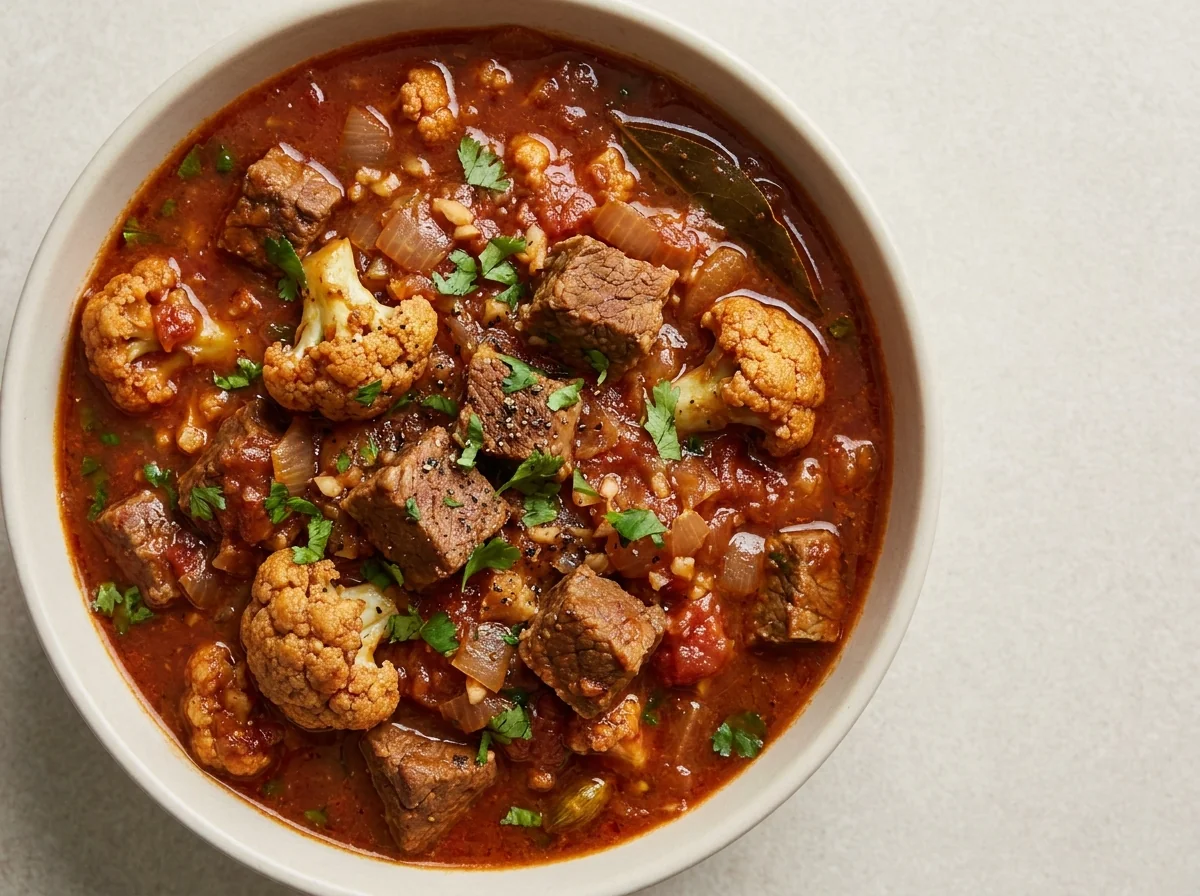
A homemade Iraqi stew in which we fry cauliflower florets, then bring them together with meat, tomato broth, and lemon, crowned with a dash of garlic and cilantro
We cook marag zahra the way Iraqi homes prepare it in cauliflower season: fried florets that soak up the broth of meat, tomato, and lemon, crowned with a dash of fried garlic and cilantro whose aroma fills the kitchen.
It is a warm everyday stew we serve with white rice, simple in its ingredients and rich in its flavor.
Preparation Steps
Boiling the meat
Boil the meat cubes in the water with the cardamom pods and bay leaf, skimming off the foam as it forms, and leave it over low heat until nearly cooked, keeping the cooking liquid.
Preparing the cauliflower
Cut the cauliflower into medium florets and fry them in a little oil until their edges turn golden, then lift them onto paper towels, and for a lighter meal roast them in the oven instead of frying.
Sautéing the onion and paste
Sauté the chopped onion in the oil until it wilts, then add the tomato paste and stir it for a minute until its raw smell fades.
Bringing the broth together
Add the meat with its cooking liquid, the lemon juice, the black pepper, and the salt, bring it to a boil, then lower the heat.
Adding the cauliflower
Add the fried cauliflower florets and leave them in the broth for about ten minutes until they absorb the flavor while staying firm rather than mushy.
A dash of garlic and cilantro
Fry the mashed garlic and chopped cilantro in a spoonful of oil until fragrant, and add them to the stew at the end of cooking so they give it its distinctive flavor.
Serving
Serve the cauliflower stew hot with fluffy white rice and a topping of green cilantro.
Blood Sugar Impact
The glycemic index (GI) measures how quickly a food raises blood sugar, while the glycemic load (GL) measures how much a full serving raises it. Together they give the complete picture.
Glycemic Index
GI
15Low
Low0–55Medium56–69High70+
A low value (≤55) means a gradual rise in blood sugar — the most suitable range for diabetes and insulin resistance.
Glycemic Load
GL
2Low
Low0–10Medium11–19High20+
Glycemic load reflects the impact of the full serving. To lower it: take half a serving, or pair the recipe with a source of protein and fiber.
Nutritional Information
Per ServingMakes 4 servings · one serving is about 615 g of raw ingredients
Calories404 kcal20%of Daily Value*
Protein28 g56%of Daily Value*
Carbohydrates16 g6%of Daily Value*
Fat26 g33%of Daily Value*
Fiber5 g18%of Daily Value*
Sodium531 mg23%of Daily Value*
* Percent Daily Values are based on a 2,000-calorie diet per FDA food-label reference values — your daily needs may be higher or lower. Values are derived from the recipe's ingredients via the USDA database.
Troubleshooting
The most common problems when preparing Iraqi Cauliflower and Beef Stew (Marag Zahra), and how to fix them:
The cauliflower falls apart in the broth
Fry or roast it first so it firms up, and add it only in the last ten minutes without cooking it too long.
The broth tastes bland
Cook the tomato paste for a minute before adding the water, and add more lemon juice and a dash of garlic and cilantro at the end.
The meat smell is strong
Skim off all the boiling foam at the start, and cook the meat with cardamom and bay leaf to reduce its effect.
Storage and Make-Ahead
Refrigerator
Keep it in an airtight container for up to three days, reheat it over low heat, and its flavor deepens the next day.
Freezer
Freeze the stew without the cauliflower for up to a month, and add fresh cauliflower when reheating so it stays firm.
Tested Ingredient Substitutions
Original Ingredient
Tested Substitute
Ratio
Flavor Difference
beef
lamb or chicken
same weight, 500 g
Lamb has a richer flavor, and chicken is lighter and cooks faster
frying the cauliflower in oil
roasting the cauliflower in the oven
same amount
Roasting reduces the fat and gives a pleasant toasted flavor
tomato paste
grated fresh tomatoes
three tomatoes in place of the 40 g
Fresh tomatoes are lighter with milder acidity
cilantro
parsley
same weight, 20 g
The flavor differs slightly and stays fresh
How Much Does It Make? Scaling Guide
Ingredient
Half quantity
Quantity (base)
Double
Cauliflower
350 g
700 g
1400 g
Beef
250 g
500 g
1000 g
Onion
60 g
120 g
240 g
Tomato paste
20 g
40 g
80 g
Vegetable oil
15 ml
30 ml
60 ml
Salt
2 g
4 g
8 g
EEINA Nutrition Tip
Fry the cauliflower lightly or roast it in the oven so its florets hold and do not fall apart in the broth, and add the garlic and cilantro at the end of cooking so their flavor stays fresh.
Add This Recipe to Your Plan
The EEINA app saves your favorite recipes, calculates them from their real ingredients, and shows your daily numbers toward your goal. Try it free now.
Why do we fry the cauliflower before cooking it in the broth?
Frying or roasting firms up the cauliflower florets and gives them a toasted flavor, so they stay firm in the broth and do not fall apart.
Is this stew suitable for those cutting back on starch?
The stew itself is low in carbohydrates and rich in protein, and those cutting back on starch serve it on its own or with cauliflower rice instead of white rice.
What is the difference between it and eggplant tepsi?
This is a liquid stew in which we cook cauliflower with meat and tomato broth, whereas tepsi is a layered tray baked in the oven.