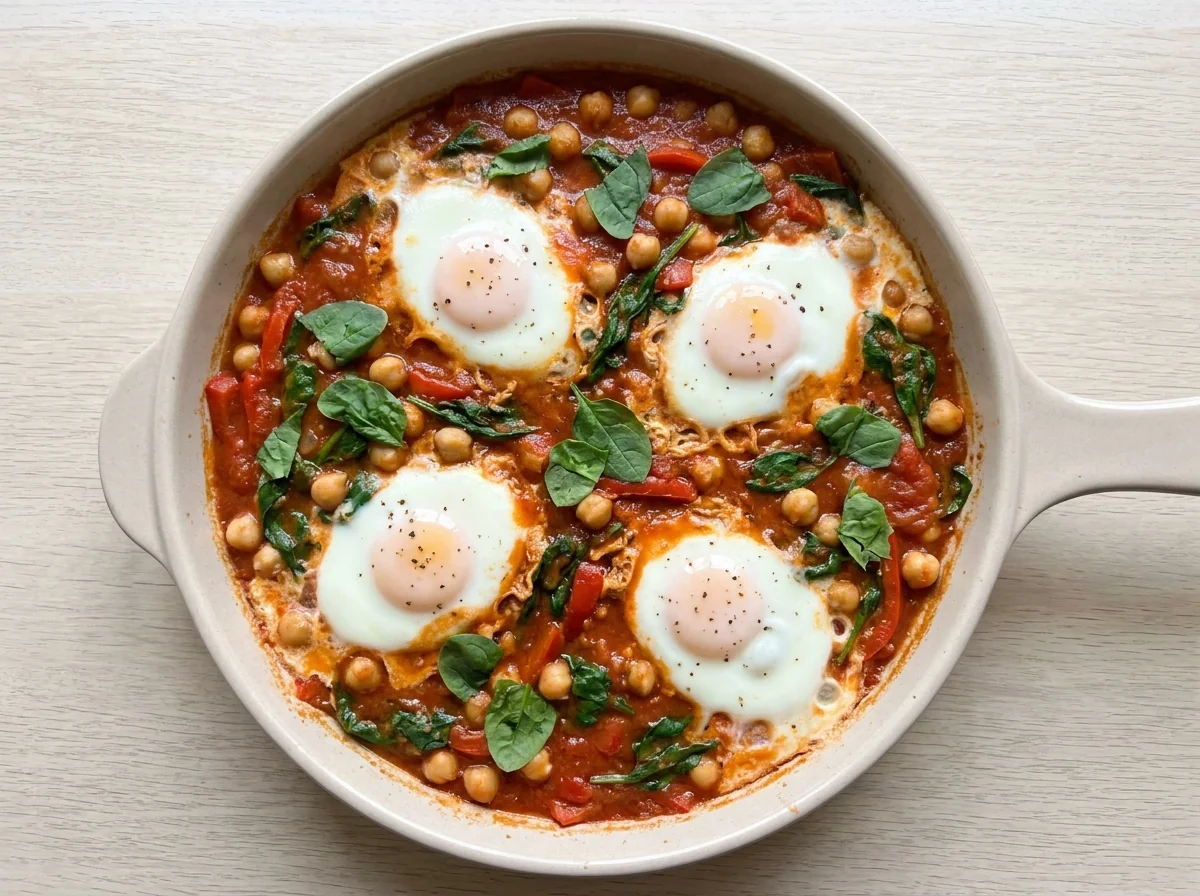
Shakshuka is a dish of tomato sauce and eggs deeply rooted in the tables of the Levant and the Gulf.
We boost it with cooked chickpeas and spinach to raise the protein and fiber, so it becomes a breakfast or suhoor that keeps you full for a long time without meat.
Preparation Steps
Heating
Heat the olive oil in a wide skillet over medium heat, as the fat base cooks the onion gently.
The onion
Sauté the onion and bell pepper for five to seven minutes until softened and sweet.
The spices
Add the garlic, cumin, coriander, and paprika and stir for half a minute until fragrant, as the heat awakens the spice oils.
The sauce
Pour in the pureed tomatoes with the salt and pepper and let the sauce simmer over low heat for ten to fifteen minutes until it thickens.
Chickpeas and spinach
Add the cooked chickpeas and spinach and stir for two minutes until the spinach wilts and the chickpeas absorb the flavor, which is what raises the protein and fiber.
The eggs
Make wells in the sauce and crack the eggs into them, then cover the skillet.
Doneness
Cook for five to eight minutes until the whites set and the yolks stay runny as we like.
Serving
Garnish with parsley and serve the shakshuka hot from the skillet.
Blood Sugar Impact
The glycemic index (GI) measures how quickly a food raises blood sugar, while the glycemic load (GL) measures how much a full serving raises it. Together they give the complete picture.
Glycemic Index
GI
18Low
Low0–55Medium56–69High70+
A low value (≤55) means a gradual rise in blood sugar — the most suitable range for diabetes and insulin resistance.
Glycemic Load
GL
4Low
Low0–10Medium11–19High20+
Glycemic load reflects the impact of the full serving. To lower it: take half a serving, or pair the recipe with a source of protein and fiber.
Nutritional Information
Per ServingMakes 4 servings · one serving is about 325 g of raw ingredients
Calories313 kcal16%of Daily Value*
Protein17 g34%of Daily Value*
Carbohydrates27 g10%of Daily Value*
Fat17 g22%of Daily Value*
Fiber7 g25%of Daily Value*
Sodium577 mg25%of Daily Value*
* Percent Daily Values are based on a 2,000-calorie diet per FDA food-label reference values — your daily needs may be higher or lower. Values are derived from the recipe's ingredients via the USDA database.
Troubleshooting
The most common problems when preparing High-Protein Chickpea Shakshuka, and how to fix them:
The eggs set slowly
The sauce is cold or thin; keep the heat medium and cover the skillet so the trapped steam holds the heat.
The yolk sets completely
It was left too long; watch from the fifth minute and raise the heat only once the whites set.
The sauce is sour
The tomatoes are sharp; add a small touch of sautéed onion or cook longer so its sweetness develops.
The spinach releases water
It was added too early; add it in the step before the eggs so it wilts quickly without watering down the sauce.
Storage and Make-Ahead
Refrigerator
The sauce without eggs in an airtight container for up to three days, then reheated with fresh eggs cracked in.
Freezing
The sauce base with chickpeas freezes for up to a month, thawed and reheated, then the eggs added fresh.
Tested Ingredient Substitutions
Original Ingredient
Tested Substitute
Ratio
Flavor Difference
Spinach
Arugula or chard
Same weight
An alternative leafy green that wilts the same way and adds fiber
Cooked chickpeas
Cooked fava beans
Same weight
An alternative legume that raises protein with a familiar Arabic flavor
Smoked paprika
Sweet paprika
Same weight
For a milder flavor without the smokiness
Salt
Half the amount
1.5 g
For the low-sodium version, compensating the flavor with spices and lemon
How Much Does It Make? Scaling Guide
Ingredient
2 servings
4 servings (base)
8 servings
Eggs
150 g
300 g
600 g
Cooked chickpeas
120 g
240 g
480 g
Spinach
30 g
60 g
120 g
Pureed tomatoes
200 g
400 g
800 g
Onion
60 g
120 g
240 g
Olive oil
14 g
28 g
56 g
EEINA Nutrition Tip
Let the sauce thicken well before cracking the eggs, as a watery sauce makes the eggs sink and slows their setting.
Add This Recipe to Your Plan
The EEINA app saves your favorite recipes, calculates them from their real ingredients, and shows your daily numbers toward your goal. Try it free now.