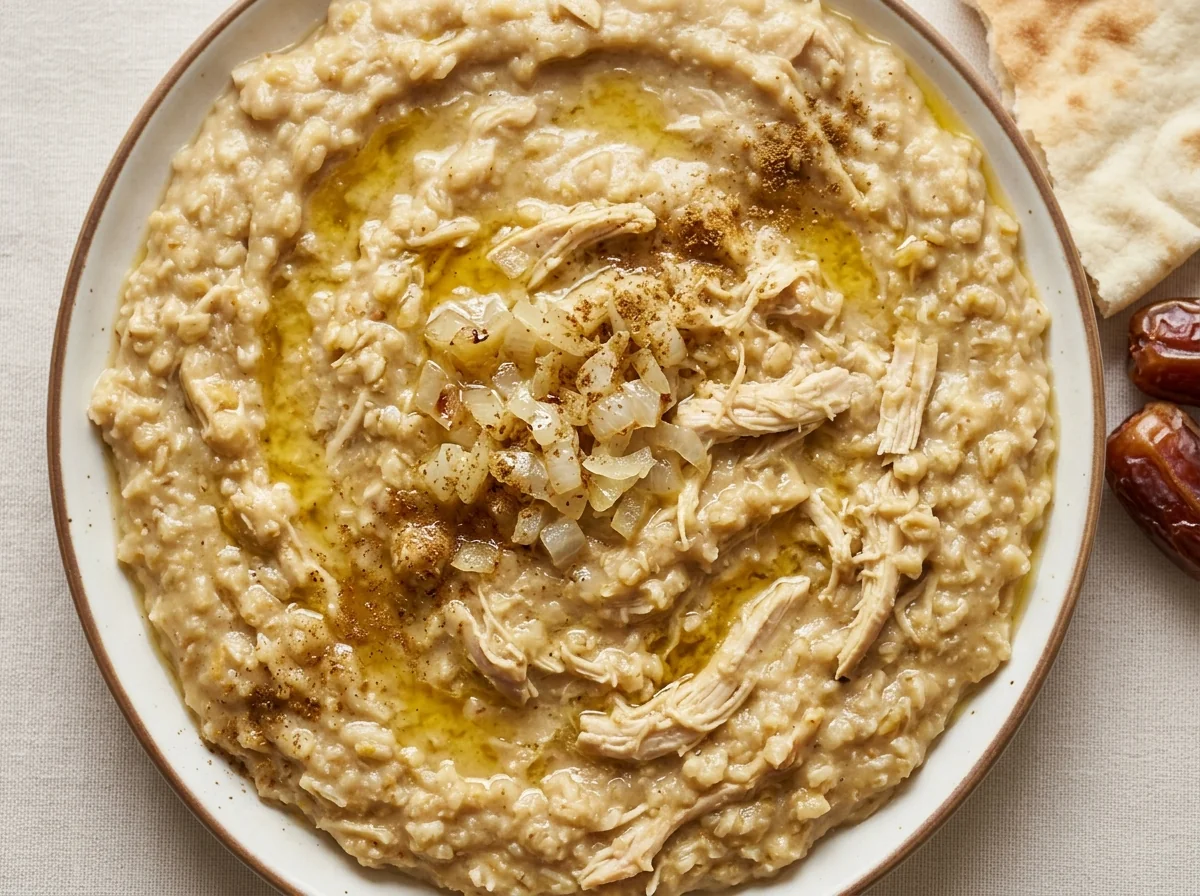
Slow-cooked cracked wheat and chicken porridge seasoned with cardamom, cinnamon, and ghee. A traditional Gulf suhoor dish with a creamy, ribbon-like consistency.
Chicken harees is a classic dish on the Ramadan suhoor table across the Arabian Peninsula, with roots that go back to pre-Islamic times.
The chicken version is lighter and faster to cook than the lamb version, and families favor it because there are fewer bones and the meat is more tender. The kitchen fills with the scent of cardamom and cinnamon, and it keeps you full through the hours of fasting.
Preparation Steps
Boil the chicken
In a large pot, place the chicken with the onion, salt, cardamom, cinnamon, and about a liter of water. Bring to a boil and skim the foam, then lower the heat and simmer for 60 minutes until the meat is cooked and pulls away from the bone.
Add the wheat
Drain the soaked wheat and add it to the pot with extra chicken stock. Continue cooking on low heat for 60 minutes, stirring every 10 minutes to prevent sticking.
Shred the chicken
Lift the chicken out and remove the bones and skin. Shred the meat with your fingers into thin strips and return it to the pot, stirring well.
Add the spices and ghee
Add the cumin, turmeric, ginger, and black pepper. Melt half the ghee and stir it in well. Cook on low heat for 15 minutes, stirring, until the harees takes on a creamy consistency.
Serve
Pour the harees into a wide plate and garnish with the melted ghee, toasted almonds, and a pinch of cumin. Serve hot with bread or dates.
Blood Sugar Impact
The glycemic index (GI) measures how quickly a food raises blood sugar, while the glycemic load (GL) measures how much a full serving raises it. Together they give the complete picture.
Glycemic Index
GI
38Low
Low0–55Medium56–69High70+
A low value (≤55) means a gradual rise in blood sugar — the most suitable range for diabetes and insulin resistance.
Glycemic Load
GL
18Medium
Low0–10Medium11–19High20+
Glycemic load reflects the impact of the full serving. To lower it: take half a serving, or pair the recipe with a source of protein and fiber.
Nutritional Information
Per ServingMakes 4 servings · one serving is about 810 g of raw ingredients
Calories861 kcal43%of Daily Value*
Protein64 g128%of Daily Value*
Carbohydrates59 g21%of Daily Value*
Fat41 g53%of Daily Value*
Fiber11 g39%of Daily Value*
Sodium1144 mg50%of Daily Value*
* Percent Daily Values are based on a 2,000-calorie diet per FDA food-label reference values — your daily needs may be higher or lower. Values are derived from the recipe's ingredients via the USDA database.
Troubleshooting
The most common problems when preparing Chicken Harees, and how to fix them:
The harees is too dry
Add a cup of stock and let it simmer for 10 minutes. High heat dries it out fast.
The meat is tough
Extend the boiling time by 20 minutes. Frozen chicken needs longer.
The harees is gummy
Lower the heat and stir more. Slow cooking releases the starch and thickens it.
The flavor is flat
Add an extra pinch of cumin and a drizzle of melted ghee just before serving.
Storage and Make-Ahead
In the refrigerator
Three days. Reheat with a spoonful of ghee.
In the freezer
Two months. Let it thaw overnight in the refrigerator.
Tested Ingredient Substitutions
Original Ingredient
Tested Substitute
Ratio
Flavor Difference
chicken
turkey
1:1
Add 30 minutes to the cooking time.
cracked wheat
whole wheat
1:1
Add an hour to the cooking time.
local ghee
oil
1:1
A lighter version but less rich.
How Much Does It Make? Scaling Guide
Ingredient
4 people
8 people
12 people
Chicken
1200 g
2400 g
3600 g
Wheat
300 g
600 g
900 g
Ghee
70 g
140 g
210 g
Broth
1.5 L
3 L
4.5 L
EEINA Nutrition Tip
Soaking the wheat for 4 hours shortens cooking time and gives a smoother texture. Stir every 10 minutes during the final cook to prevent sticking. Chicken on the bone gives a flavor that boneless chicken cannot replace.
Add This Recipe to Your Plan
The EEINA app saves your favorite recipes, calculates them from their real ingredients, and shows your daily numbers toward your goal. Try it free now.