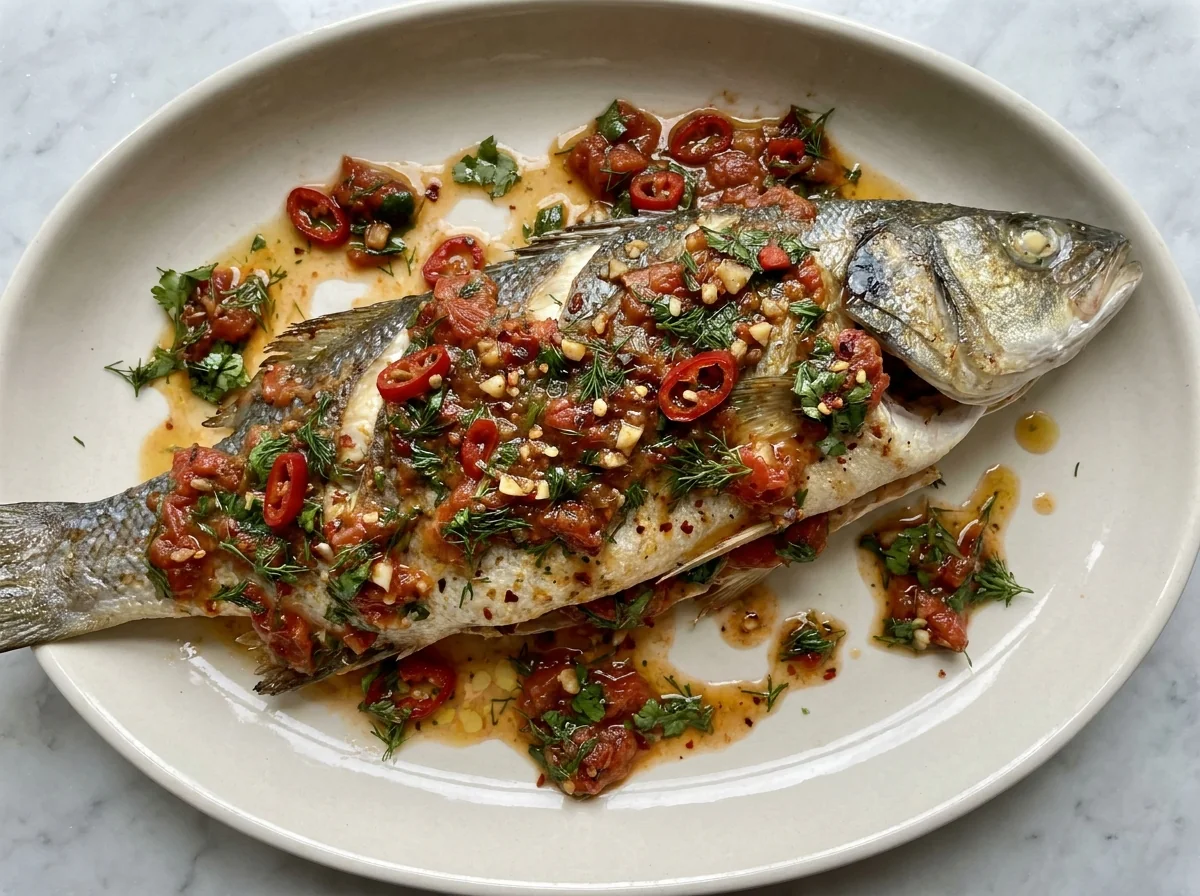
We make samak bel harra the way it is made in the homes of Gaza, where the fish is baked in the Gazan dagga, the sauce of tomatoes, garlic, red pepper, and dill they call the trinity of Gazan cuisine.
There is no rice here and no frying, only fish submerged in its spicy sauce and baked until it absorbs the aroma of the dill and the heat of the pepper, so it comes out a dish that resembles Gaza's bold coast, which does not fear a strong flavor.
Preparation Steps
Seasoning the fish
We make two deep slashes on each side of the fish, and rub its body and slashes with a mix of crushed garlic, salt, cumin, dried coriander, and half the lemon juice, and leave it to soak for about 15 minutes.
Preparing the Gazan dagga
We pound the tomatoes, garlic, and hot red pepper in the mortar until crushed, then add the dill, cilantro, the rest of the lemon juice, and salt, so the aromatic oils release and the dagga's flavor blends.
The bottom layer
We grease the oven tray with olive oil and spread half the dagga on its bottom, then lay the marinated fish over it so it holds and perfumes it from below.
Covering and baking
We cover the fish with the remaining half of the dagga and drizzle olive oil, then bake it at 180 degrees Celsius for about 35 minutes until its flesh separates easily with a fork.
The finishing touch
We raise the heat in the last minutes or move the tray to the top rack until the surface browns a little, and serve it hot submerged in its spicy sauce.
Blood Sugar Impact
The glycemic index (GI) measures how quickly a food raises blood sugar, while the glycemic load (GL) measures how much a full serving raises it. Together they give the complete picture.
Glycemic Index
GI
7Low
Low0–55Medium56–69High70+
A low value (≤55) means a gradual rise in blood sugar — the most suitable range for diabetes and insulin resistance.
Glycemic Load
GL
1Low
Low0–10Medium11–19High20+
Glycemic load reflects the impact of the full serving. To lower it: take half a serving, or pair the recipe with a source of protein and fiber.
Nutritional Information
Per ServingMakes 4 servings · one serving is about 380 g of raw ingredients
Calories388 kcal19%of Daily Value*
Protein49 g98%of Daily Value*
Carbohydrates12 g4%of Daily Value*
Fat15 g19%of Daily Value*
Fiber2 g7%of Daily Value*
Sodium469 mg20%of Daily Value*
* Percent Daily Values are based on a 2,000-calorie diet per FDA food-label reference values — your daily needs may be higher or lower. Values are derived from the recipe's ingredients via the USDA database.
Troubleshooting
The most common problems when preparing Gazan Baked Fish in Dagga, and how to fix them:
The fish is dry after baking
We submerge it in the dagga from above and below and watch its doneness, for the flesh separates with a fork when it is done and needs no longer.
The sauce is watery
We use ripe tomatoes and drain their excess water, or extend the baking a little until it thickens around the fish.
The dish is not spicy
We add more hot red pepper to the dagga, for the heat is a mark of Gazan cuisine.
Storage and Make-Ahead
Refrigerator
Keep it covered in the refrigerator for up to two days, and reheat it in the oven until it is warm again in its sauce.
Freezing
Freeze it in an airtight container for up to a month, and thaw it in the refrigerator before reheating.
Tested Ingredient Substitutions
Original Ingredient
Tested Substitute
Ratio
Flavor Difference
sea bream
sea bass or rabbitfish
same weight, 1000 g
Any whole white fish suits baking
fresh hot red pepper
chili paste or chili flakes
to taste
We adjust the heat by the amount
fresh dill
dried dill
one-third by weight
Dried dill is stronger, so we reduce the amount
fresh tomatoes
drained canned tomatoes
same weight, 300 g
We drain the excess liquid for a thicker texture
How Much Does It Make? Scaling Guide
Ingredient
half the amount
full amount (base)
double
Whole white fish
500 g
1000 g
2000 g
Tomato
150 g
300 g
600 g
Garlic
15 g
30 g
60 g
Hot red pepper
20 g
40 g
80 g
Fresh dill
12 g
25 g
50 g
Olive oil
22 ml
45 ml
90 ml
EEINA Nutrition Tip
Pound the dagga in the mortar rather than the blender, for pounding crushes the ingredients and releases their aromatic oils gradually, while the blender liquefies it and robs it of its texture.
Add This Recipe to Your Plan
The EEINA app saves your favorite recipes, calculates them from their real ingredients, and shows your daily numbers toward your goal. Try it free now.