Fish Kabsa (Saudi spiced rice dish with grilled fish)
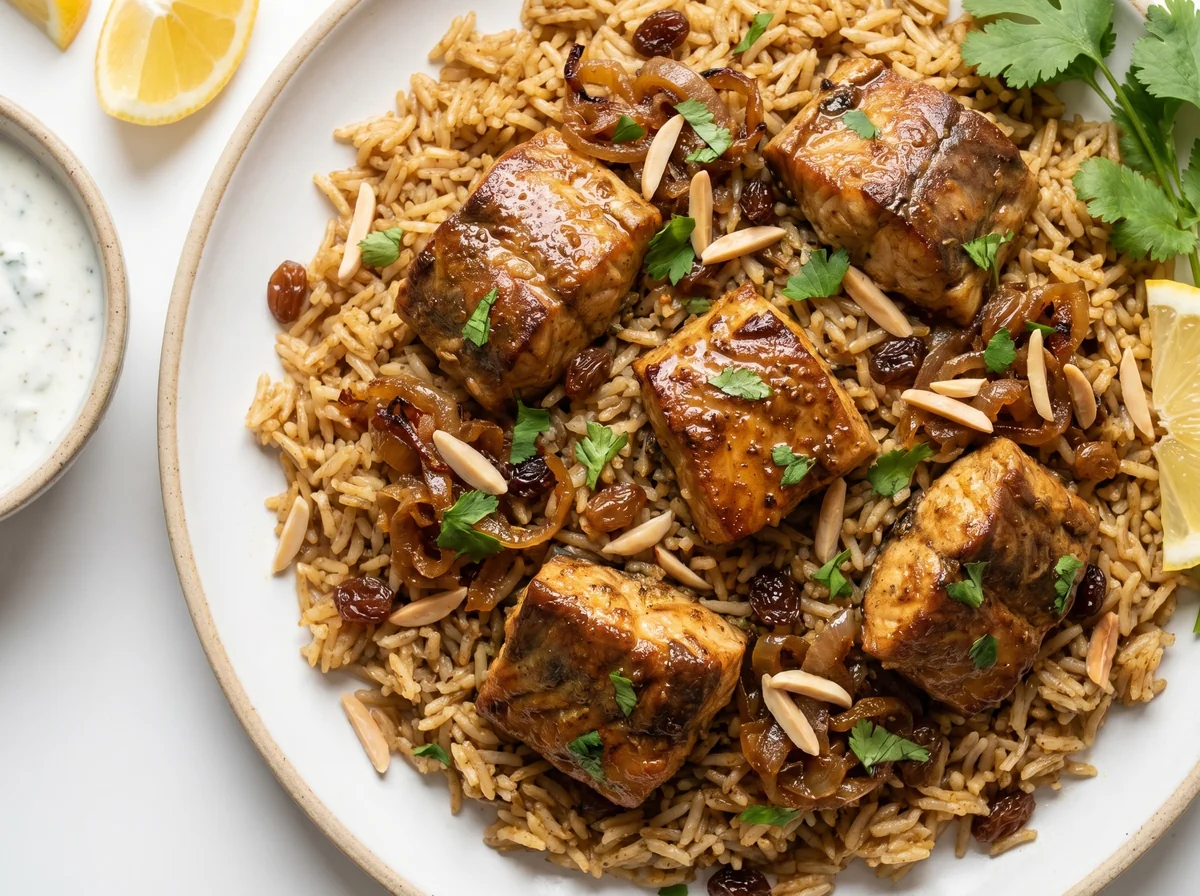
Coastal Kabsa (Saudi spiced rice dish) with white fish — seasoned fish fillets grilled and placed over basmati rice cooked in tomato broth with baharat (Gulf spice blend) and loomi (dried black lime). EEINA's version uses grilled rather than fried fish and a controlled rice portion, preserving the seafood Kabsa's flavour with a lighter profile.
Along the eastern and western coasts of the Arabian Peninsula, Kabsa (Saudi spiced rice dish) takes on a seafood form as fresh white fish replaces the meat or chicken. Its secret is cooking the rice in a tomato-based broth spiced with loomi (dried black lime) and baharat (Gulf spice blend), with the fish grilled separately so it does not break apart in the rice.
It differs from meat Kabsa in the lightness of the fish and the speed of its cooking. EEINA's version grills the fish instead of frying it, so the Kabsa retains its coastal flavour with a lighter nutritional profile.
Preparation Steps
Marinate the fish
Pat the fish fillets dry, then rub with half the spice blend, one crushed garlic clove, lemon juice, and a pinch of salt. Leave to marinate for 15 minutes. The lemon juice firms the texture of the fish and mellows its smell.
Build the sauce
In a pot, heat the oil and fry the onion until soft, then add the remaining garlic and spices and stir until fragrant. Add the grated tomatoes, tomato paste, and pierced loomi (dried black lime). Cook until the sauce thickens.
Cook the rice in the sauce
Rinse the soaked rice and add it to the sauce, then pour in the hot water at roughly double the volume of rice and adjust the salt. Bring to a boil, then reduce the heat, cover, and leave for about 15 minutes until the rice absorbs the broth and is fully cooked.
Grill the fish
While the rice is cooking, arrange the fish fillets on a greased baking tray and place in a preheated oven at 200°C for 12–15 minutes until the fish is cooked through and flakes gently with a fork. Avoid over-cooking to prevent it drying out.
Combine
When the rice is done, spread it on a serving platter and gently place the grilled fish fillets on top. Fish is delicate, so handle it with care to keep the fillets intact.
Serve
Garnish the Kabsa with chopped parsley and lemon wedges, and serve hot alongside daqoos (Saudi tomato sauce) and a green salad. A squeeze of lemon over the fish at serving time brightens its flavour.
Blood Sugar Impact
The glycemic index (GI) measures how quickly a food raises blood sugar, while the glycemic load (GL) measures how much a full serving raises it. Together they give the complete picture.
Glycemic Index
GI
64Medium
Low0–55Medium56–69High70+
A low value (≤55) means a gradual rise in blood sugar — the most suitable range for diabetes and insulin resistance.
Glycemic Load
GL
35High
Low0–10Medium11–19High20+
Glycemic load reflects the impact of the full serving. To lower it: take half a serving, or pair the recipe with a source of protein and fiber.
Nutritional Information
Per ServingMakes 4 servings · one serving is about 440 g of raw ingredients
Calories467 kcal23%of Daily Value*
Protein33 g66%of Daily Value*
Carbohydrates59 g21%of Daily Value*
Fat10 g13%of Daily Value*
Fiber4 g14%of Daily Value*
Sodium402 mg17%of Daily Value*
Potassium1052 mg22%of Daily Value*
Phosphorus355 mg28%of Daily Value*
* Percent Daily Values are based on a 2,000-calorie diet per FDA food-label reference values — your daily needs may be higher or lower. Values are derived from the recipe's ingredients via the USDA database.
Troubleshooting
The most common problems when preparing Fish Kabsa (Saudi spiced rice dish with grilled fish), and how to fix them:
Fish broke apart badly
It was cooked in the rice or stirred too much. Grill the fish separately and place it on top of the rice at the end, handling it gently — fish is delicate and breaks easily.
Strong fishy smell
Fish is not fresh, or it was not marinated with lemon. Choose fresh fish, and lemon juice in the marinade mellows the smell.
Fish is dry
Over-cooked. Fish cooks quickly — 12–15 minutes is enough. Remove it as soon as it flakes gently with a fork.
Rice is watery
Too much water. The tomatoes release liquid, so reduce the added water slightly and leave the pot uncovered for the last 2 minutes.
Flavour is dull
Too few spices or omitted loomi. Turmeric gives colour and flavour, and the pierced loomi (dried black lime) deepens the seafood broth.
Storage and Make-Ahead
Refrigerator (4°C)
2 days only in a sealed container — seafood has a shorter shelf life. Reheat once.
Freezer (-18°C)
Not recommended for cooked fish — its texture is affected by freezing. Best cooked fresh.
Advance preparation
Prepare the sauce and marinate the fish in advance; cook the rice and grill the fish just before serving for the best texture.
Reheating
Over low heat with a splash of water until just hot. Do not leave cooked food out of the refrigerator for more than 2 hours [2].
Tested Ingredient Substitutions
Original Ingredient
Tested Substitute
Ratio
Flavor Difference
White fish fillets
Grouper, cod, or salmon
Same weight
Any firm fish works; salmon is richer in flavour
White basmati rice
Brown basmati rice
Same weight
Lowers the glycemic load and increases fibre
Grilling the fish
Steaming
Same ingredients
Lighter and more moisture-retaining; gentler flavour without browning
Ready-made kabsa spice blend
Home blend: cardamom, cinnamon, cumin, turmeric, black pepper
Same quantity
Fresher and free of additives
Loomi (dried black lime)
Lemon zest with its juice
1 lemon
A more accessible substitute; the acidity is lighter
How Much Does It Make? Scaling Guide
Servings
Fish
Rice
Water
Pot
2 (single × 2)
300 g
120 g
1.25 cups
small pot
4 (base)
600 g
240 g
2.5 cups
medium pot
6 (family)
900 g
360 g
3.5 cups
large pot
8 (guests)
1.2 kg
480 g
5 cups
large pot
EEINA Nutrition Tip
White fish is a light protein low in fat and calories, making this one of the lightest Kabsa variations. Grilling the fish instead of frying it reduces the fat further. White basmati rice remains the main source of glycemic load, so treat this as an occasion dish alongside a generous salad — and choose brown rice for a lighter option.
Add This Recipe to Your Plan
The EEINA app saves your favorite recipes, calculates them from their real ingredients, and shows your daily numbers toward your goal. Try it free now.
Firm white fish such as grouper or cod holds its shape best. Salmon is also excellent with a richer flavour. Avoid very soft fish that breaks apart easily.
Why grill the fish separately from the rice?
To prevent the fish from breaking apart in the rice during cooking. Grilling it separately keeps the fillets whole, and they are placed on top of the rice gently at the end.
Is fish Kabsa suitable for people with diabetes?
Fish is excellent for its low fat content and omega-3 richness, but white rice raises the glycemic load — so treat it as an occasion dish with a generous salad, and choose brown rice for a lighter option.
How do I remove the fishy smell?
Choose fresh fish and marinate it with lemon juice before cooking — the acidity mellows the smell. A squeeze of lemon at serving also refreshes the dish.
How do I know the fish is cooked?
It turns opaque white and flakes gently when pressed with a fork. Over-cooking dries it out, so remove it as soon as it flakes.
Sources: USDA · University of Sydney · Gulf GSO · Our methodology · Updated on