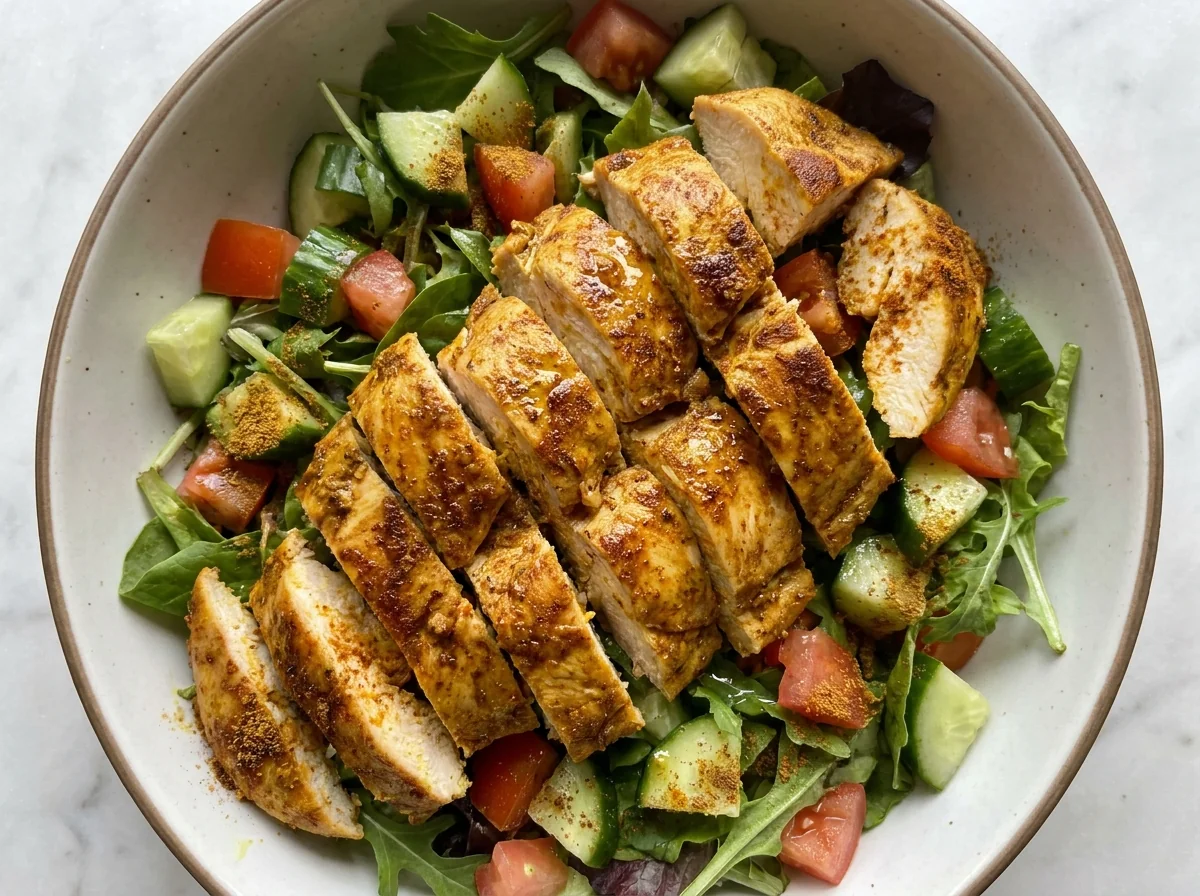
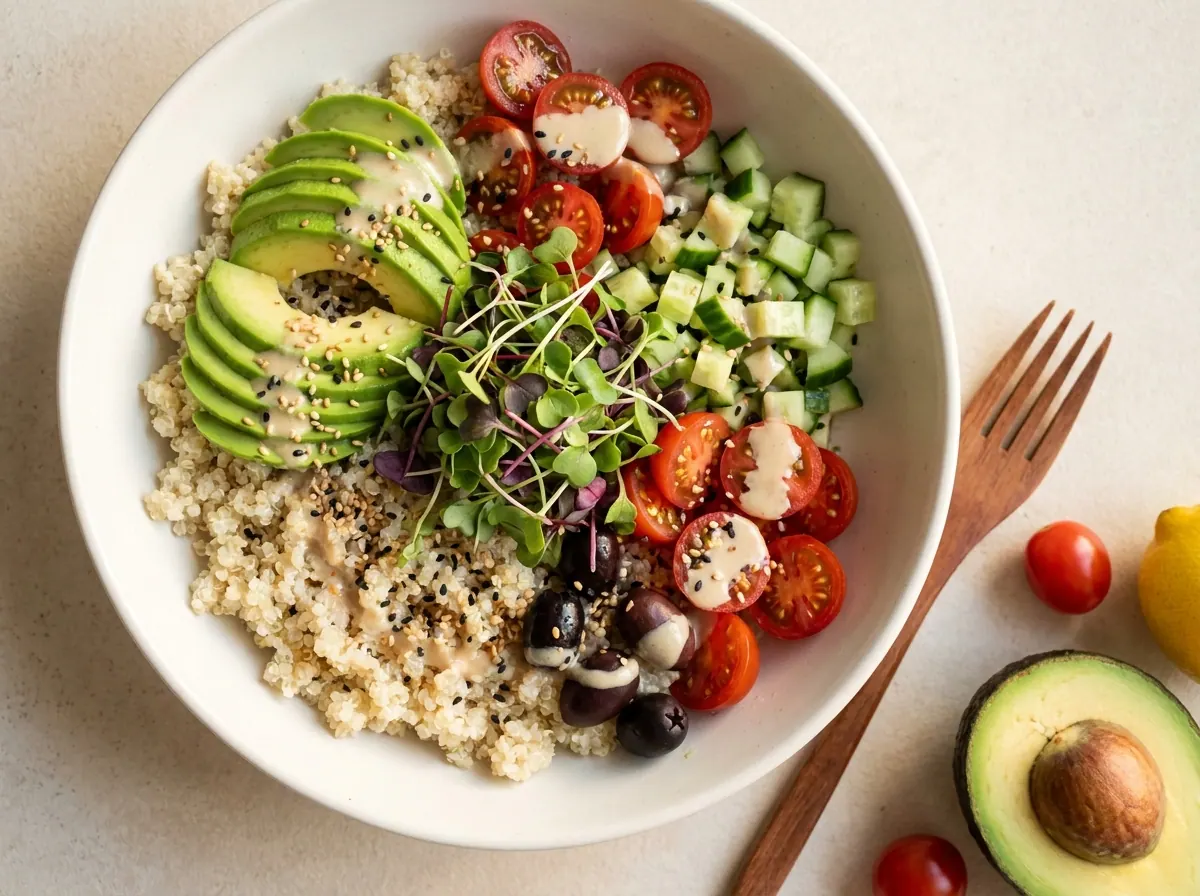
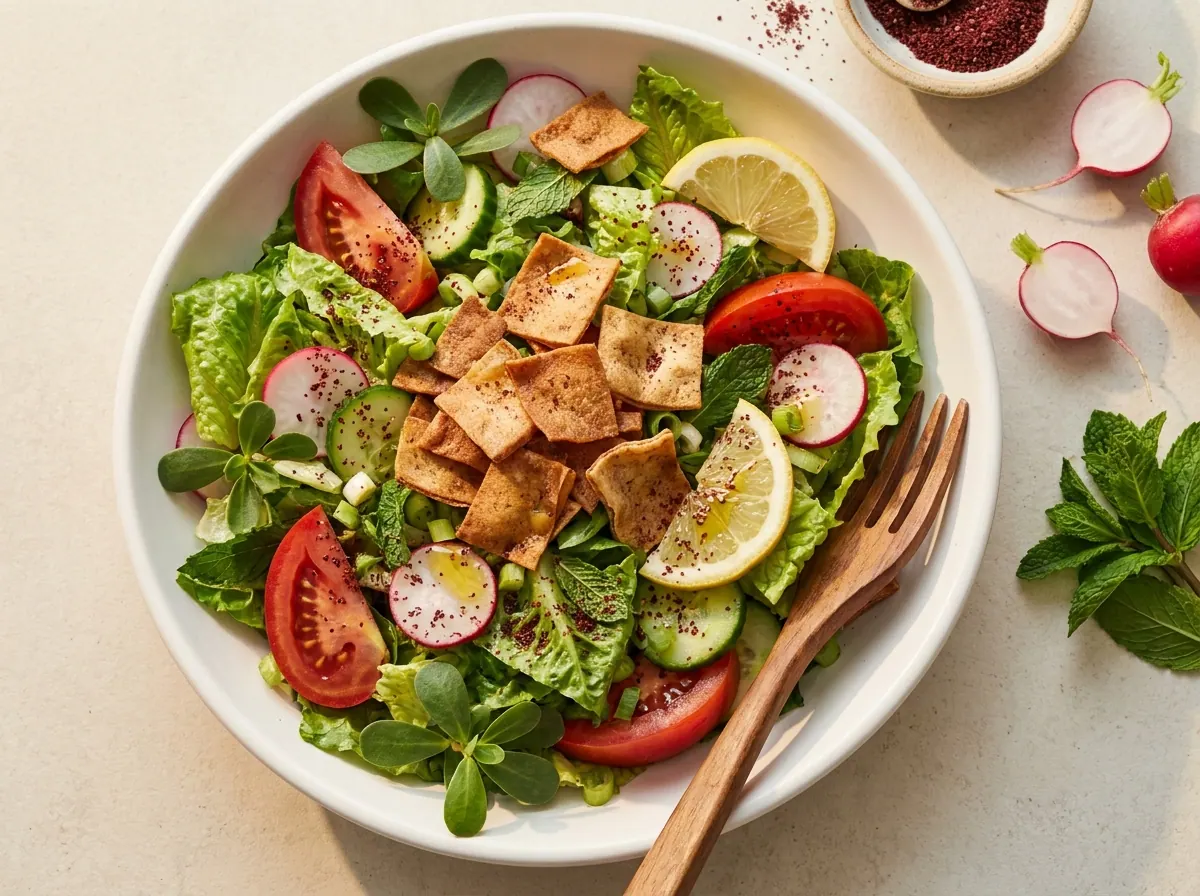
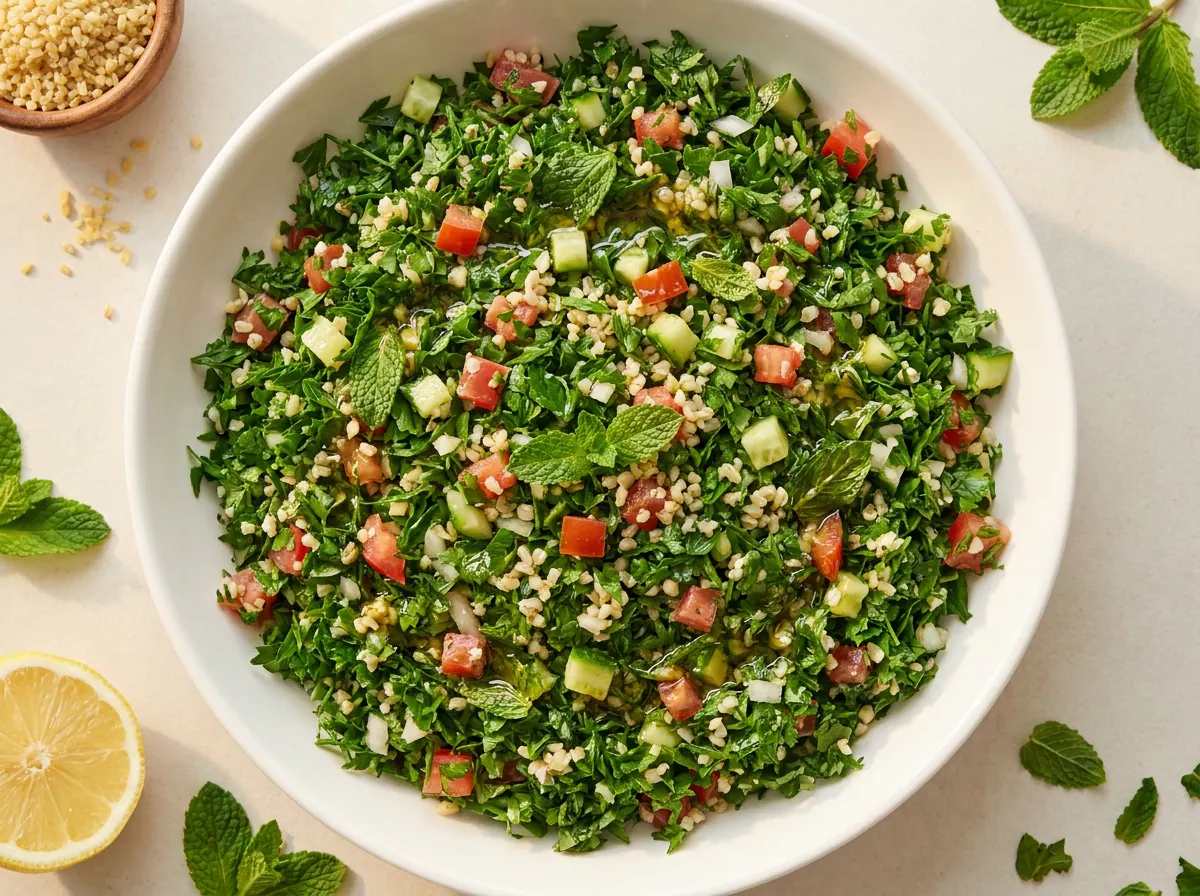
We rebalance the usual shawarma by keeping the starch very limited, building the plate on the balanced-bowl model: more than half of it leafy greens, tomato, and cucumber, a quarter protein from the seasoned chicken, and the starch just a small whole-wheat loaf.
This way we get the shawarma flavor without the load of oil-laden bread and garlic sauce.
Preparation Steps
Mix the shawarma spices
Combine the cumin, turmeric, coriander, garlic, paprika, and cloves in a small bowl, for a warm, aromatic shawarma blend whose fragrance rises the moment it is mixed.
Season the chicken
Pat the chicken slices dry, then toss them with the spices, salt, olive oil, and lemon juice, and let them marinate for ten minutes so the flavor penetrates.
Grill the chicken
Heat a pan over medium heat and cook the chicken for five to six minutes, flip it, then five to six minutes more until it browns and reaches 74 degrees (the FSIS standard for chicken).
Prepare the salad base
Spread the arugula, tomato, cucumber, and onion in the bowl, making half the plate fresh, crisp vegetables.
Dress and assemble
Whisk the sumac, lemon juice, and olive oil into a tangy dressing, and pour it over the salad just before serving so it stays crisp, then top with the chicken and add the small whole-wheat loaf alongside.
Blood Sugar Impact
The glycemic index (GI) measures how quickly a food raises blood sugar, while the glycemic load (GL) measures how much a full serving raises it. Together they give the complete picture.
Glycemic Index
GI
36Low
Low0–55Medium56–69High70+
A low value (≤55) means a gradual rise in blood sugar — the most suitable range for diabetes and insulin resistance.
Glycemic Load
GL
6Low
Low0–10Medium11–19High20+
Glycemic load reflects the impact of the full serving. To lower it: take half a serving, or pair the recipe with a source of protein and fiber.
Nutritional Information
Per ServingMakes 1 servings · one serving is about 385 g of raw ingredients
Calories389 kcal19%of Daily Value*
Protein41 g82%of Daily Value*
Carbohydrates24 g9%of Daily Value*
Fat15 g19%of Daily Value*
Fiber6 g21%of Daily Value*
Sodium507 mg22%of Daily Value*
* Percent Daily Values are based on a 2,000-calorie diet per FDA food-label reference values — your daily needs may be higher or lower. Values are derived from the recipe's ingredients via the USDA database.
Troubleshooting
The most common problems when preparing Chicken Shawarma Salad Bowl (Low-Starch), and how to fix them:
The salad is wilted
Dress it only at the moment of serving, as the acid and salt draw water out of the leaves if they sit on them.
The spices are too sharp
Reduce the cloves, as their small amount easily overpowers the rest of the blend.
Storage and Make-Ahead
Refrigerator
Keep the chicken and salad in two separate containers for up to three days, and combine them only when eating.
The dressing
Keep it in a small separate container and add it fresh to each serving.
Tested Ingredient Substitutions
Original Ingredient
Tested Substitute
Ratio
Flavor Difference
chicken breast
skinless chicken thigh
same weight, 150 g
A richer, more traditional shawarma flavor with comparable protein
arugula
chopped romaine lettuce
same weight, 40 g
A neutral leafy base for anyone who dislikes the bitterness of arugula
whole-wheat bread
omit it entirely
zero grams
Cuts the starch further for a deeper weight-loss goal
olive oil
olive oil spray
half the total amount
Lowers the fat calories while keeping the flavor
How Much Does It Make? Scaling Guide
Ingredient
1/2 serving
1 serving (base)
2 servings
Chicken breast
75 g
150 g
300 g
Arugula
20 g
40 g
80 g
Tomato and cucumber
60 g
120 g
240 g
Whole-wheat bread
15 g
30 g
60 g
EEINA Nutrition Tip
Add the sumac and lemon dressing right before serving, not before, so the arugula stays crisp and does not wilt.
Add This Recipe to Your Plan
The EEINA app saves your favorite recipes, calculates them from their real ingredients, and shows your daily numbers toward your goal. Try it free now.