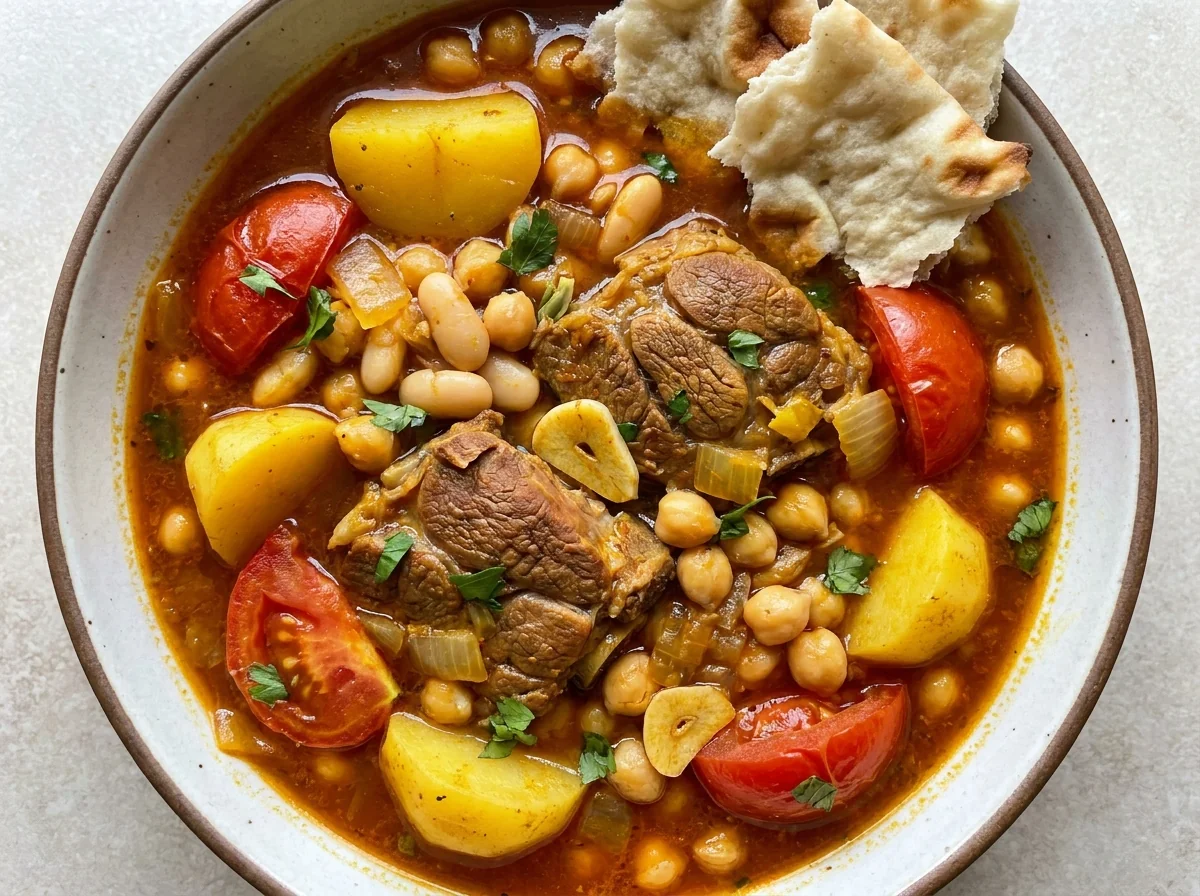
Abgoosht, or dizi, is one of the most distinguished dishes of Persian cuisine, and its name means "meat water." It is cooked slowly in a stone pot and eaten in two rounds: first the broth is drunk with the soaked bread, then the meat, legumes, and potatoes are mashed and eaten with onion and pickles.
A dish humble in origin that became beloved by all Iranians.
Preparation Steps
The meat
Place the lamb in a heavy pot, cover it with water, and bring it to a boil, then skim off the floating foam until the broth runs clear.
The base
Add the onion, garlic, turmeric, cumin, pepper, and half the amount of salt, as these spices build the depth of the broth.
The legumes and loomi
Add the soaked chickpeas and beans and the pierced loomi, lower the heat to the gentlest setting, cover the pot, and cook for two hours until the meat and legumes soften.
The tomato and potatoes
Dissolve the tomato paste in a little of the broth and add it with the tomatoes, potatoes, and the rest of the salt, as the potatoes give body and the tomatoes give color.
Finishing
Remove the lid and cook for about forty-five minutes until the potatoes are done and the broth thickens, then adjust the salt.
Straining and mashing
Strain the broth into a bowl and serve it first with bread soaked in it, then take out the meat, potatoes, and legumes and mash them together until they become a smooth paste eaten in the second round.
Serving
Serve the mashed part with onion, bread, and pickles, as this is the tradition of dizi in its two rounds.
Blood Sugar Impact
The glycemic index (GI) measures how quickly a food raises blood sugar, while the glycemic load (GL) measures how much a full serving raises it. Together they give the complete picture.
Glycemic Index
GI
44Low
Low0–55Medium56–69High70+
A low value (≤55) means a gradual rise in blood sugar — the most suitable range for diabetes and insulin resistance.
Glycemic Load
GL
12Medium
Low0–10Medium11–19High20+
Glycemic load reflects the impact of the full serving. To lower it: take half a serving, or pair the recipe with a source of protein and fiber.
Nutritional Information
Per ServingMakes 6 servings · one serving is about 690 g of raw ingredients
Calories582 kcal29%of Daily Value*
Protein32 g64%of Daily Value*
Carbohydrates35 g13%of Daily Value*
Fat36 g46%of Daily Value*
Fiber7 g25%of Daily Value*
Sodium441 mg19%of Daily Value*
* Percent Daily Values are based on a 2,000-calorie diet per FDA food-label reference values — your daily needs may be higher or lower. Values are derived from the recipe's ingredients via the USDA database.
Troubleshooting
The most common problems when preparing Persian Lamb and Chickpea Stew (Abgoosht/Dizi), and how to fix them:
The chickpeas do not soften
They were not soaked enough or the water is hard; soak them overnight and extend the cooking until they are fully tender.
The broth is cloudy
The foam was not skimmed at the start; skim it at the first boil before adding the rest of the ingredients.
The dish is bland in taste
It lacks acidity; pierce the loomi well so it releases its flavor or add an extra piece.
The potatoes crumbled
They were added too early; add them only in the last forty-five minutes with the tomatoes.
Storage and Make-Ahead
Refrigerator
Keep the broth and the mashed meat separately in two airtight containers for up to three days.
Freezer
Freeze for up to three months, and thaw it in the refrigerator and reheat over low heat with a splash of water.
Tested Ingredient Substitutions
Original Ingredient
Tested Substitute
Ratio
Flavor Difference
lamb shoulder
bone-in lamb shank
same weight, 900 g
The bone gives a richer broth and takes a little longer to cook.
white beans
red beans
same weight, 60 g
Gives a darker color and a close flavor.
loomi
lemon juice and grated zest
30 ml of juice with a spoon of zest
Add it near the end for a refreshing acidity.
tomato paste
concentrated grated tomato
about 120 g
Cook it a little longer until it concentrates.
How Much Does It Make? Scaling Guide
Ingredient
Two servings
Four servings (base)
Eight servings
lamb shoulder
300 g
900 g
1800 g
chickpeas
33 g
100 g
200 g
potatoes
150 g
450 g
900 g
water
670 ml
2000 ml
4000 ml
EEINA Nutrition Tip
Skim the floating foam at the start of the boil so the broth clears and becomes bright and clean, and cook over the gentlest possible heat, as slowness is the secret of dizi.
Add This Recipe to Your Plan
The EEINA app saves your favorite recipes, calculates them from their real ingredients, and shows your daily numbers toward your goal. Try it free now.