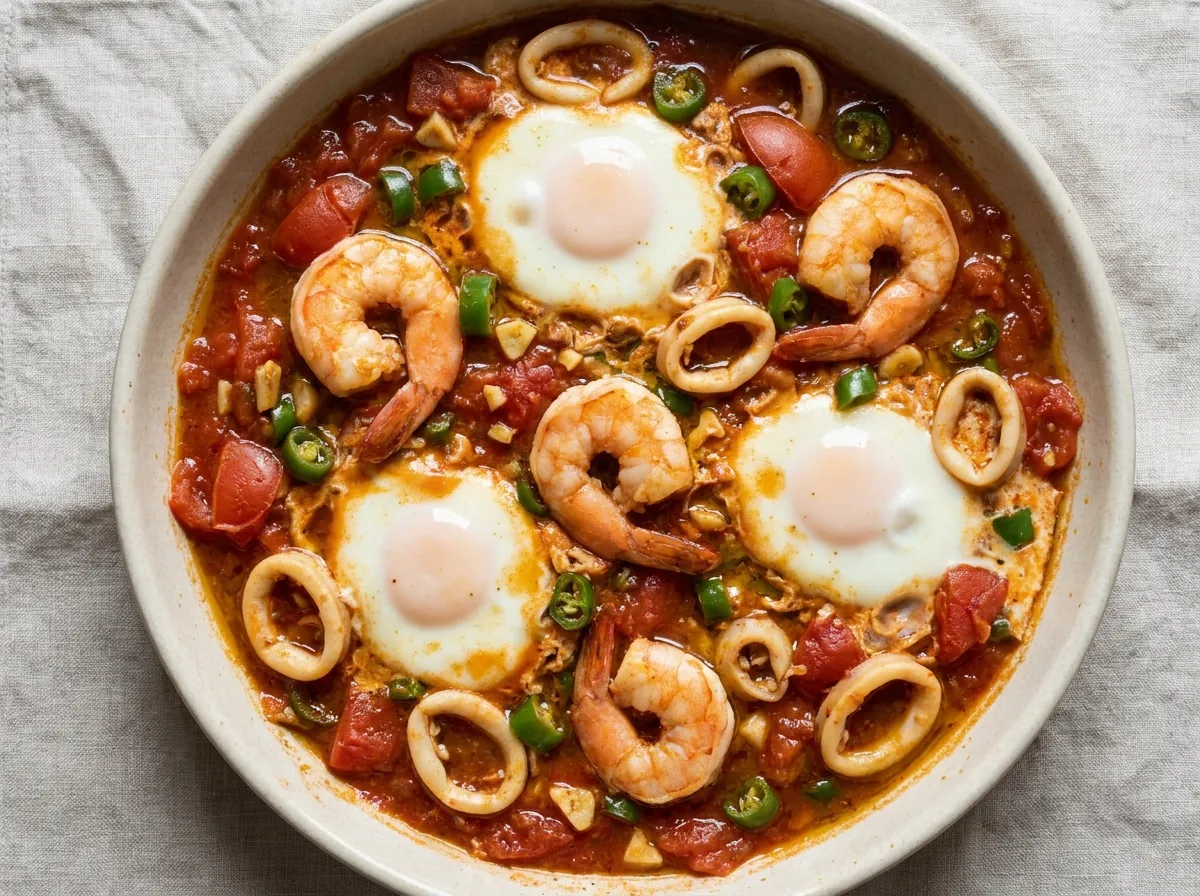
We make seafood ojja the way it is made in Tunisian kitchens, where tomatoes and harissa come together in a spicy sauce in which the shrimp and squid are submerged and then the eggs are cracked over it.
We cook it in a single pan that is brought to the table as it is; it is a quick coastal dish that gathers the warmth of the spices and the tenderness of the seafood in a single bite with bread.
Preparation Steps
The base
Heat the olive oil and stir the tomatoes over medium-high heat for about five to eight minutes until they soften and break down, for this is the base of the sauce.
Seasoning
Add the garlic and stir it for three minutes, then blend in the harissa, tomato paste, coriander, turmeric, caraway, and green pepper and let them brown for two minutes until the spices become fragrant.
The sauce
Pour in the hot water and let the sauce simmer gently, and meanwhile clean the shrimp and squid well.
The seafood
Add the shrimp and squid and stir, and after two minutes add the cumin and let the mixture simmer gently for three minutes until the shrimp is cooked and the squid turns tender.
The eggs
Crack the eggs over the sauce and stir them a little, as you prefer, between set firm or scrambled, then leave them to set over medium heat for five to seven minutes, sprinkle the black pepper, and serve it hot with bread.
Blood Sugar Impact
The glycemic index (GI) measures how quickly a food raises blood sugar, while the glycemic load (GL) measures how much a full serving raises it. Together they give the complete picture.
Glycemic Index
GI
7Low
Low0–55Medium56–69High70+
A low value (≤55) means a gradual rise in blood sugar — the most suitable range for diabetes and insulin resistance.
Glycemic Load
GL
2Low
Low0–10Medium11–19High20+
Glycemic load reflects the impact of the full serving. To lower it: take half a serving, or pair the recipe with a source of protein and fiber.
Nutritional Information
Per ServingMakes 2 servings · one serving is about 790 g of raw ingredients
Calories565 kcal28%of Daily Value*
Protein46 g92%of Daily Value*
Carbohydrates31 g11%of Daily Value*
Fat30 g38%of Daily Value*
Fiber5 g18%of Daily Value*
Sodium582 mg25%of Daily Value*
* Percent Daily Values are based on a 2,000-calorie diet per FDA food-label reference values — your daily needs may be higher or lower. Values are derived from the recipe's ingredients via the USDA database.
Troubleshooting
The most common problems when preparing Tunisian Seafood Ojja (Ojja Hout), and how to fix them:
The sauce is watery
Let it simmer uncovered for a few extra minutes before adding the eggs until it thickens, for the eggs need a sauce of thick consistency.
The shrimp turned tough
Cook it for only a few minutes, for shrimp cooks quickly and shrinks and toughens if overcooked.
The squid is rubbery
Cook it over low heat for a short time, for squid toughens over high heat and only softens again with very long cooking.
Storage and Make-Ahead
Refrigerator
Keep it covered in the refrigerator for up to two days, and reheat it gently without boiling so the seafood does not toughen.
No freezing
We do not recommend freezing it because the cooked eggs and seafood change texture after thawing.
Tested Ingredient Substitutions
Original Ingredient
Tested Substitute
Ratio
Flavor Difference
shrimp
chopped white fish
same weight, 180 g
A lighter seafood alternative added at the same time
squid
extra shrimp
same weight, 150 g
For those who do not care for squid, while keeping the seafood character
harissa paste
hot paprika and garlic
15 g paprika
To ease the heat while keeping the red color
caraway
extra cumin
same weight, 1 g
The flavor moves closer to cumin and is less aromatic
How Much Does It Make? Scaling Guide
Ingredient
Half amount
Amount (base)
Double
Chopped tomatoes
225 g
450 g
900 g
Peeled shrimp
90 g
180 g
360 g
Squid rings
75 g
150 g
300 g
Eggs
75 g
150 g
300 g
Harissa paste
15 g
30 g
60 g
Hot water
240 ml
480 ml
960 ml
EEINA Nutrition Tip
Add the cumin at the end of cooking rather than the beginning, for its aroma evaporates with long simmering and keeps its sharpness if added late.
Add This Recipe to Your Plan
The EEINA app saves your favorite recipes, calculates them from their real ingredients, and shows your daily numbers toward your goal. Try it free now.