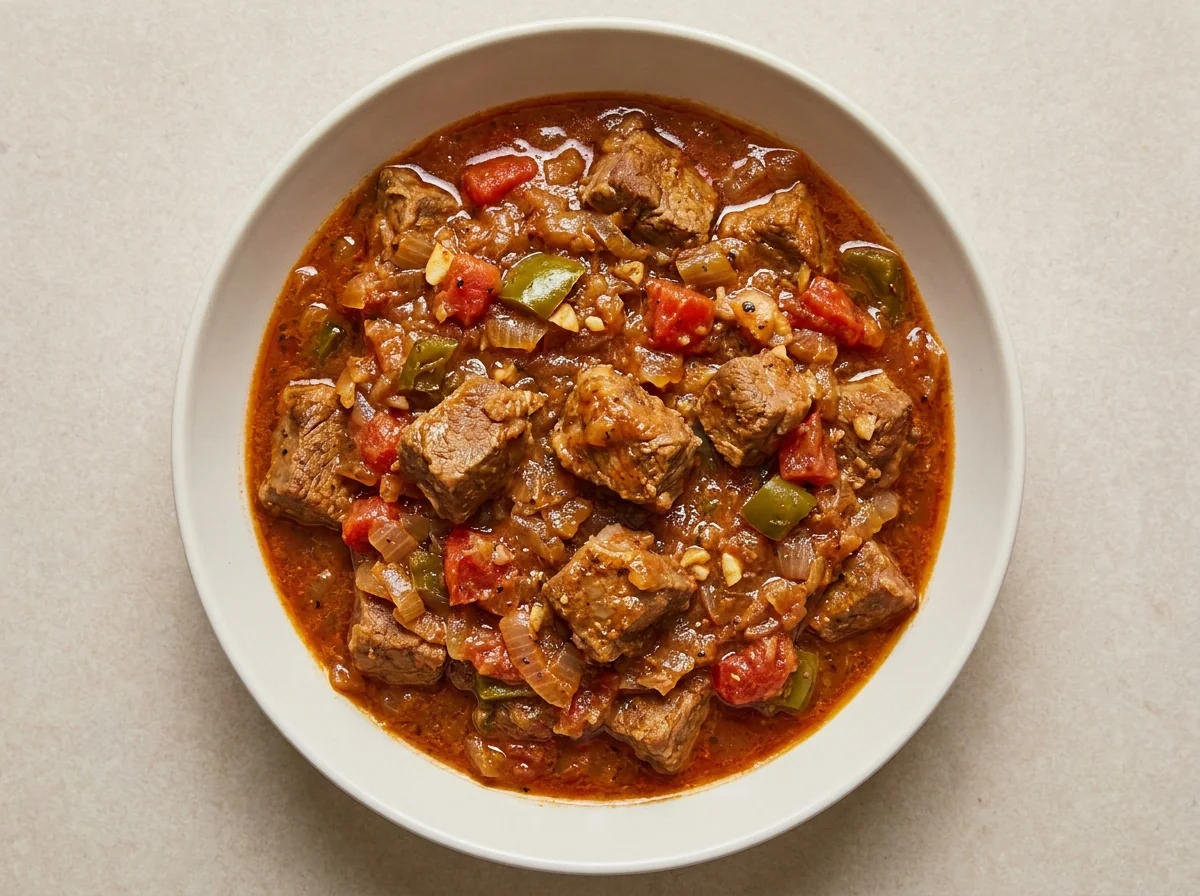
Dam'a is one of the beloved everyday Sudanese dishes, and its name describes its state when the sauce cooks down and droplets of oil separate on its surface like tears.
Its secret lies in patiently sautéing the onion until it darkens, then cooking the tomatoes down over low heat until they thicken and glisten, producing a rich sauce ladled with gurassa or aseeda in a warm home-cooked meal.
Preparation Steps
Sautéing the onion
Heat the oil in a pot over medium heat, add the chopped onion, and stir it patiently until it wilts completely and turns deep golden, for this is the basis of Dam'a's dark body.
Browning the meat
Add the meat cubes to the onion and stir them until their color changes and their edges brown, then add the cardamom, cinnamon, black pepper, and half the salt and stir until the spices become fragrant.
Boiling the meat
Add hot water to cover the meat, cover the pot, and leave it over low heat for about twenty minutes until it is nearly done and the water reduces.
Browning down the tomatoes
Add the chopped tomatoes, tomato paste, and green pepper, stir, and let the mixture cook down over low heat until droplets of oil separate on the surface and the sauce thickens, and from this comes the name Dam'a (teardrop).
The final seasoning
Add the crushed garlic and dried coriander and adjust the salt, and leave the pot for a few minutes until the flavors come together and the sauce becomes thick and glossy.
Serving
Take the pot off the heat and serve the Dam'a hot with gurassa, aseeda, or rice, ladling out plenty of its dark sauce with it.
Blood Sugar Impact
The glycemic index (GI) measures how quickly a food raises blood sugar, while the glycemic load (GL) measures how much a full serving raises it. Together they give the complete picture.
Glycemic Index
GI
12Low
Low0–55Medium56–69High70+
A low value (≤55) means a gradual rise in blood sugar — the most suitable range for diabetes and insulin resistance.
Glycemic Load
GL
1Low
Low0–10Medium11–19High20+
Glycemic load reflects the impact of the full serving. To lower it: take half a serving, or pair the recipe with a source of protein and fiber.
Nutritional Information
Per ServingMakes 4 servings · one serving is about 290 g of raw ingredients
Calories337 kcal17%of Daily Value*
Protein21 g42%of Daily Value*
Carbohydrates16 g6%of Daily Value*
Fat22 g28%of Daily Value*
Fiber4 g14%of Daily Value*
Sodium374 mg16%of Daily Value*
* Percent Daily Values are based on a 2,000-calorie diet per FDA food-label reference values — your daily needs may be higher or lower. Values are derived from the recipe's ingredients via the USDA database.
Troubleshooting
The most common problems when preparing Sudanese Meat Stew in Onion and Tomato Sauce (Damaa), and how to fix them:
The sauce is pale and thin
Sauté the onion longer until it darkens, and let the tomatoes cook down for a longer time over low heat until they concentrate and darken.
The meat is tough
Boil it longer in water before adding the tomatoes, for acidity slows the meat's tenderizing if added early.
The tomato taste is sour
Let them cook down longer until their acidity mellows, and a small pinch of sugar can be added to balance the taste.
Storage and Make-Ahead
Refrigerator
Keep it in an airtight container for up to three days, and reheat it over low heat; its flavor deepens the next day.
Freezing
Freeze it for up to a month in airtight containers, move it to the refrigerator before reheating, and add a splash of water if it has thickened more than needed.
Tested Ingredient Substitutions
Original Ingredient
Tested Substitute
Ratio
Flavor Difference
lamb
beef or chicken
same weight, 400 g
Chicken cooks faster, and the dish is then called chicken Dam'a.
green pepper
colored bell peppers
same weight, 60 g
Colored bell peppers give a light sweetness and a brighter color.
vegetable oil
clarified butter (ghee)
same volume, 30 ml
Ghee deepens the traditional flavor but raises the fat, so we use it in moderation.
How Much Does It Make? Scaling Guide
Ingredient
1/2 quantity
Quantity (base)
Double
Cubed meat
200 g
400 g
800 g
Onion
150 g
300 g
600 g
Tomatoes
150 g
300 g
600 g
Tomato paste
20 g
40 g
80 g
Vegetable oil
15 ml
30 ml
60 ml
Salt
1.5 g
3 g
6 g
EEINA Nutrition Tip
Do not rush sautéing the onion, for the darker its color gets without burning, the darker and richer Dam'a's body becomes. And let the tomatoes cook down until the oil appears on the surface, for that is the sign the sauce is done.
Add This Recipe to Your Plan
The EEINA app saves your favorite recipes, calculates them from their real ingredients, and shows your daily numbers toward your goal. Try it free now.
Because the oil separates on the surface of the sauce when it is done and cooked down, so its droplets look like the tears its name refers to.
What is the difference between Dam'a and tagliya?
Both are meat-and-tomato sauces, but in Dam'a the onion and tomato are cooked down until they darken and thicken and the oil droplets appear, tending toward a denser body.
What is Dam'a served with?
It is served with gurassa, Sudanese aseeda, or rice, ladled with plenty of its dark sauce.