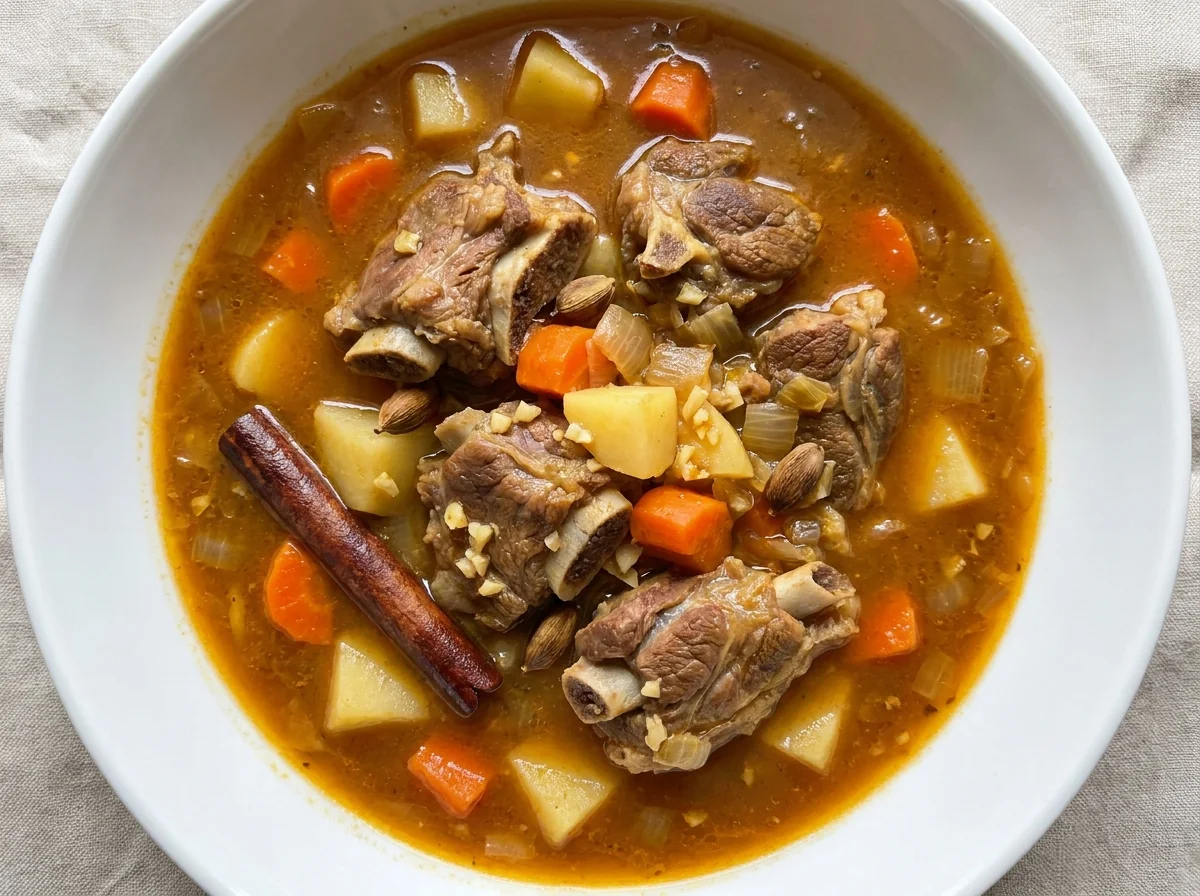
We cook Bramah the way it is cooked in Sudanese homes: bone-in lamb pieces simmer slowly in the barmah pot until their flavor dissolves into the broth, and the aroma of cinnamon, cloves, and cardamom fills the kitchen.
We add the potato and carrot at the end of cooking so they keep their texture, and serve it as a warm, rich soup to sip on its own or pour over rice on a cold day.
Preparation Steps
Sautéing the onion and meat
Heat the oil in a wide pot and sauté the onion until it wilts, then add the lamb pieces and stir them until their color changes on all sides.
Adding the spices
Add the garlic, cinnamon stick, cloves, cardamom, cumin, coriander, and black pepper, and stir for a minute until the aroma of the spices wafts over the meat.
Slow cooking
Cover the meat with the water and bring it to a boil, then lower the heat and skim off the foam that rises, and leave it over low heat for about an hour until the lamb turns tender and the broth becomes rich.
Adding the vegetables
Add the potato, carrot, hot green chili, and salt, and continue cooking for a quarter of an hour until the vegetables are done and the soup's texture firms up.
Serving
Remove the cinnamon stick and cardamom pods, and serve the soup hot with rice or bread, adding lemon juice for those who like it.
Blood Sugar Impact
The glycemic index (GI) measures how quickly a food raises blood sugar, while the glycemic load (GL) measures how much a full serving raises it. Together they give the complete picture.
Glycemic Index
GI
47Low
Low0–55Medium56–69High70+
A low value (≤55) means a gradual rise in blood sugar — the most suitable range for diabetes and insulin resistance.
Glycemic Load
GL
7Low
Low0–10Medium11–19High20+
Glycemic load reflects the impact of the full serving. To lower it: take half a serving, or pair the recipe with a source of protein and fiber.
Nutritional Information
Per ServingMakes 4 servings · one serving is about 635 g of raw ingredients
Calories379 kcal19%of Daily Value*
Protein26 g52%of Daily Value*
Carbohydrates18 g7%of Daily Value*
Fat23 g29%of Daily Value*
Fiber3 g11%of Daily Value*
Sodium402 mg17%of Daily Value*
* Percent Daily Values are based on a 2,000-calorie diet per FDA food-label reference values — your daily needs may be higher or lower. Values are derived from the recipe's ingredients via the USDA database.
Troubleshooting
The most common problems when preparing Sudanese Bramah Lamb and Vegetable Soup, and how to fix them:
The meat is still tough
Extend the cooking over low heat until the lamb turns tender before adding the vegetables, for bone-in meat needs time to soften.
The broth is cloudy and dark
Skim off the foam that rises at the start of the boil and cook over low, not high, heat, for a hard boil clouds the broth.
The vegetables fall apart in the soup
Add the potato and carrot only in the last quarter of the cooking, for adding them early makes them dissolve into the broth.
Storage and Make-Ahead
Refrigerator
Keep it in an airtight container for up to three days, and reheat it over low heat with a little water to adjust the texture.
Freezing
Freeze the broth and meat for up to two months; it is best to freeze it before adding the potato, because its texture changes after freezing.
Tested Ingredient Substitutions
Original Ingredient
Tested Substitute
Ratio
Flavor Difference
bone-in lamb
bone-in beef or lamb neck
same weight, 500 g
Beef needs slightly longer cooking and gives a heavier broth
potato
pumpkin or zucchini
same weight, 200 g
It lowers the carbohydrates further and speeds up the cooking
vegetable oil
traditional ghee
same weight, 20 ml
Ghee gives a heritage flavor closer to Sudanese cooking but adds dairy
hot green chili
extra black pepper
as desired
For those who want the soup without heat
How Much Does It Make? Scaling Guide
Ingredient
Half amount
Amount (base)
Double
Bone-in lamb
250 g
500 g
1000 g
Onion
60 g
120 g
240 g
Potato
100 g
200 g
400 g
Carrot
60 g
120 g
240 g
Water
750 ml
1500 ml
3000 ml
Salt
1.5 g
3 g
6 g
EEINA Nutrition Tip
Skim off the foam that rises at the start of the boil so the broth stays clear, and cook the lamb over low heat for long enough, for slow cooking is what makes the meat tender and gives Bramah its depth of flavor.
Add This Recipe to Your Plan
The EEINA app saves your favorite recipes, calculates them from their real ingredients, and shows your daily numbers toward your goal. Try it free now.
Because the bone releases its flavor and marrow into the broth, making it richer and deeper in flavor, and that is the secret to the texture of Sudanese Bramah.
How do I make the broth clear?
Skim off the foam that rises at the start of the boil, and cook over low, not high, heat, for a hard boil clouds the broth.
Can Bramah be made in a pressure cooker?
Yes, the lamb turns tender in about half the time; then add the vegetables at the end and finish over normal heat until they are done.