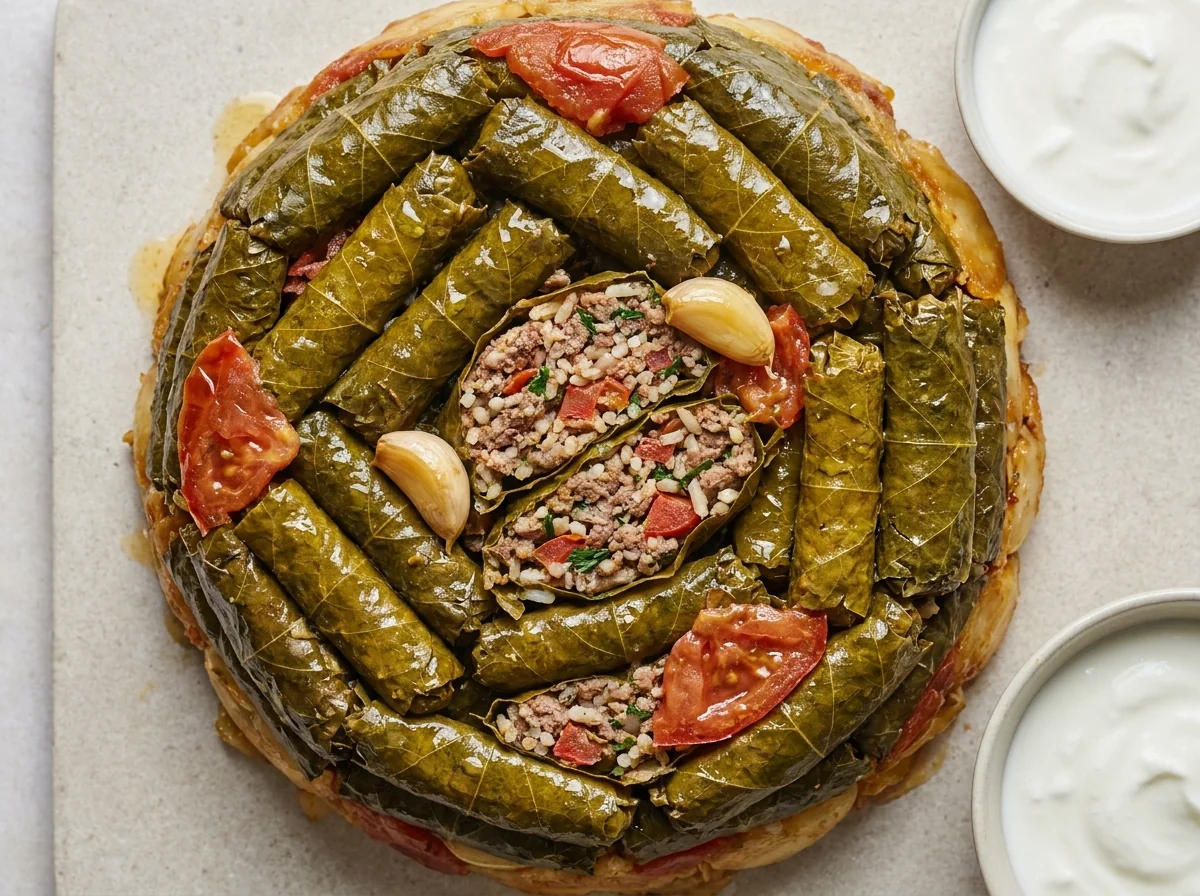
Meat-stuffed vine leaves are the master of feast tables in the Levant, Egypt, and the Gulf, and their presence on the Ramadan table is a celebration in itself.
Fingers rolled by the hands of the whole family together hours before iftar, and it is unlike the cold vegetarian yalanji cooked in oil.
Preparation Steps
Prepare the leaves
If the leaves are preserved, cover them with hot water for ten minutes and wash the salt out of them; if fresh, boil them for two minutes until they soften to an olive color. Trim the hard stems and set aside the torn ones to line the bottom of the pot, for in stuffed dishes nothing is wasted.
Mix the meat and rice filling
Mix the washed, drained rice with the ground meat, tomato, parsley, spices, a pinch of cinnamon, salt, pepper, and a spoon of olive oil. A moist, even filling whose spice aroma rises before it ever touches the heat.
Roll even, thin fingers
Lay out the leaf with the veins up and its stem toward you, place a thin line of filling near the stem, fold in the two sides and roll a finger pulled moderately tight. Too tight chokes the rice, too loose comes undone. And evenness in thickness is the secret of a single doneness.
Pack the pot the way the pros do
Line the bottom of the pot with the torn leaves and the bone-in meat pieces or potato slices, then pack the fingers in tight rows in opposing circles, layer over layer, and tuck the whole garlic cloves between the rows.
Submerge, weigh down, and cook slowly
Place an inverted plate over the top to weigh the fingers down so they do not float and come undone, and pour the hot salted water and lemon juice until it touches the plate. Let it boil, then lower the heat to its gentlest and cover for an hour and a quarter until the rice is done and the leaves soak up its acidity, and the scent of grape leaves with lemon fills the house, an announcement of a feast.
Flip the pot, the family scene
Rest the pot for ten minutes, run a knife around its wall, place the serving plate over it and flip it in one confident motion, so the structure of the stuffed dish is revealed firm with its golden base, and it is served hot with cold yogurt on the side.
Blood Sugar Impact
The glycemic index (GI) measures how quickly a food raises blood sugar, while the glycemic load (GL) measures how much a full serving raises it. Together they give the complete picture.
Glycemic Index
GI
64Medium
Low0–55Medium56–69High70+
A low value (≤55) means a gradual rise in blood sugar — the most suitable range for diabetes and insulin resistance.
Glycemic Load
GL
20High
Low0–10Medium11–19High20+
Glycemic load reflects the impact of the full serving. To lower it: take half a serving, or pair the recipe with a source of protein and fiber.
Nutritional Information
Per ServingMakes 6 servings · one serving is about 340 g of raw ingredients
Calories412 kcal21%of Daily Value*
Protein20 g40%of Daily Value*
Carbohydrates37 g13%of Daily Value*
Fat21 g27%of Daily Value*
Fiber6 g21%of Daily Value*
Sodium567 mg25%of Daily Value*
* Percent Daily Values are based on a 2,000-calorie diet per FDA food-label reference values — your daily needs may be higher or lower. Values are derived from the recipe's ingredients via the USDA database.
Troubleshooting
The most common problems when preparing Meat-Stuffed Vine Leaves, and how to fix them:
The fingers came undone in the pot
Loose rolling or the weight was missing. Roll more precisely and weigh them down with a plate that touches the top throughout cooking.
The rice stayed raw and the leaves were done
Scarce water or rushed heat. The water should always touch the heavy plate, and we add more hot water whenever it dries before doneness.
The stuffed dish is too salty
Preserved leaves that were not soaked. Soaking in hot water and two washes are a must for preserved leaves, and salt comes after them, by tasting.
The leaves are tough and hard to chew
Old, thick leaves or undercooking. Choose young, thin leaves, and an extra quarter hour on the gentlest heat dissolves the stubbornness.
Storage and Make-Ahead
Right away
Hot after the victorious flip, with yogurt.
In the fridge
Three days, and it grows tastier. Reheated with a little water over low heat or eaten lukewarm.
In the freezer
Cooked for two months in airtight containers. Thawed overnight in the fridge and reheated with steam.
Tested Ingredient Substitutions
Original Ingredient
Tested Substitute
Ratio
Flavor Difference
Vine leaves
Large chard leaves
1:1
Faster to roll for their wide leaves and a more delicate taste
The ground meat in the filling
Omit it and add more rice with tomato and mint
~
It becomes yalanji in oil. Another dish we have
The potato bottom
Pieces of zucchini or tomato slices
1:1
Every household's bottom is to its own taste
Lemon juice
Diluted pomegranate molasses
30 g
Sweet acidity in the Aleppo style
How Much Does It Make? Scaling Guide
Ingredient
6 servings
3 servings
12 servings
Vine leaves
300 g
150 g
600 g
Rice
200 g
100 g
400 g
Meat
300 g
150 g
600 g
EEINA Nutrition Tip
Roll moderately tight, not strangling. The rice swells and needs a third more of its space, and a strangled finger bursts in the pot. And always try one test finger before flipping the whole pot.
Add This Recipe to Your Plan
The EEINA app saves your favorite recipes, calculates them from their real ingredients, and shows your daily numbers toward your goal. Try it free now.
Yalanji has a filling of rice without meat and is cooked in olive oil and eaten cold as an appetizer; the meat-stuffed one is cooked in broth and lemon and eaten hot as a meal. Two methods and two entirely different standings.
How much time does it actually need on feast day?
An hour of rolling for someone used to it and an hour and a quarter of cooking, and the loveliest family solution: a group rolling session in the afternoon cuts it in half and makes the memory.
Can it be rolled the night before and cooked the next day?
Yes. Packed in its pot covered in the fridge, then the hot water is poured over it and it is cooked just before iftar.
Why is it weighed down with a plate over the fingers?
The fingers float as the water boils and the rice swells, so they come apart. The plate keeps them packed in place until they firm up with doneness.