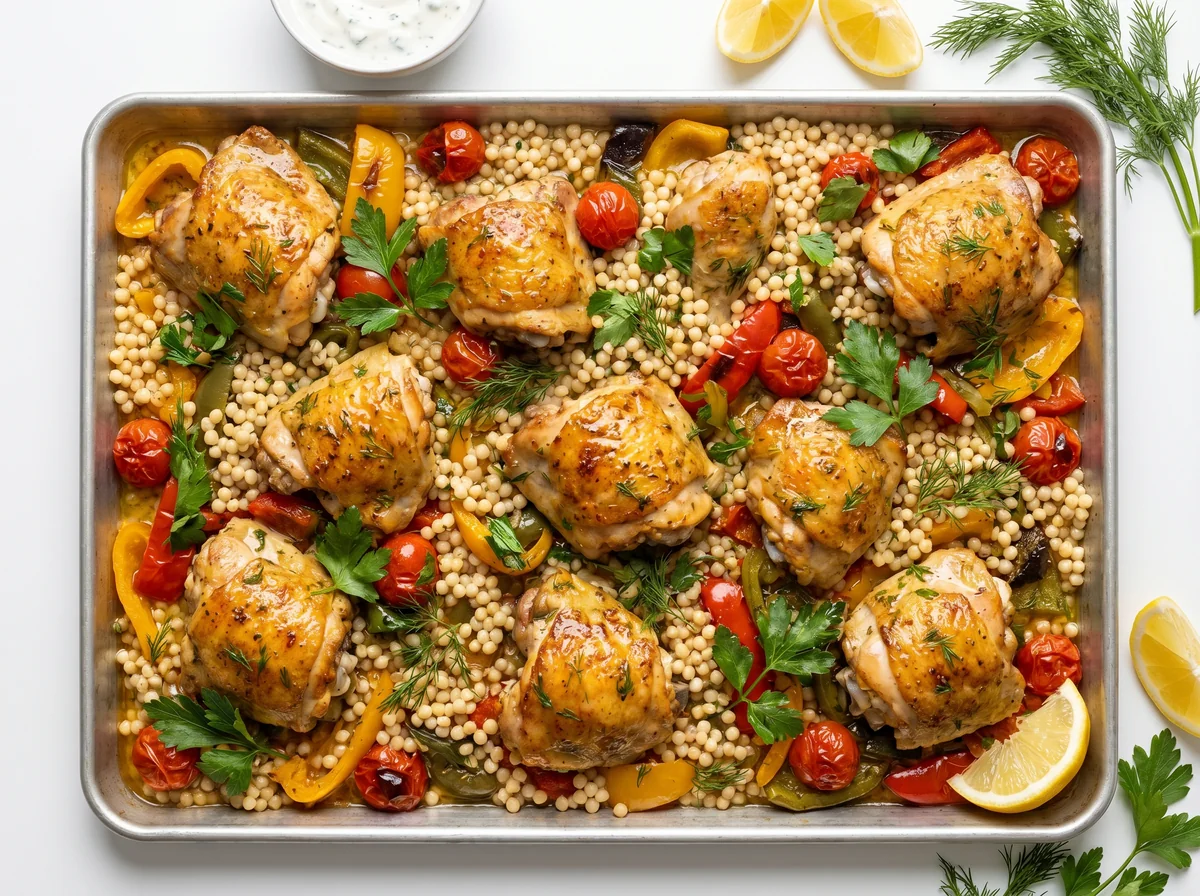
The sheet pan is a solution for busy weeknight kitchens: one component layered on another, one pan to wash instead of four pots. Here the simplicity of the sheet pan met the flavors of the Mediterranean kitchen — the lemon-and-thyme marinated chicken roasts over a bed of couscous so its seasoned juices drip down into it during cooking and give it a flavor that steaming the couscous alone never could.
The zucchini, peppers, and red onion brown at the edges, picking up a gentle sweetness, and the cherry tomatoes burst and melt into the broth. A recipe worthy of a quiet Friday family dinner, or for advance meal-prep distributed into airtight containers for the week. The idea is to let the oven do the work while you get on with something else, producing a complete balanced meal with the least effort and the fewest dishes to wash.
Preparation Steps
Marinate the chicken
Mix 30 ml olive oil with the lemon juice, lemon zest, garlic, thyme, cumin, paprika, black pepper, and a pinch of salt, then rub the chicken thighs all over until fully coated on every side. Leave them to marinate for at least 15 minutes in the refrigerator so the flavors penetrate and the acid in the lemon tenderizes the meat.
Preheat the oven and hydrate the couscous
Preheat the oven to 200°C (top and bottom heat). In a deep roasting pan, scatter the dry couscous and pour the hot chicken broth over it along with one tablespoon of olive oil, then stir quickly so the broth absorbs evenly. The moistened couscous will trap steam and cook in the oven's heat without drying out.
Arrange the vegetables
Scatter the zucchini, bell peppers, red onion, and cherry tomatoes over the couscous layer. Drizzle with the remaining oil and a light pinch of salt. Spread the vegetables in a single, non-crowded layer so they roast rather than steam — stacking releases moisture that prevents browning.
Arrange the chicken and roast
Arrange the chicken thighs on top of the vegetables and pour over any remaining marinade. Roast for 40 to 45 minutes until the skin is golden and the thickest part of the thigh reaches an internal temperature of 74°C on a meat thermometer. Clear (not pink) juices at the thickest point is a sign of full doneness; 74°C ensures poultry safety.
Rest and serve
Remove the pan and let it rest for 5 minutes so the juices redistribute inside the meat and the chicken stays juicy when cut. Fluff the couscous with a fork and scatter the chopped parsley. Serve hot with extra lemon wedges on the side.
Blood Sugar Impact
The glycemic index (GI) measures how quickly a food raises blood sugar, while the glycemic load (GL) measures how much a full serving raises it. Together they give the complete picture.
Glycemic Index
GI
47Low
Low0–55Medium56–69High70+
A low value (≤55) means a gradual rise in blood sugar — the most suitable range for diabetes and insulin resistance.
Glycemic Load
GL
32High
Low0–10Medium11–19High20+
Glycemic load reflects the impact of the full serving. To lower it: take half a serving, or pair the recipe with a source of protein and fiber.
Nutritional Information
Per ServingMakes 4 servings · one serving is about 665 g of raw ingredients
Calories757 kcal38%of Daily Value*
Protein59 g118%of Daily Value*
Carbohydrates78 g28%of Daily Value*
Fat22 g28%of Daily Value*
Fiber9 g32%of Daily Value*
Sodium560 mg24%of Daily Value*
Potassium1302 mg28%of Daily Value*
Phosphorus649 mg52%of Daily Value*
* Percent Daily Values are based on a 2,000-calorie diet per FDA food-label reference values — your daily needs may be higher or lower. Values are derived from the recipe's ingredients via the USDA database.
Troubleshooting
The most common problems when preparing Sheet Pan Chicken with Mediterranean Couscous and Vegetables, and how to fix them:
The couscous came out dry or hard at the bottom
The broth quantity was too little or it was cold when poured. Use hot broth at a ratio of at least 360 ml per 300 g couscous, and cover the pan with foil for the first 20 minutes then uncover to brown the chicken.
The couscous turned mushy like porridge
There was too much moisture or the vegetables released a lot of water. Reduce the broth slightly next time, spread the vegetables in a single non-crowded layer, and avoid placing squeezed tomatoes directly on the couscous.
The chicken browned on top but was not cooked through inside
The heat was too high or the pieces were very thick. Lower the temperature to 190°C and verify the center has reached 74°C with a thermometer; cover with foil if the surface is browning too early.
The vegetables came out steamed rather than roasted
They were crowded and the steam trapped the vegetables instead of letting them roast. Spread them in a single layer on a wide pan; if needed, use two pans instead of stacking one, as space allows the steam to escape and the edges to brown.
The flavor is bland despite the marinade
The lemon acid and salt need time to penetrate. Extend the marinating time to one hour in the refrigerator and add fresh lemon zest and juice at serving for an extra refreshing flavor layer.
Storage and Make-Ahead
Refrigerator
In an airtight container for up to 3 days. Cool the dish within two hours of cooking per the danger zone rule to avoid bacterial growth.
Freezer
Freeze the chicken and couscous in airtight containers for up to two months. The couscous may lose some texture after freezing but the flavor stays good.
Reheating
Reheat in the oven at 175°C with a splash of water or broth over the couscous to restore moisture, or in the microwave covered until the center heats through.
Tested Ingredient Substitutions
Original Ingredient
Tested Substitute
Ratio
Flavor Difference
Bone-in chicken thighs
Chicken breasts or boneless thighs
equal weight
Breasts are leaner but dry out faster — reduce roasting time to about 30 minutes and check for 74°C early.
Wheat couscous
Coarse bulgur or parboiled rice
cup for cup roughly with broth adjustment
Bulgur is a less processed option but is also wheat. For gluten-free, use rinsed quinoa with a little extra broth.
Zucchini and bell pepper
Eggplant, carrots, or sweet potato cubes
equal weight
Denser vegetables like carrots and sweet potato need smaller cuts or a 10-minute head start before adding the chicken to cook evenly.
Fresh thyme
Dried thyme or mixed Mediterranean herbs
1 teaspoon dried per 1 tablespoon fresh
Dried is more concentrated so use less; add it with the marinade rather than at the end so it releases its flavor.
Olive oil
Canola or sunflower oil
similar amount
Olive oil is preferred for its Mediterranean flavor, but any neutral vegetable oil works for roasting.
How Much Does It Make? Scaling Guide
Ingredient
4 servings
6 servings
8 servings
Chicken thighs
8 (900 g)
12 (1.35 kg)
16 (1.8 kg)
Dry couscous
300 g
450 g
600 g
Hot chicken broth
360 ml
540 ml
720 ml
Mixed vegetables
930 g
1.4 kg
1.86 kg
Olive oil
45 ml
68 ml
90 ml
EEINA Nutrition Tip
For a golden chicken crust and couscous that is not soggy, make sure the broth is hot when you pour it and do not use more than roughly twice the volume of the couscous. Couscous needs enough moisture to soften but excess turns it into porridge. In the last five minutes, switch the oven to the top broiler setting to brown the surface of the chicken if needed, while watching closely so the thyme does not burn.
Add This Recipe to Your Plan
The EEINA app saves your favorite recipes, calculates them from their real ingredients, and shows your daily numbers toward your goal. Try it free now.
Can this recipe be prepared in advance for meal prep?
Yes, and it is ideal for it. Divide it into airtight containers once cooled and refrigerate for up to 3 days. When reheating, add a splash of broth over the couscous to restore its moisture.
How do I ensure the chicken is fully cooked?
The most accurate method is a food thermometer: insert it into the thickest part of the thigh without touching the bone — it must reach 74°C. The juices also run clear rather than pink when the chicken is fully done.
Is couscous suitable for someone with diabetes?
Couscous on its own is high-glycemic, but serving it here within a meal rich in protein, vegetables, olive oil, and lemon acid slows carbohydrate absorption. Stick to the measured portion and monitor your readings; consult a dietitian to determine what suits your individual case.
What is the substitute if I am avoiding gluten?
Replace the couscous with well-rinsed quinoa, which is naturally gluten-free and gives a similar texture. Adjust the broth quantity as quinoa absorbs slightly more liquid.
Why is the chicken roasted directly on top of the couscous?
So that the seasoned chicken juices drip onto the couscous during cooking and give it a deep flavor and a gentle richness — something that distinguishes this method from steaming the couscous separately and placing the chicken on top.