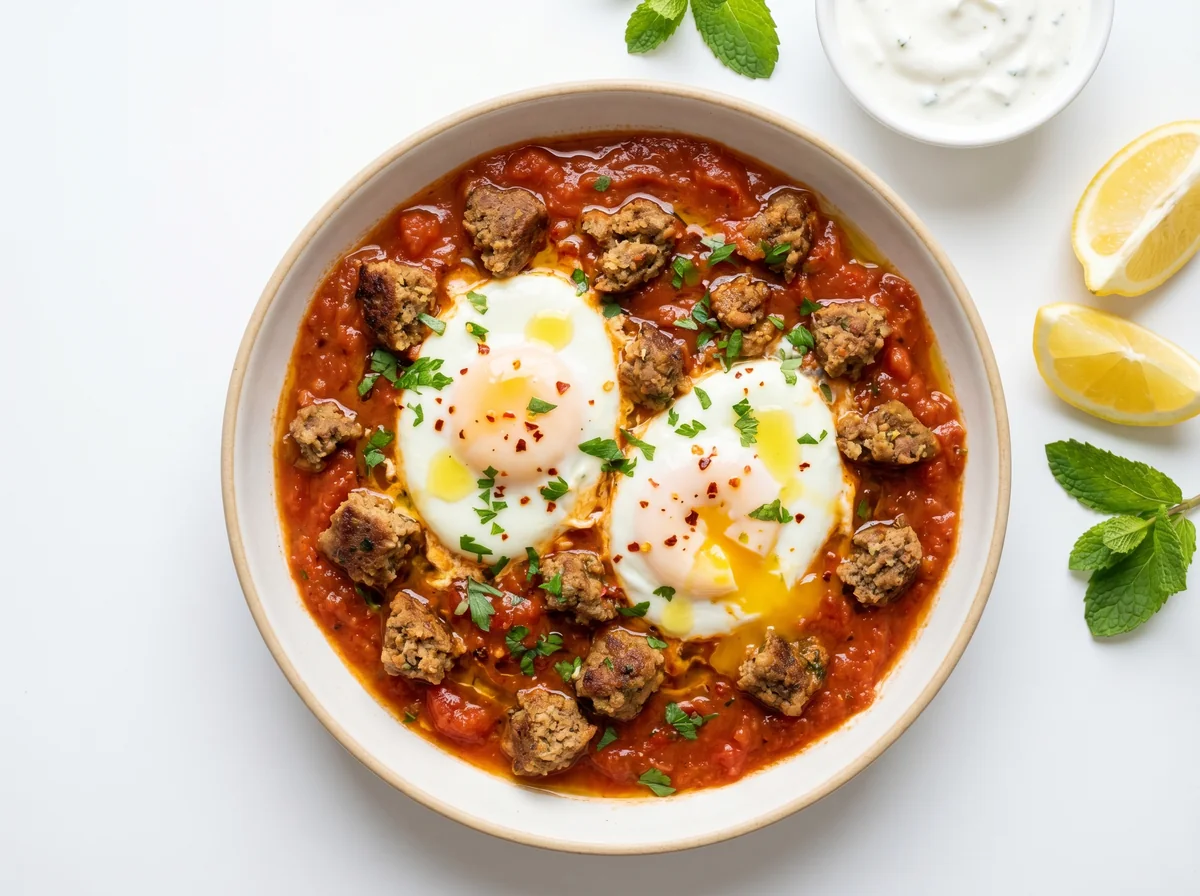
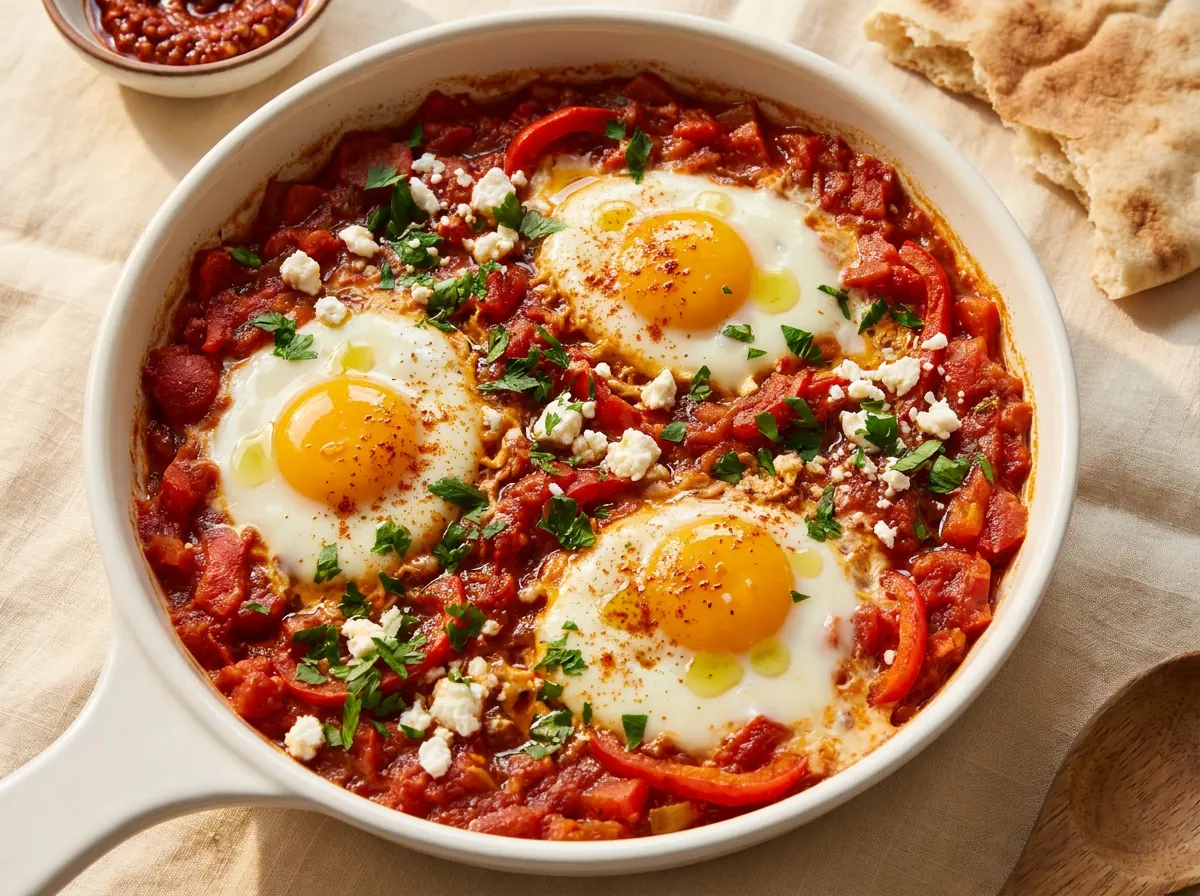
On Levantine tables, eggs poached in tomatoes are a popular morning dish that gathers the family around one pan.
It differs from the Saudi Hameess in its abundant generous sauce in which the eggs are fully submerged rather than pan-fried, and from Galayat Banadoura in that the eggs are cooked whole in pockets of sauce rather than scrambled in. The Levantine seasoning with cumin, garlic, and bell pepper gives it a warm depth, making it a single dish that feeds the family with hot bread and a touch of parsley.
Preparation Steps
Sauté the onion and pepper
Heat the olive oil in a wide pan over medium heat, then add the onion and bell pepper and stir for about 5 minutes until the onion softens and turns a translucent golden color; this softening releases their natural sweetness and builds the base flavor of the sauce. Avoid high heat to prevent the oil from burning before the vegetables are done.
Bloom the garlic and cumin
Lower the heat slightly and add the crushed garlic and ground cumin, stirring for just 30 seconds until the garlic is fragrant but has not changed color to brown; a brief gentle heat releases the aromatic oils of cumin, while overcooking makes the garlic bitter.
Cook the tomato sauce
Add the grated tomatoes, tomato paste, warm water, and black pepper, then cook over medium-low heat for 10 minutes with occasional stirring until the sauce thickens, deepens in color, and the oil floats to the surface; this sign tells you the tomatoes are fully cooked and their raw acidity has cooked off. Adjust salt at the end of cooking.
Make the pockets and crack the eggs
Use the back of a spoon to make six small evenly spaced hollows in the sauce, then crack one egg gently into each hollow so the yolk does not break; spacing the eggs in separate pockets ensures even cooking and makes it easy to serve one portion per person.
Poach the eggs to doneness
Cover the pan and cook over low heat for 6 to 8 minutes until the egg whites are completely firm and have reached their set texture while the yolks remain at your preferred doneness; for full safety, cook until the egg temperature reaches 71°C if you prefer fully set yolks. The steam trapped under the lid is what cooks the surface of the eggs.
Garnish and serve
Remove the pan from the heat and scatter the chopped parsley over the top, then serve the dish warm immediately with whole-grain bread; serving right away preserves the texture of the yolk and the warmth of the sauce before it sets further.
Blood Sugar Impact
The glycemic index (GI) measures how quickly a food raises blood sugar, while the glycemic load (GL) measures how much a full serving raises it. Together they give the complete picture.
Glycemic Index
GI
12Low
Low0–55Medium56–69High70+
A low value (≤55) means a gradual rise in blood sugar — the most suitable range for diabetes and insulin resistance.
Glycemic Load
GL
2Low
Low0–10Medium11–19High20+
Glycemic load reflects the impact of the full serving. To lower it: take half a serving, or pair the recipe with a source of protein and fiber.
Nutritional Information
Per ServingMakes 3 servings · one serving is about 425 g of raw ingredients
Calories305 kcal15%of Daily Value*
Protein17 g34%of Daily Value*
Carbohydrates18 g7%of Daily Value*
Fat19 g24%of Daily Value*
Fiber4 g14%of Daily Value*
Sodium161 mg7%of Daily Value*
Potassium769 mg16%of Daily Value*
Phosphorus289 mg23%of Daily Value*
* Percent Daily Values are based on a 2,000-calorie diet per FDA food-label reference values — your daily needs may be higher or lower. Values are derived from the recipe's ingredients via the USDA database.
Troubleshooting
The most common problems when preparing Levantine Eggs Poached in Tomato and Pepper Sauce, and how to fix them:
The sauce is watery and will not thicken
Remove the lid and let it simmer gently for a few extra minutes until the excess water evaporates and the oil floats; high-water tomatoes need longer, or add a spoonful of tomato paste to concentrate the texture.
The whites are cooking but the yolk is still too runny
Lower the heat and cover the pan well so steam builds and cooks the top surface; high heat cooks the bottom before the top. For a more set yolk, extend cooking by two minutes.
The sauce tastes sour or raw
Cook the tomatoes longer until they deepen in color and the raw acid cooks off, and add a small amount of sautéed onion or a little paste to balance the natural sweetness without sugar.
The garlic turned bitter
Add the garlic over low heat for just a few seconds until fragrant, before it changes color to brown; burnt garlic releases a bitterness that is very hard to fix afterwards.
The egg stuck to the bottom of the pan
Make sure there is a sufficient layer of sauce under each egg before cracking it in, and use a non-stick pan or enough oil; poaching the egg in the sauce rather than on bare metal prevents sticking.
Storage and Make-Ahead
Refrigerator
Store leftovers in an airtight container in the refrigerator for up to 3 days; it is preferable to store the sauce and eggs together, and dishes containing cooked eggs should be consumed within this period per USDA guidelines.
Reheating
Reheat over low heat or in the microwave until the dish is fully hot and steaming; avoid overheating to prevent the yolk from drying out.
Two-hour rule
Do not leave the dish at room temperature for more than two hours, and less in hot weather, as bacteria thrive in the danger zone between 4 and 60°C per USDA guidelines.
Freezing
Freezing cooked poached eggs is not recommended as the texture becomes rubbery and watery after thawing; it is better to freeze the sauce alone and add fresh eggs when reheating.
Tested Ingredient Substitutions
Original Ingredient
Tested Substitute
Ratio
Flavor Difference
Whole eggs
Egg whites only (2 whites per whole egg)
2 egg whites for 1 whole egg
Reduces cholesterol and fat while keeping the protein; lighter and less rich texture, and needs slightly less cooking time.
Green bell pepper
Red or yellow bell pepper
same weight
Red is sweeter and more mature, adding more natural sweetness and color to the sauce without changing the cooking method.
Olive oil
Neutral vegetable oil
same amount
A practical substitute when olive oil is not available, but it loses the olive flavor and the heart-healthy polyphenols.
Fresh grated tomatoes
Canned crushed tomatoes with no added salt
600 g fresh = about 400 g canned mashed
A quick out-of-season option; choose the no-added-sodium variety to preserve the heart benefit of the dish, and reduce the added water.
Parsley
Fresh cilantro
same amount
Gives a different, aromatic Levantine note; also added at the end to preserve its color and flavor.
How Much Does It Make? Scaling Guide
Ingredient
3 servings (6 eggs)
4 servings (8 eggs)
6 servings (12 eggs)
Eggs
6
8
12
Grated tomatoes
600 g
800 g
1200 g
Bell pepper
150 g
200 g
300 g
Onion
100 g
130 g
200 g
Olive oil
30 ml
40 ml
60 ml
Ground cumin
3 g
4 g
6 g
EEINA Nutrition Tip
Choose fully ripe tomatoes for a sweeter, less acidic sauce, and cook the sauce until the oil floats before adding the eggs; this ensures a concentrated, not watery, sauce and keeps the whites firm and the yolk soft. To preserve the heart-health benefit of the dish, cut back the salt and rely on cumin and garlic for flavor.
Add This Recipe to Your Plan
The EEINA app saves your favorite recipes, calculates them from their real ingredients, and shows your daily numbers toward your goal. Try it free now.
What is the difference between this dish, Hameess, and Galayat Banadoura?
This dish has an abundant generous sauce in which the eggs are poached whole in separate pockets, while the Saudi Hameess is more of a sauté with less sauce, and in Galayat Banadoura the eggs are usually scrambled into the tomatoes rather than cooked whole. The seasoning here is Levantine with cumin, garlic, and bell pepper.
Is it suitable for weight loss?
Yes, it is rich in protein and vegetables and low in refined carbohydrates, which supports satiety for longer. To control calories, reduce the oil slightly and serve with whole-grain bread in a moderate amount instead of white bread.
How do I ensure the eggs are cooked safely?
Cook the eggs until the whites are completely firm. For full safety, cook until the yolks are also firm and reach about 71°C, especially for pregnant women, the elderly, children, and immunocompromised individuals per food safety guidelines.
Can I prepare it ahead for the family?
The sauce can be prepared ahead and stored in the refrigerator for up to 3 days, then reheated with fresh eggs added at serving time; this is better than storing cooked eggs as it preserves the soft yolk texture.
What is the vegan substitute for eggs in this dish?
Replace the eggs with cubes of firm tofu seasoned with turmeric to mimic the color of egg yolk, added to the sauce and cooked until heated through; the flavor is different but the dish remains rich in plant protein and vegetables.