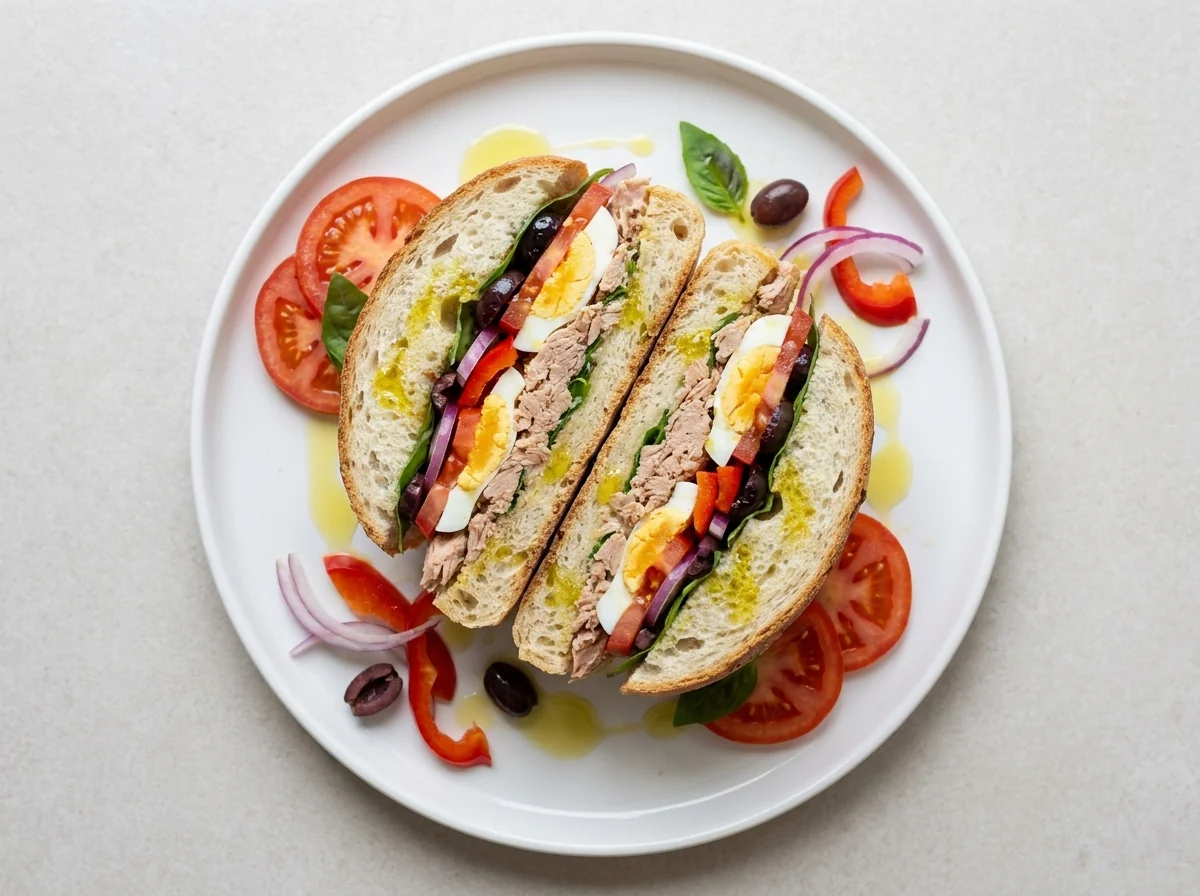
A sandwich from the city of Nice on France's Mediterranean coast, whose name means "the soaked bread" because the bread absorbs the olive oil and the juices of the vegetables until it turns soft.
It was the food of fishermen and workers, who would make it in the morning and press it to eat at midday once its flavors had melded, and that is what makes it ideal for travel and picnics to this day. We present it in a lighter version, tuna in water and rinsed olives.
Preparation Steps
Boil the egg and prep the vegetables
Boil the egg for ten minutes, then cool it in cold water, peel it, and cut it into slices. Slice the tomato, pepper, and onion thinly. Rinse the black olives under running water to reduce their saltiness, since canned olives are salty and we want to control the sandwich's sodium.
Prepare the bread
Split the loaf horizontally into two halves and pull out a little of the inner crumb from each half to make room for the filling. Rub the inner surface with the cut garlic clove; this is the first step of the Niçoise method, giving the bread a light garlic flavor.
Moisten the bread with the dressing
Whisk the olive oil with the red wine vinegar and black pepper, and brush it over both inner faces of the bread completely. Do not add salt, as the tuna and olives are enough to season the sandwich; this is a deliberate sodium adjustment. The dish's name, pan bagnat, means soaked bread, and this moistening with oil and vinegar is the soul of the recipe, which the bread absorbs to turn soft and rich rather than dry.
Layer the filling
Spread the drained tuna over the bottom half, then arrange the tomato, pepper, onion, and olive slices over it along with the egg slices and the arugula leaves. Layer them evenly so every bite gets a bit of each ingredient, and cover with the top half of the bread.
Press the sandwich
Wrap the sandwich tightly in plastic wrap, place a weight on top of it (a plate with a can on it), and leave it in the refrigerator for at least an hour. Pressing merges the flavors and lets the bread absorb the juices of the vegetables and the dressing, and this step is what sets pan bagnat apart from any ordinary tuna sandwich.
Cut and pack it for travel
Cut the pressed sandwich in half; it is eaten at room temperature, where it is at its best. For travel, keep it wrapped and carry it in a cool bag with an ice pack, and eat it within two hours of taking it out of the cold to keep it safe.
Blood Sugar Impact
The glycemic index (GI) measures how quickly a food raises blood sugar, while the glycemic load (GL) measures how much a full serving raises it. Together they give the complete picture.
Glycemic Index
GI
66Medium
Low0–55Medium56–69High70+
A low value (≤55) means a gradual rise in blood sugar — the most suitable range for diabetes and insulin resistance.
Glycemic Load
GL
33High
Low0–10Medium11–19High20+
Glycemic load reflects the impact of the full serving. To lower it: take half a serving, or pair the recipe with a source of protein and fiber.
Nutritional Information
Per ServingMakes 2 servings · one serving is about 310 g of raw ingredients
Calories486 kcal24%of Daily Value*
Protein27 g54%of Daily Value*
Carbohydrates55 g20%of Daily Value*
Fat18 g23%of Daily Value*
Fiber5 g18%of Daily Value*
Sodium793 mg34%of Daily Value*
* Percent Daily Values are based on a 2,000-calorie diet per FDA food-label reference values — your daily needs may be higher or lower. Values are derived from the recipe's ingredients via the USDA database.
Troubleshooting
The most common problems when preparing Pressed Tuna Travel Sandwich (Pan Bagnat), and how to fix them:
The bread is dry and did not soften
Too little dressing, or it wasn't pressed. Brush both faces of the bread fully with the oil and vinegar and press it for at least an hour, for pressing and moistening are what soften the bread.
The bread got soggy and crumbled
Bread that was too soft was used, or too much liquid was added. Choose a firm country loaf that is slightly stale, as it absorbs the flavor without falling apart.
The sandwich is salty
The olives or the tuna are salty. Rinse the olives well, choose low-salt tuna in water, and add no salt at all, as what's in the ingredients is enough.
The filling slides out when you bite
The slices are thick or not packed. Cut the vegetables thin, pack them tightly, and press well so the layers hold together.
Storage and Make-Ahead
Refrigerator
Kept tightly wrapped in the refrigerator for up to one day; in fact its taste improves a few hours after pressing and melding.
Travel
Carried wrapped in an insulated bag with an ice pack, and eaten within two hours of taking it out of the cold per the two-hour rule.
Freezer
Not suitable, as the tomato, the fresh vegetables, and the egg change texture after thawing.
Tested Ingredient Substitutions
Original Ingredient
Tested Substitute
Ratio
Flavor Difference
Tuna in water
Grilled chicken breast, sliced
Same weight
An option for those who don't like fish, while keeping the protein high; season it with a little vinegar as well.
Country bread
Firm whole wheat bread
Same weight
Adds more fiber; choose it firm and slightly stale so it withstands pressing without getting soggy.
Black olives
Roasted pepper cubes
Same weight
For those who find olives salty; it lowers the sodium and keeps a Mediterranean flavor.
Arugula
Lettuce or basil leaves
Same weight
Arugula is sharper and lettuce is milder; both add freshness.
How Much Does It Make? Scaling Guide
Ingredient
1 serving
2 servings (base)
4 servings
Country bread
90 g
180 g
360 g
Drained tuna in water
60 g
120 g
240 g
Boiled egg
1/2 egg
1 egg
2 eggs
Extra virgin olive oil
10 ml
20 ml
40 ml
EEINA Nutrition Tip
The secret of pan bagnat is that it improves with waiting rather than spoiling, for pressing and time let the bread absorb the flavors. But because it contains tuna and egg, be sure during travel to keep it cold in an insulated bag with an ice pack, and eat it within two hours of taking it out of the cold per the two-hour rule for perishable foods (source: USDA FSIS).
Add This Recipe to Your Plan
The EEINA app saves your favorite recipes, calculates them from their real ingredients, and shows your daily numbers toward your goal. Try it free now.
Why press the sandwich instead of eating it right away?
Pressing for an hour lets the bread absorb the olive oil and the juices of the vegetables, so the flavors meld and the bread turns soft, firm, and easy to carry. This is the essence of pan bagnat and what sets it apart from an ordinary tuna sandwich.
Is it really suitable for a long trip in the heat?
It is suitable for picnics and travel provided you keep it cold in an insulated bag with an ice pack, and eat it within two hours of taking it out of the cold, because it contains tuna and egg that are perishable in heat (two-hour rule · USDA FSIS).
How much protein does it have?
The tuna and egg make it relatively high in protein, which gives it enough satiety for a full travel meal. The exact value is calculated on the nutrition label.
Can I prepare it the night before?
Yes, and this is ideal, for making it in the evening and pressing it in the refrigerator overnight makes it ready and even tastier in the morning. Wrap it well and keep it cold until trip time.