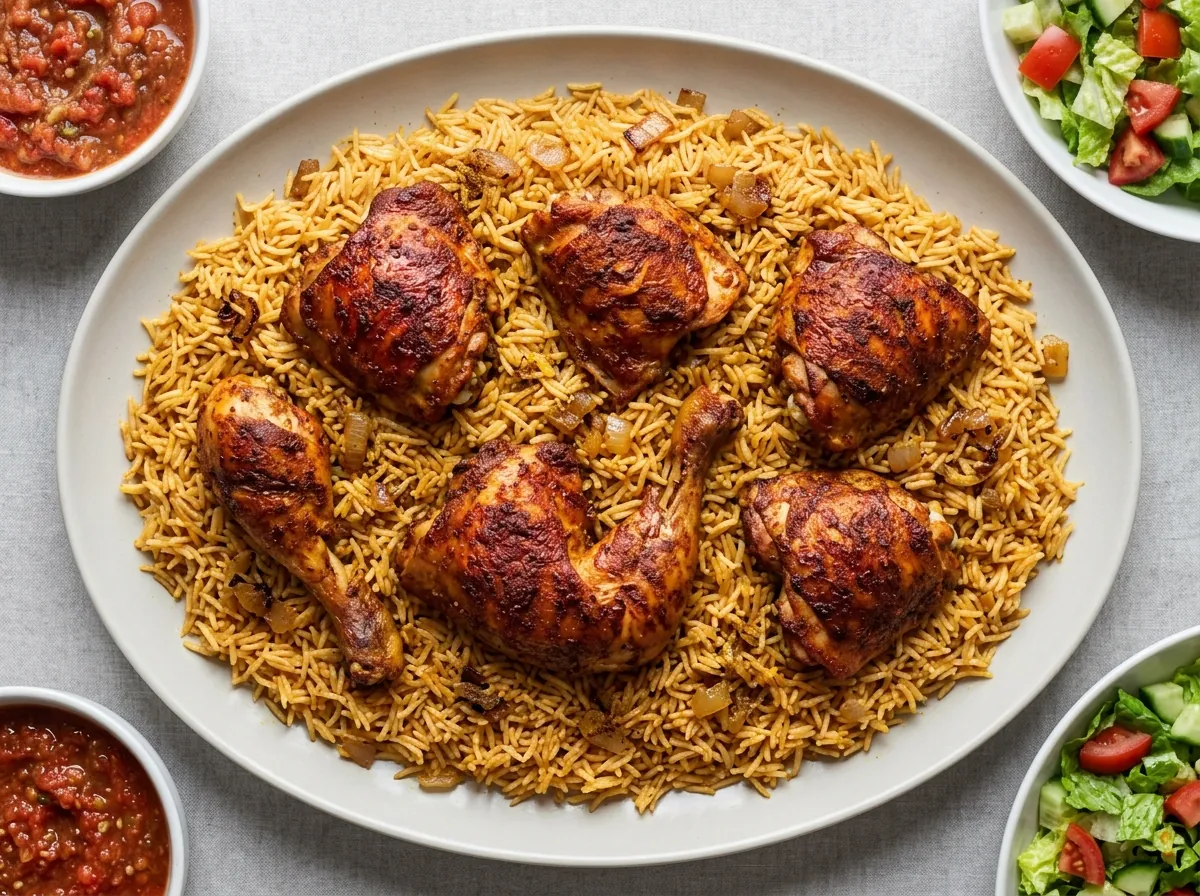
A chicken Mandi (Yemeni-Saudi smoked meat and rice) made entirely in one oven tray, Gulf style: the rice drinks the spiced water at the bottom of the tray while the skinless chicken rests above it on pierced foil so its juices drip into the rice, then a glowing coal at the end lends it the aroma of the traditional pit. A lighter version — no skin, less fat, and no MSG.
The original is the oven chicken Mandi recipe from Atyab Tabkha, and its idea is moving the Mandi pit into a single tray: the rice at the bottom, the chicken above on pierced foil dripping into it, and the coal at the finish.
We lightened the original openly: we removed the skin, cut the fat from half a cup of oil plus ghee down to two tablespoons of olive oil, dropped the MSG (Ajinomoto) in favor of just five grams of salt, and kept the build and the spices as they are.
Preparation Steps
Score and marinate the chicken
Remove the chicken skin and score each piece with a knife two or three times so the marinade sinks in. Rub the pieces with half the salt, the turmeric, the mixed spice, and the cumin, and leave them covered in the refrigerator overnight if possible, or at least an hour, until the meat absorbs the spices and takes on a yellow tint.
Toast the onion and whole spices
Heat the olive oil in a skillet over medium heat and toast the onion for 4 to 5 minutes until golden, then add the cardamom, cloves, cinnamon, pierced loomi, and green chilies and stir for a minute until the spices release their aroma.
Prepare the rice water in the tray
Rinse the rice until the water runs clear and spread it in a deep oven tray. Add the onion and spice mixture and the remaining salt, pour the hot water over it until it stands about two fingers above the rice, and level the surface with a spoon so it cooks evenly.
Build the foil layer and arrange the chicken
Cover the tray tightly with aluminum foil and pierce it with a knife in several well-spaced holes, then arrange the chicken pieces on top of the pierced foil and cover them with a second layer of foil. The holes let the chicken juices drip down into the rice, giving it the Mandi flavor.
Bake, then uncover the chicken to brown
Place the tray in an oven preheated to 180°C for about 50 minutes until the rice absorbs the water and the chicken cooks through. Lift the top foil and return the tray for a final 15 minutes until the chicken surface browns, the center of the thickest piece reaches 74°C, and its juices run clear.
Smoke with the coal and serve
Light a piece of coal until it glows red, set it in a small metal cup in the middle of the tray with a drop of oil, cover the tray with foil for just 3 minutes, then remove the coal. Spread the rice on a serving platter with the chicken on top — daqqus (Gulf tomato-chili relish) and a green salad go well alongside.
Blood Sugar Impact
The glycemic index (GI) measures how quickly a food raises blood sugar, while the glycemic load (GL) measures how much a full serving raises it. Together they give the complete picture.
Glycemic Index
GI
70High
Low0–55Medium56–69High70+
A low value (≤55) means a gradual rise in blood sugar — the most suitable range for diabetes and insulin resistance.
Glycemic Load
GL
38High
Low0–10Medium11–19High20+
Glycemic load reflects the impact of the full serving. To lower it: take half a serving, or pair the recipe with a source of protein and fiber.
Nutritional Information
Per ServingMakes 6 servings · one serving is about 330 g of raw ingredients
Calories413 kcal21%of Daily Value*
Protein26 g52%of Daily Value*
Carbohydrates56 g20%of Daily Value*
Fat8 g10%of Daily Value*
Fiber1 g4%of Daily Value*
Sodium383 mg17%of Daily Value*
Potassium367 mg8%of Daily Value*
Phosphorus261 mg21%of Daily Value*
* Percent Daily Values are based on a 2,000-calorie diet per FDA food-label reference values — your daily needs may be higher or lower. Values are derived from the recipe's ingredients via the USDA database.
Troubleshooting
The most common problems when preparing Oven Chicken Mandi, and how to fix them:
The rice came out raw in the middle
Too little water, or the heat was distributed in a rush. Hold to three cups of hot water, not cold, level the rice surface before covering, and if it is still raw, sprinkle it with half a cup of boiling water and return it covered for 10 minutes.
The chicken cooked through but the rice lagged behind
The pieces were small or the oven runs hot from above. Lift the chicken aside covered with foil, return the rice tray alone, covered, until it finishes, then bring them back together for the final minutes.
The smoke overwhelmed the dish
The coal stayed in too long. Three covered minutes are enough for the pit aroma — any longer turns the smoke bitter. Remove the coal as soon as the time is up and air the tray for a minute.
The chicken stayed pale and never browned
The top foil was not lifted early enough. Uncover it a full quarter hour before the end; for more browning, move it under the oven broiler for two minutes while watching.
Storage and Make-Ahead
Refrigerator (4°C)
Keep the chicken and rice in an airtight container for up to 3 days, preferably separated so the rice does not clump from the chicken's moisture.
Freezer (-18°C)
Freeze in single portions for up to 2 months, thawing each portion overnight in the refrigerator before reheating.
Reheating
Reheat the rice with a splash of water, covered, in the oven at 160°C for about 15 minutes or over gentle steam, until heated through to the center.
Food safety
Do not leave Mandi at room temperature for more than 2 hours, and cool the rice quickly after the meal — cooked rice spoils fast.
Tested Ingredient Substitutions
Original Ingredient
Tested Substitute
Ratio
Flavor Difference
The whole cut-up chicken
Skinless, bone-in chicken thighs
Same weight, 1000 g
More tender and harder to dry out in the oven, with slightly more fat than breast even without the skin.
The coal
A sprinkle of smoked paprika on the chicken
1/2 teaspoon
An alternative for anyone without access to coal; the aroma is lighter than true smoking.
White basmati rice
Two-thirds white basmati with one-third soaked brown basmati
Same total weight, 400 g
Raises the fiber and softens the dish's effect on blood sugar — soak the brown rice for an hour so both cook evenly.
The hot green chilies
Mild peppers, or leave them out
Same count, or none
For anyone cooking for children — the heat is optional in the original anyway.
How Much Does It Make? Scaling Guide
Servings
Chicken
Rice
Hot water
Salt
6 servings
1000 g
400 g
750 ml
5 g
9 servings
1500 g
600 g
1125 ml
7 g
12 servings
2000 g
800 g
1500 ml
10 g
EEINA Nutrition Tip
Removing the skin before marinating, not after, is what makes the lightening cost nothing: the marinade touches the meat directly and sinks in, instead of sitting on skin whose fat would only end up in the rice. And the foil holes are the soul of the method — do not make them wide, or the onion falls into the chicken, and do not forget them, or the rice comes out with no flavor.
Add This Recipe to Your Plan
The EEINA app saves your favorite recipes, calculates them from their real ingredients, and shows your daily numbers toward your goal. Try it free now.
How does this version differ from the pot chicken Mandi in the EEINA library?
In that one, the chicken is simmered in a broth on the stovetop, the rice is cooked in the broth, and the chicken browns under the broiler; this one is made entirely in a single oven tray — rice below, chicken above on pierced foil dripping into it — closer to the idea of the pit and with fewer pots.
Is MSG necessary, as in the circulating recipes?
No — we removed it deliberately. Ajinomoto is an industrial flavor enhancer that raises sodium without need, and the black loomi, whole spices, and chicken juices dripping into the rice more than make up for it.
Can Mandi be made without the coal?
It can, and it comes out delicious, but it loses the signature pit aroma. The closest alternative is a sprinkle of smoked paprika on the chicken before baking, or simply leave it as an honest oven Mandi.
Why marinate the chicken overnight?
The turmeric and spices need time to get past the surface, and the knife scoring opens the way for them. An hour is enough in a hurry, but a night in the refrigerator gives a deeper color and a flavor that reaches the bone.