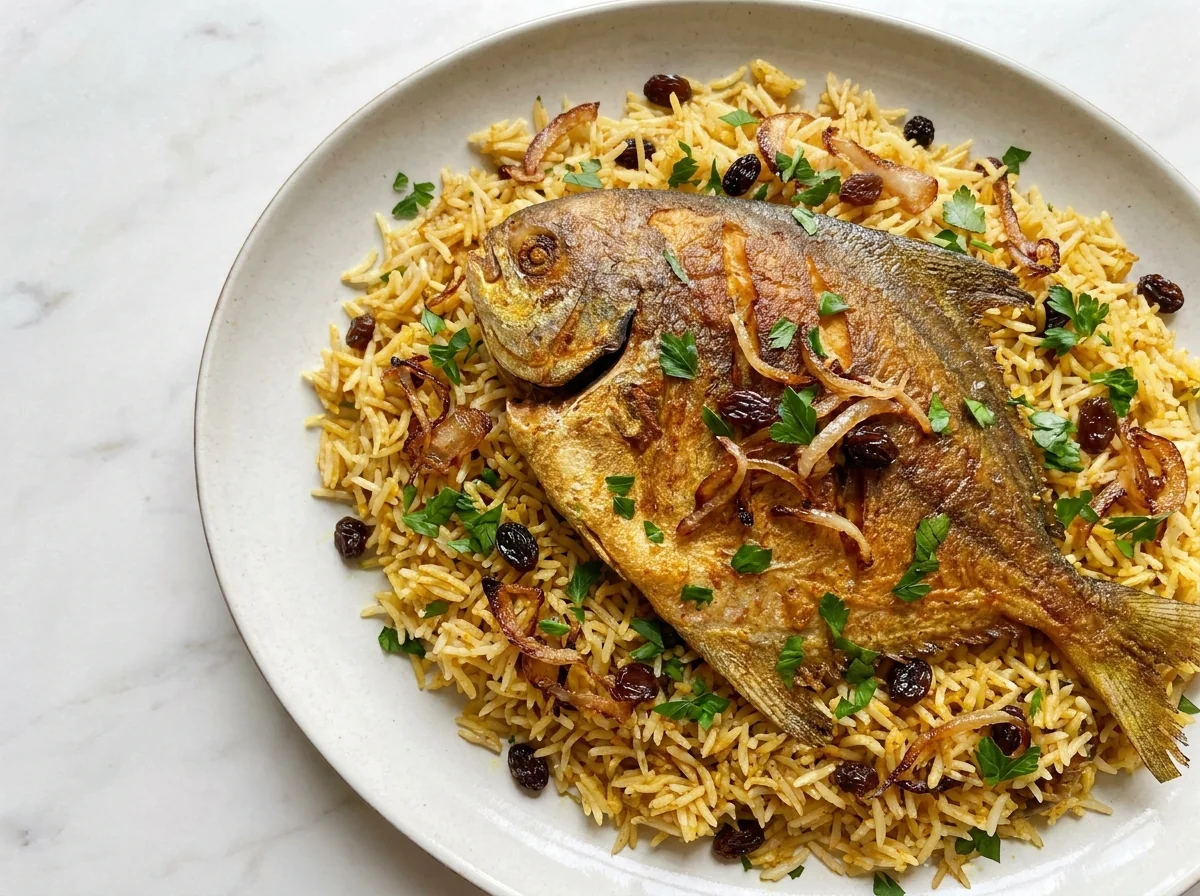
We make mutabbaq samak the way it is served in the homes of Kuwait, where the pomfret is fried until its surface is crisp, then turned out over rice cooked in the fish's own broth so it carries the full flavor of the sea.
Its name comes from flipping the fish over the rice at serving, and it is one of the Friday dishes that gather the family around a single platter served with spicy daqqus.
Preparation Steps
The fish broth
Season the pomfret with the turmeric, black lime, and half the salt, then lightly boil it in water with an onion until tender, keep the broth, then lift out the fish and dry it.
Frying the fish
Coat the fish in flour seasoned with salt and pepper and fry it until its surface turns golden and crisp, then lift it onto absorbent paper. We count the oil absorbed in frying, not the whole pan of oil.
Preparing the rice
Sauté the chopped onion in the pot until golden, then add the parsley, raisins, turmeric, and a little salt and stir for five minutes until the flavors mingle.
Cooking the rice in the broth
Add the washed rice and pour the fish broth over it until it covers it by a finger's width, and leave it over low heat for about thirty minutes until it absorbs the broth and cooks.
The daqqus and serving
Cook the grated tomatoes with the garlic, tomato paste, and cilantro until the daqqus thickens, then spread the rice on a platter, turn the fried fish out over it, and serve the daqqus on the side.
Blood Sugar Impact
The glycemic index (GI) measures how quickly a food raises blood sugar, while the glycemic load (GL) measures how much a full serving raises it. Together they give the complete picture.
Glycemic Index
GI
67Medium
Low0–55Medium56–69High70+
A low value (≤55) means a gradual rise in blood sugar — the most suitable range for diabetes and insulin resistance.
Glycemic Load
GL
69High
Low0–10Medium11–19High20+
Glycemic load reflects the impact of the full serving. To lower it: take half a serving, or pair the recipe with a source of protein and fiber.
Nutritional Information
Per ServingMakes 4 servings · one serving is about 465 g of raw ingredients
Calories902 kcal45%of Daily Value*
Protein46 g92%of Daily Value*
Carbohydrates107 g39%of Daily Value*
Fat30 g38%of Daily Value*
Fiber4 g14%of Daily Value*
Sodium705 mg31%of Daily Value*
Potassium1265 mg27%of Daily Value*
Phosphorus699 mg56%of Daily Value*
* Percent Daily Values are based on a 2,000-calorie diet per FDA food-label reference values — your daily needs may be higher or lower. Values are derived from the recipe's ingredients via the USDA database.
Troubleshooting
The most common problems when preparing Kuwaiti Fried Pomfret over Rice (Mutabbaq Samak Zubaidi), and how to fix them:
The fish came apart while frying
Dry it well before coating in flour and leave it in the oil without moving it until the crust sets before turning it.
The rice is sticky
Wash the rice until the water runs clear and adjust the broth to cover it by just a finger's width, no more.
The daqqus is watery
Let it boil uncovered until the water evaporates and its texture thickens before serving.
Storage and Make-Ahead
Refrigerator
Keep the rice and fish separate in airtight containers for up to two days, and reheat the rice with steam.
Freezing
Freeze the rice for up to a month; it is best to fry the fish fresh at serving to keep it crisp.
Tested Ingredient Substitutions
Original Ingredient
Tested Substitute
Ratio
Flavor Difference
pomfret fish
sheari or hammour fish
same weight, 700 g
Any firm white fish suitable for frying gives the same result
basmati rice
short-grain Egyptian rice
same weight, 400 g
The texture becomes a little softer
raisins
chopped dates
half the weight, 15 g
A deeper sweetness that suits the Gulf flavor
fish bzar
cumin, coriander, and black pepper
same weight, 6 g
A homemade blend close to ready-made bzar
How Much Does It Make? Scaling Guide
Ingredient
Half amount
Full amount (base)
Double
Pomfret fish
350 g
700 g
1400 g
Basmati rice
200 g
400 g
800 g
Onion
125 g
250 g
500 g
Flour for coating
25 g
50 g
100 g
Raisins
15 g
30 g
60 g
Tomatoes for the daqqus
150 g
300 g
600 g
EEINA Nutrition Tip
Cook the rice in the fish broth, not water, for this broth is what carries the flavor of the sea into every grain of rice and sets the dish apart from ordinary rice.
Add This Recipe to Your Plan
The EEINA app saves your favorite recipes, calculates them from their real ingredients, and shows your daily numbers toward your goal. Try it free now.