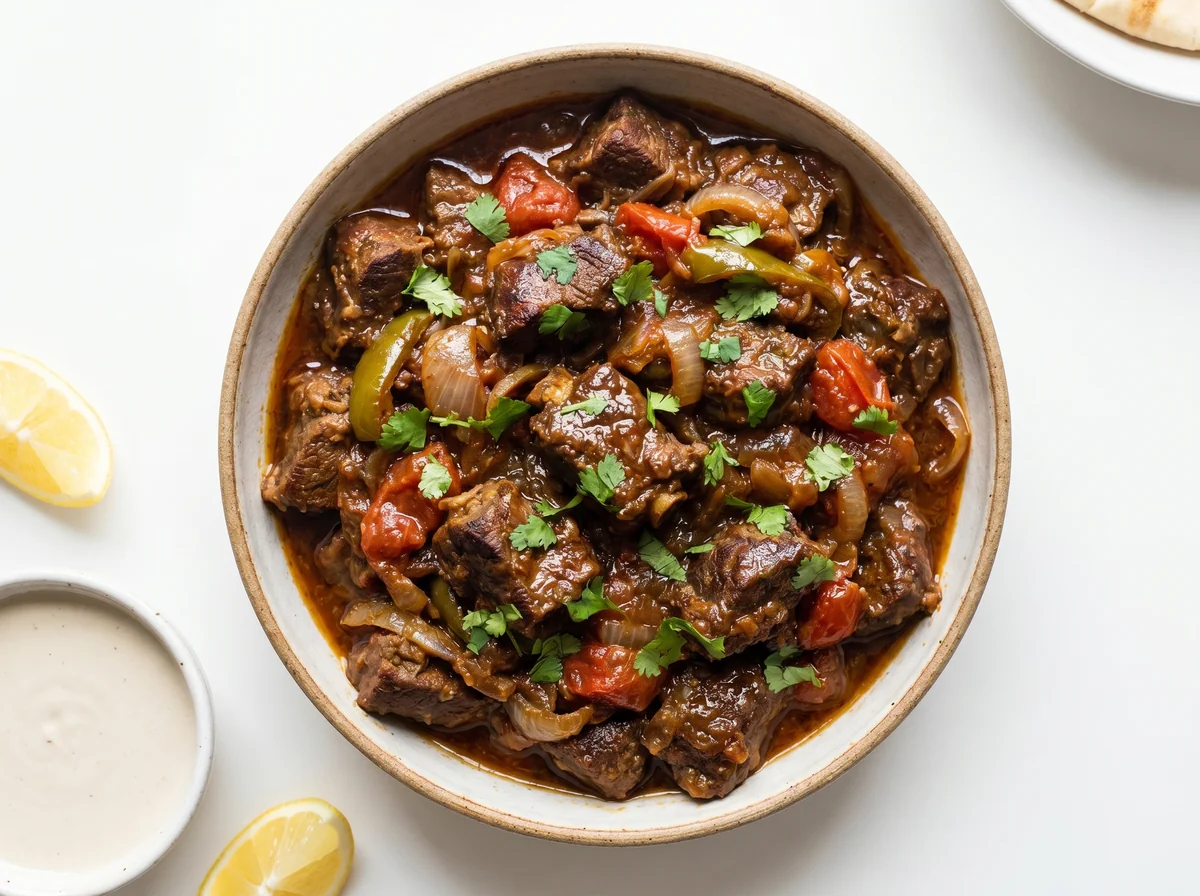
A quick Hejazi dish — meat cubes sautéed (mugalgal) over high heat with onion, bell pepper, tomato, and spices until tender. Low-carb, high in protein and iron, served with bread or rice, and free of common allergens.
Mugalgal is a quick Hejazi meat dish; its name comes from the Arabic for rapid tossing — the meat is tossed quickly over high heat. Its origins are documented in the Hejaz region of western Saudi Arabia, and it has spread across Gulf tables as a festive dish, a celebration meal, and a quick lunch.
The concept is simple: meat cubes tossed with onion, bell pepper, tomatoes, and spices until tender and coated in a light sauce. Served with bread or rice, it is one of those dishes that combines speed and rich flavor.
Preparation Steps
Sear the meat
Heat the oil in a wide pan or pot over high heat, then add the meat cubes in a single layer without crowding. Leave them to brown for two minutes without stirring until one side is seared, then turn them to brown on all sides. Quick high-heat searing locks in the meat juices and creates deep flavor — this is the origin of the name Mugalgal (rapid tossing).
Add garlic and spices
Add the crushed garlic and ginger and stir until their aroma rises without burning, then add the baharat, turmeric, and cumin and stir for half a minute to bloom their flavor and coat the meat. Toasting the spices with the meat deepens the taste.
Braise the meat until tender
Add the tomato paste and stir for one minute, then add half a cup of hot water and a pinch of salt. Cover the pot and lower the heat; let the meat cook for twenty to twenty-five minutes (or longer depending on the cut) until tender and easy to chew. Add a little water if it dries out before the meat is done.
Add onion and bell pepper
Remove the lid and raise the heat, then add the sliced onion and bell pepper. Toss over high heat for five minutes until the onion softens slightly and the pepper retains its crunch and color. You want the vegetables tender but not mushy, adding both texture and flavor.
Add tomatoes and reduce
Add the chopped tomatoes and green chili, then stir for two to three minutes until the tomatoes soften slightly without breaking down and the liquid thickens into a light sauce that coats the meat. Taste and adjust salt and spices.
Serve
Scatter chopped fresh coriander over the mugalgal and serve hot with tandoor bread, white rice, or saj bread. Mugalgal is a fast dish served immediately, holding its tender meat pieces and bright vegetables. It suits a quick lunch or a small gathering.
Blood Sugar Impact
The glycemic index (GI) measures how quickly a food raises blood sugar, while the glycemic load (GL) measures how much a full serving raises it. Together they give the complete picture.
Glycemic Index
GI
13Low
Low0–55Medium56–69High70+
A low value (≤55) means a gradual rise in blood sugar — the most suitable range for diabetes and insulin resistance.
Glycemic Load
GL
1Low
Low0–10Medium11–19High20+
Glycemic load reflects the impact of the full serving. To lower it: take half a serving, or pair the recipe with a source of protein and fiber.
Nutritional Information
Per ServingMakes 4 servings · one serving is about 315 g of raw ingredients
Calories455 kcal23%of Daily Value*
Protein23 g46%of Daily Value*
Carbohydrates13 g5%of Daily Value*
Fat34 g44%of Daily Value*
Fiber3 g11%of Daily Value*
Sodium180 mg8%of Daily Value*
* Percent Daily Values are based on a 2,000-calorie diet per FDA food-label reference values — your daily needs may be higher or lower. Values are derived from the recipe's ingredients via the USDA database.
Troubleshooting
The most common problems when preparing Saudi Mugalgal (Hejazi Sautéed Spiced Meat), and how to fix them:
The meat is tough and did not tenderize
It was not cooked long enough, or the pieces are too large. Cut the meat into small cubes, and after searing, add water, cover, and let it cook over low heat until tender (20 to 25 minutes or more depending on the cut).
The meat released water and steamed instead of browning
The pan is crowded or the heat is too low. Brown the meat in a single layer over high heat without crowding — cook in batches if needed. Crowding lowers the temperature and causes the meat to steam in its own juices.
The vegetables became mushy and lost their texture
They were added too early or cooked too long. Add the onion and bell pepper after the meat has tenderized, and toss them over high heat for just a few minutes so they stay tender while retaining crunch and color.
The flavor is bland
The spices were not toasted, or there was not enough salt. Toast the spices with the meat for half a minute before adding liquid to bloom them, then taste and adjust salt and baharat at the end. Garlic and ginger add depth.
The sauce is too watery
Too much water was added. Raise the heat at the end and let the liquid evaporate until it becomes a light sauce that coats the meat and vegetables. Mugalgal is not a stew — the pieces should be coated in sauce, not swimming in it.
Storage and Make-Ahead
Refrigerator (4°C)
Mugalgal keeps in an airtight container for three days and its flavor improves the next day. Reheat in a pan over medium heat with a splash of water if it has dried out.
Freezer (-18°C)
Freeze for two months in an airtight container. Thaw in the refrigerator and reheat in a pan. The vegetables may soften slightly after freezing; add fresh bell pepper when reheating if desired.
Advance prep
Brown the meat and cook it until tender in advance, then refrigerate. Add the vegetables and tomatoes at serving time in minutes. This makes it a quick ready-to-finish dish.
Food safety
Cook the meat until fully done and tender. Do not leave it unrefrigerated for more than two hours. Reheat until boiling when serving again.
Tested Ingredient Substitutions
Original Ingredient
Tested Substitute
Ratio
Flavor Difference
Lamb
Lean beef or diced chicken
same weight
Lean beef is lower in fat; chicken is lighter and cooks faster (chicken mugalgal)
Frying with oil
Searing with less oil in a good pan
1 spoon instead of 2
Reduces fat; requires high heat and a non-stick pan to prevent sticking
Serving with white rice
Whole-wheat bread or a large salad
as needed
Lowers the glycemic load of the meal and raises fiber
How Much Does It Make? Scaling Guide
Servings
Meat
Onion
Bell pepper
2 (half recipe)
250 g
1 onion
1 pepper
4 (base)
500 g
2 onions
2 peppers
8 (large family)
1 kg
4 onions
4 peppers
EEINA Nutrition Tip
Mugalgal is one of the smartest meat dishes for those watching blood sugar or weight: very low in carbohydrates, rich in protein and iron, and full of vegetables (onion, bell pepper, tomato). For a lighter version, choose lean meat (such as lean beef) and moderate oil, and increase the pepper and vegetables. Serve it with a salad or whole-wheat bread instead of white rice to maintain its low glycemic load.
Add This Recipe to Your Plan
The EEINA app saves your favorite recipes, calculates them from their real ingredients, and shows your daily numbers toward your goal. Try it free now.
From the Arabic for rapid tossing — the meat is tossed quickly over high heat. That technique (fast searing and tossing) gave the dish its name, distinguishing it from slow-cooked stew dishes.
What is the difference between Mugalgal and Salona?
Mugalgal is seared meat coated in a light sauce with tender vegetables, cooked quickly over high heat. Salona is a soupier stew cooked over low heat for a longer time. Mugalgal is drier and faster.
Is Mugalgal suitable for people with diabetes?
Yes — it is very low in carbohydrates and rich in protein, with a glycemic load close to zero on its own. Serve it with a salad or whole-wheat bread instead of white rice to maintain that.
How do I get tender meat?
Sear the meat over high heat first to lock in the juices, then add a little water, cover, and let it cook over low heat until tender. Small pieces and gentle simmering after searing are the secrets to tenderness.