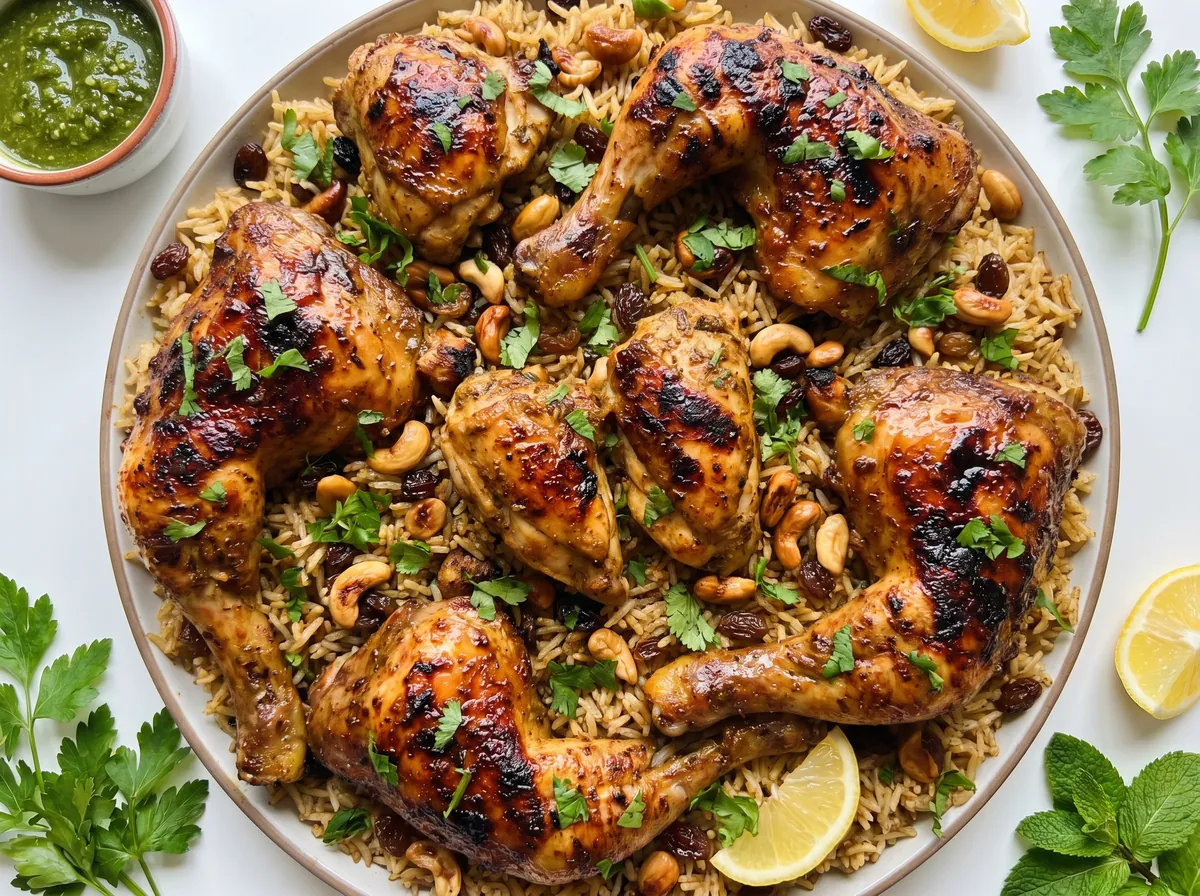
A beloved Yemeni-Saudi dish — spiced chicken grilled on a hot stone (madhbi) to acquire a smoky flavor, served over spiced rice. High glycemic load from the rice, rich in protein, and free from common allergens.
Madhbi is a Yemeni dish that spread across southern Saudi Arabia and the Gulf. Its name comes from the hot stone (madhbi) on which the chicken (or meat) is grilled over embers, acquiring a distinctive smoky flavor before being served over spiced basmati rice.
What sets it apart from Mandi (Yemeni-Saudi smoked meat and rice) — cooked in an underground pit — and Kabsa (Saudi spiced rice dish) — cooked in a pot — is the stone-grilling method. It has become a popular restaurant staple and beloved feast dish, traditionally served with hot sahawiq sauce.
Preparation Steps
Marinate the chicken
Mix the tomato paste with crushed garlic and ginger, half the spices, turmeric, lemon juice, a pinch of salt, and oil. Rub the chicken thoroughly inside and out. Leave to marinate for at least half an hour (or several hours in the refrigerator) so the flavors fully penetrate.
Grill the chicken
Madhbi is all about grilling on a hot stone: Grill the chicken in a 200°C oven, on a grill, or on a hot madhbi stone until cooked through with crispy skin and an internal temperature of 74°C (no pink near the bone), about 35 to 40 minutes. Grilling on the stone delivers the authentic smoky flavor.
Prepare the rice
Brown a chopped onion in oil until softened. Add the remaining spices, the grated tomatoes, and the pierced loomi, stirring until thickened. Add five cups of hot water or broth and a pinch of salt. Bring to a boil and adjust seasoning.
Cook the rice
Drain the soaked rice and add it to the boiling liquid. Stir once, cover, and cook over very low heat for fifteen minutes until the rice absorbs the liquid and steam holes appear. Remove from heat and leave covered for five minutes.
Smoke (optional but distinctive)
For the madhbi smoky flavor: place a lit piece of charcoal in a small metal cup set in the center of the rice or chicken. Pour a tablespoon of oil over it so smoke rises, then immediately cover the pot for two to three minutes to let the smoke penetrate, then remove the charcoal. This step replicates the flavor of the stone and pit.
Serve
Spread the rice on a large platter and arrange the grilled chicken on top. Serve madhbi hot with a hot sauce (sahawiq or daqoos) and salad. The green salad balances this starchy dish. It is a dish for gatherings and feasts in Yemen and southern Saudi Arabia.
Blood Sugar Impact
The glycemic index (GI) measures how quickly a food raises blood sugar, while the glycemic load (GL) measures how much a full serving raises it. Together they give the complete picture.
Glycemic Index
GI
69Medium
Low0–55Medium56–69High70+
A low value (≤55) means a gradual rise in blood sugar — the most suitable range for diabetes and insulin resistance.
Glycemic Load
GL
64High
Low0–10Medium11–19High20+
Glycemic load reflects the impact of the full serving. To lower it: take half a serving, or pair the recipe with a source of protein and fiber.
Nutritional Information
Per ServingMakes 5 servings · one serving is about 425 g of raw ingredients
Calories891 kcal45%of Daily Value*
Protein59 g118%of Daily Value*
Carbohydrates96 g35%of Daily Value*
Fat28 g36%of Daily Value*
Fiber3 g11%of Daily Value*
Sodium162 mg7%of Daily Value*
* Percent Daily Values are based on a 2,000-calorie diet per FDA food-label reference values — your daily needs may be higher or lower. Values are derived from the recipe's ingredients via the USDA database.
Troubleshooting
The most common problems when preparing Madhbi Chicken, and how to fix them:
The chicken is dry
Overcooked or grilled at too high a temperature. Grill only until the internal temperature reaches 74°C, marinate and soak it well beforehand, and bone-in pieces retain more moisture than boneless breasts.
The rice is clumped and gummy
Too much liquid or excessive stirring. Use a ratio of one and a half cups liquid per cup of rice. Stir once only and do not lift the lid during cooking.
No smoky flavor
The charcoal smoking step was skipped. Place a lit piece of charcoal in a small cup in the center of the rice or chicken, pour oil over it, and cover the pot for a few minutes to let the smoke penetrate. This replicates the flavor of the stone.
Bland taste
Insufficient marinade, spices, or loomi. Marinate the chicken adequately, pierce the loomi so it releases its flavor into the rice, and toast the spices to open them up.
The bottom of the rice burned
The heat was too high or the pot is thin. Cook over the lowest possible heat after adding the rice and use a heavy-bottomed pot. A light golden crust is desirable — not charred.
Storage and Make-Ahead
Refrigerator (4°C)
Madhbi keeps in an airtight container for three days, rice and chicken together or separately. Reheat with a splash of water over low heat or with steam to keep the rice moist.
Freezer (-18°C)
Spiced rice freezes for one month, as does grilled chicken. Thaw in the refrigerator and reheat with steam. Freshly grilled chicken has better texture.
Advance preparation
Marinate the chicken overnight for deeper flavor, and prepare the rice fresh. Overnight marinating greatly deepens the madhbi flavor.
Food safety
Cook the chicken to an internal temperature of 74°C with no pink near the bone, and do not leave cooked rice out of refrigeration for more than two hours.
Tested Ingredient Substitutions
Original Ingredient
Tested Substitute
Ratio
Flavor Difference
White basmati rice
Brown basmati rice
Same quantity with more water and longer cooking time
Higher fiber and lower glycemic load for the whole dish
Chicken
Lamb or ribs
Same weight
Lamb madhbi is also common and requires longer grilling time to become tender
Chicken with skin
Skinless chicken
Same quantity
Less fat — marinate well and grill carefully to prevent drying out
How Much Does It Make? Scaling Guide
Servings
Chicken
Rice
Onion
3 (half recipe)
1/2 chicken
1.5 cups
1 onion
5 (base)
1 chicken
3 cups
2 onions
10 (large family)
2 chickens
6 cups
4 onions
EEINA Nutrition Tip
Madhbi is a rice dish with a high glycemic load, but the grilled chicken (not fried) adds protein with less fat. For moderation: keep the rice portion to a fist-sized serving and have more chicken, remove the skin to reduce fat, and serve alongside a large green salad to slow sugar absorption. Replace a third of the white rice with brown rice to increase fiber.
Add This Recipe to Your Plan
The EEINA app saves your favorite recipes, calculates them from their real ingredients, and shows your daily numbers toward your goal. Try it free now.
What is the difference between madhbi, Mandi, and Kabsa?
Madhbi chicken is grilled on a hot stone to acquire a smoky flavor. Mandi (Yemeni-Saudi smoked meat and rice) is cooked underground with smoking. Kabsa (Saudi spiced rice dish) is cooked directly in a pot. All three are rice with meat or chicken prepared by different cooking methods.
How do I get a smoky flavor without a stone?
Use the charcoal smoking technique: place a lit piece of charcoal in a small cup set in the center of the rice or chicken, pour oil over it, and cover the pot for a few minutes to absorb the smoke. This replicates the flavor of the stone and pit.
Is madhbi suitable for diabetics?
With caution — it is a rice dish with a high glycemic load. With a small rice portion, skinless chicken, and a large green salad on a special occasion, it can work. Replace some rice with brown rice and consult your doctor.
What is loomi?
A dried black lime used whole and pierced to give the rice a deep smoky acidity. It is an essential flavor in madhbi, Mandi, and Gulf Kabsa rice — one or two pieces are enough.