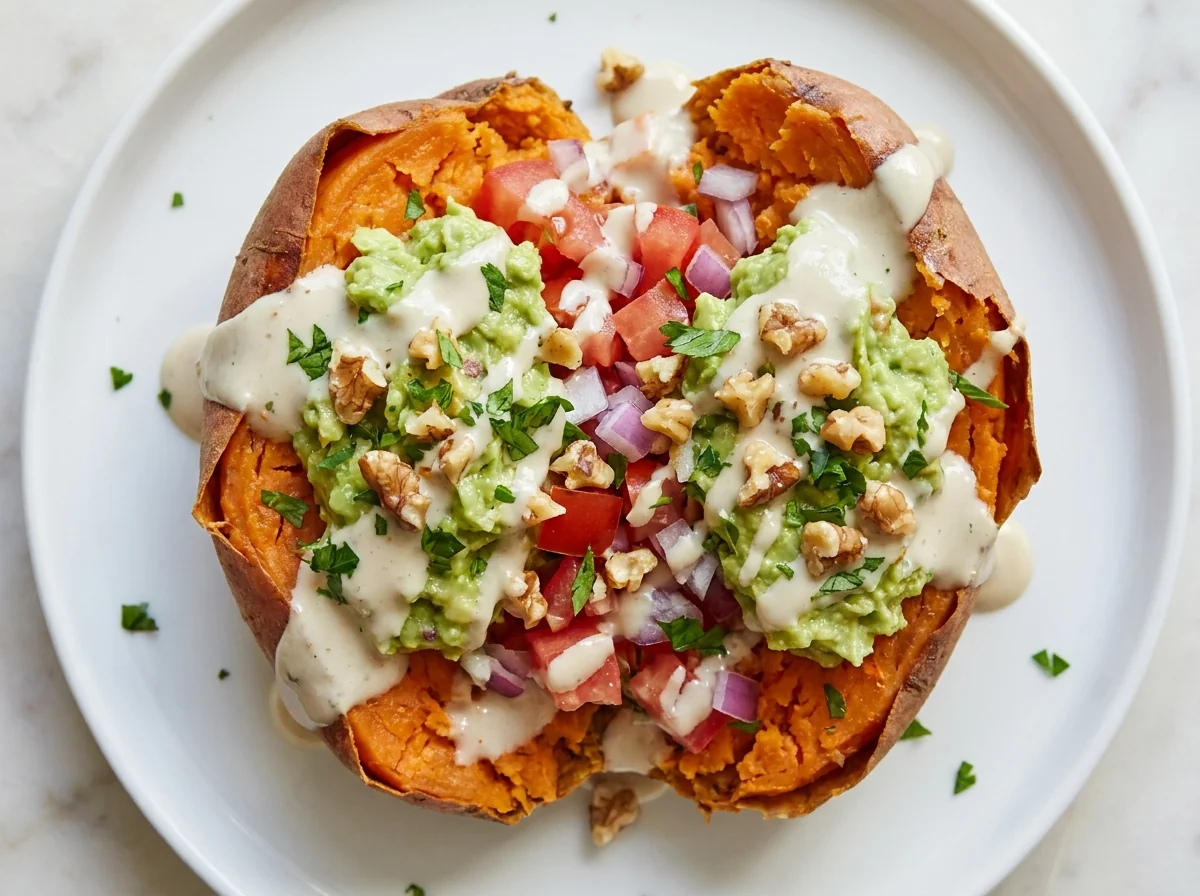
We love plant-based dishes that satisfy the eye before the stomach, and this roasted sweet potato pairs its natural sweetness with the smooth bitterness of tahini and the creaminess of guacamole.
Warm Middle Eastern flavors and pomegranate seeds add a refreshing pop, making it a self-sufficient plant-based lunch.
Preparation Steps
Prepare the sweet potato
Halve each sweet potato lengthwise, brush with olive oil and sprinkle with a little salt
Roasting
Arrange them cut-side down on a tray and roast in a preheated oven at 200°C for about forty minutes until tender and the surface caramelizes
The tahini sauce
Make the tahini sauce by whisking the tahini with the lemon juice, mashed garlic and cold water gradually until smooth and pourable, then adjust the salt
The guacamole
Mash the avocado with a fork and mix it with the tomatoes, red onion, a pinch of salt and cumin for a quick Middle Eastern guacamole
The walnuts
Toast the walnuts in a dry skillet for two minutes until fragrant; this brings out their flavor and adds crunch
Prepare the flesh
Flip the sweet potato halves and press the flesh slightly with a fork so it cradles the toppings
Loading
Spread the guacamole over the sweet potato, then drizzle the tahini sauce generously
Garnish
Scatter the toasted walnuts, parsley and pomegranate seeds over the top and serve warm
Blood Sugar Impact
The glycemic index (GI) measures how quickly a food raises blood sugar, while the glycemic load (GL) measures how much a full serving raises it. Together they give the complete picture.
Glycemic Index
GI
51Low
Low0–55Medium56–69High70+
A low value (≤55) means a gradual rise in blood sugar — the most suitable range for diabetes and insulin resistance.
Glycemic Load
GL
17Medium
Low0–10Medium11–19High20+
Glycemic load reflects the impact of the full serving. To lower it: take half a serving, or pair the recipe with a source of protein and fiber.
Nutritional Information
Per ServingMakes 4 servings · one serving is about 315 g of raw ingredients
Calories469 kcal23%of Daily Value*
Protein9 g18%of Daily Value*
Carbohydrates46 g17%of Daily Value*
Fat31 g40%of Daily Value*
Fiber12 g43%of Daily Value*
Sodium399 mg17%of Daily Value*
Potassium1144 mg24%of Daily Value*
Phosphorus277 mg22%of Daily Value*
* Percent Daily Values are based on a 2,000-calorie diet per FDA food-label reference values — your daily needs may be higher or lower. Values are derived from the recipe's ingredients via the USDA database.
Troubleshooting
The most common problems when preparing Loaded Baked Sweet Potato with Tahini and Guacamole, and how to fix them:
The tahini seized and clumped
Add the cold water little by little while whisking and it returns smooth and pourable
The sweet potato isn't tender in the center
Extend the baking by five more minutes, since larger pieces need more time
The guacamole browned quickly
Mix it with lemon juice and make it just before serving
The surface didn't caramelize
Make sure the cut side is flush against the tray and the oven is hot enough
Storage and Make-Ahead
Refrigerator
Store the roasted sweet potato and the sauce separately for up to three days, and assemble the components at serving time
Guacamole
Make it fresh and don't store it long, since avocado oxidizes quickly
Tested Ingredient Substitutions
Original Ingredient
Tested Substitute
Ratio
Flavor Difference
Sweet potato
Butternut squash
Same weight, 600 g
A similar flavor with fewer carbs
Tahini
Greek yogurt with garlic
Same amount, 60 g
A lighter, less rich sauce
Walnuts
Toasted almonds
Same amount, 40 g
An alternative crunch
Avocado
Mashed chickpeas
Same amount, 240 g
A creamy texture without avocado
How Much Does It Make? Scaling Guide
Ingredient
2 servings
4 servings (base)
8 servings
Sweet potato
300 g
600 g
1200 g
Tahini
30 g
60 g
120 g
Avocado
120 g
240 g
480 g
Pomegranate seeds
25 g
50 g
100 g
EEINA Nutrition Tip
Roast the sweet potato cut-side down so the surface caramelizes and its natural sugar concentrates. And thin the tahini with cold water gradually, since it seizes up first and then loosens.
Add This Recipe to Your Plan
The EEINA app saves your favorite recipes, calculates them from their real ingredients, and shows your daily numbers toward your goal. Try it free now.