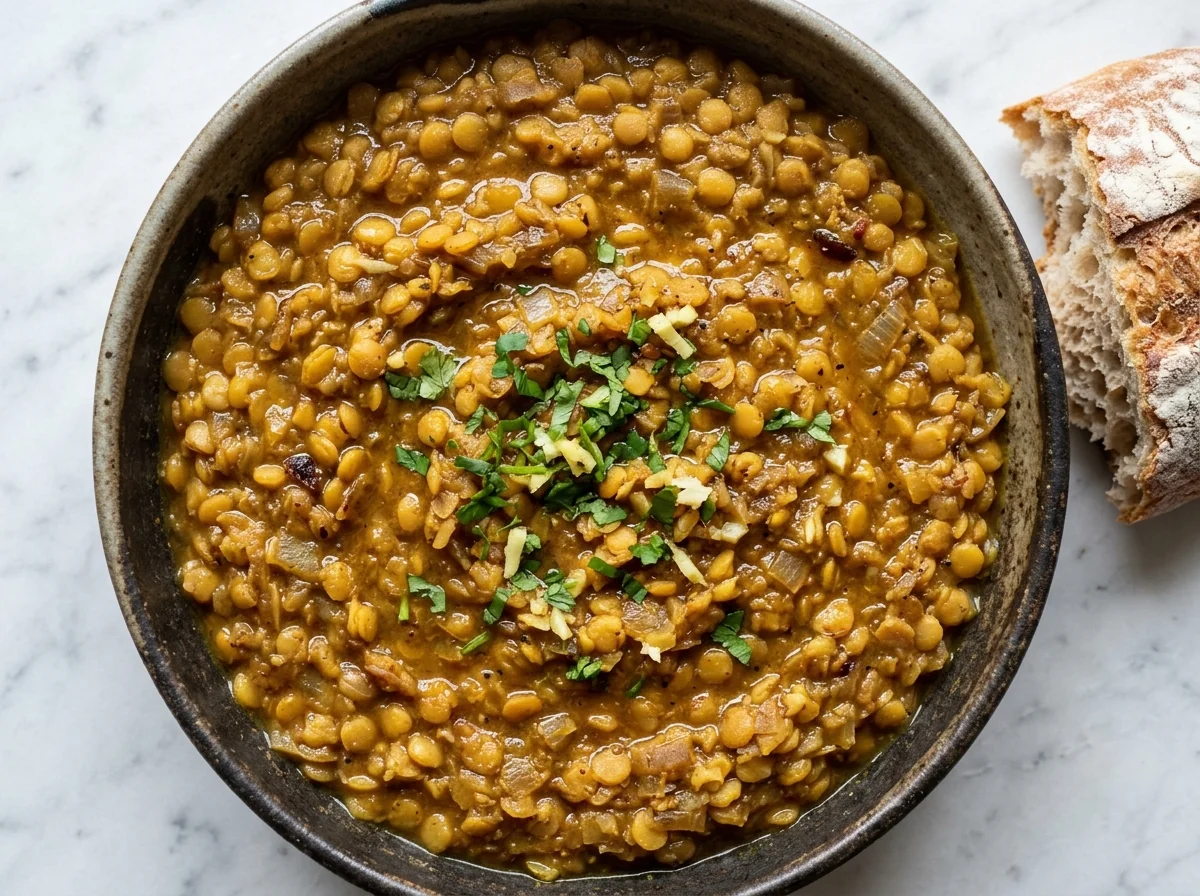
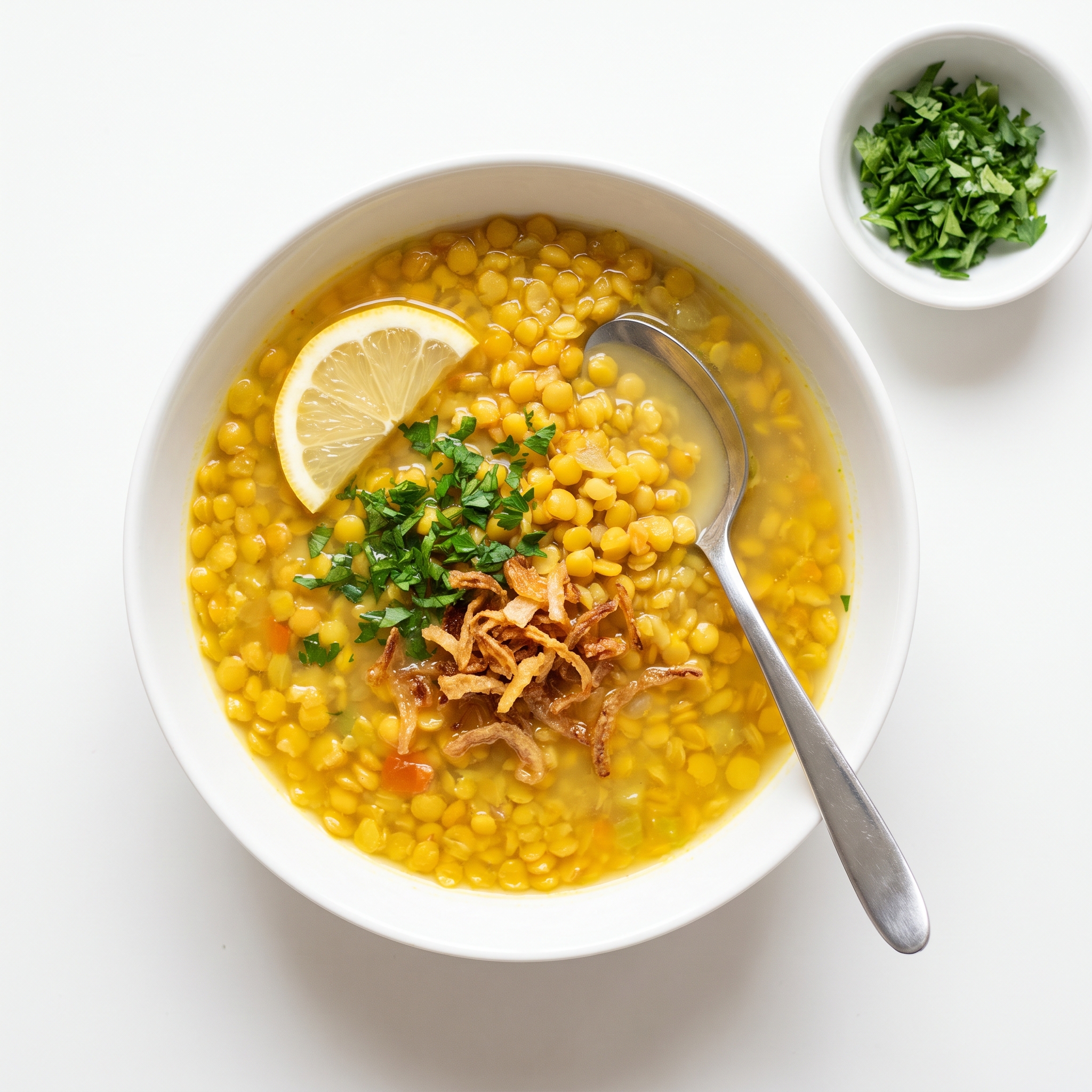
Yellow lentils simmered with onion, garlic, ginger, cumin, turmeric, and tamarind for a tangy, aromatic finish. A high-fiber, low-sodium, plant-based suhoor that kick-starts digestion.
Tamarind is a sour ingredient used in Levantine, Egyptian, and Moroccan cooking to add acidic depth.
With yellow lentils it balances the bitterness of cumin and creates a unique tangy-spicy flavor. Suhoor shifts from familiar to surprising and opens the appetite.
Preparation Steps
Prepare the tamarind
Soak the tamarind in a cup of warm water for 20 minutes. Strain it, keep the water, and knead the pulp to extract the acidity.
Sauté the onion
In a pot, heat the oil and sauté the onion for five minutes until soft and golden. Add the garlic and ginger and continue for two minutes.
Add the spices
Add the cumin, turmeric, red pepper, and coriander. Stir for thirty seconds. The heat releases the oils of the spices.
Boil the lentils
Add the rinsed lentils, the strained tamarind water, and an extra cup of water. Leave the pot for 20 minutes until the lentils are tender and have absorbed the acidity.
Serve
Remove from the heat, add the salt, and garnish with the herbs. Serve hot with country bread.
Blood Sugar Impact
The glycemic index (GI) measures how quickly a food raises blood sugar, while the glycemic load (GL) measures how much a full serving raises it. Together they give the complete picture.
Glycemic Index
GI
30Low
Low0–55Medium56–69High70+
A low value (≤55) means a gradual rise in blood sugar — the most suitable range for diabetes and insulin resistance.
Glycemic Load
GL
10Low
Low0–10Medium11–19High20+
Glycemic load reflects the impact of the full serving. To lower it: take half a serving, or pair the recipe with a source of protein and fiber.
Nutritional Information
Per ServingMakes 4 servings · one serving is about 100 g of raw ingredients
Calories292 kcal15%of Daily Value*
Protein14 g28%of Daily Value*
Carbohydrates42 g15%of Daily Value*
Fat9 g12%of Daily Value*
Fiber7 g25%of Daily Value*
Sodium504 mg22%of Daily Value*
* Percent Daily Values are based on a 2,000-calorie diet per FDA food-label reference values — your daily needs may be higher or lower. Values are derived from the recipe's ingredients via the USDA database.
Troubleshooting
The most common problems when preparing Lentils with Tamarind and Warm Spices, and how to fix them:
The tamarind is too sour
Reduce the amount to 30 g and add a spoonful of sugar to balance.
The lentils are dry
Add a cup of hot water and leave 5 minutes. Tamarind absorbs the liquid fast.
The flavor is flat
Add a spoon of ketchup or hot sauce in the last minute to deepen the flavor.
The tamarind is bitter
The tamarind is not fresh. Choose soft brown tamarind and avoid dry black.
Storage and Make-Ahead
In the refrigerator
Three days. Add a spoon of water when reheating.
In the freezer
One month. Freeze it before adding the herbs.
Tested Ingredient Substitutions
Original Ingredient
Tested Substitute
Ratio
Flavor Difference
tamarind
lemon juice
2 tablespoons
loses the acidic depth but keeps the acidity.
yellow lentils
red lentils
200 g
cook faster.
fresh ginger
ground ginger
2 g
a stored version.
How Much Does It Make? Scaling Guide
Ingredient
4 people
8 people
12 people
Lentils
200 g
400 g
600 g
Tamarind
50 g
100 g
150 g
Onion
70 g
140 g
210 g
Oil
30 ml
60 ml
90 ml
EEINA Nutrition Tip
Soaked tamarind releases a strong acidic pulp. Choose fresh brown tamarind, not black. If the tamarind is dry, soak it for 4 hours.
Add This Recipe to Your Plan
The EEINA app saves your favorite recipes, calculates them from their real ingredients, and shows your daily numbers toward your goal. Try it free now.