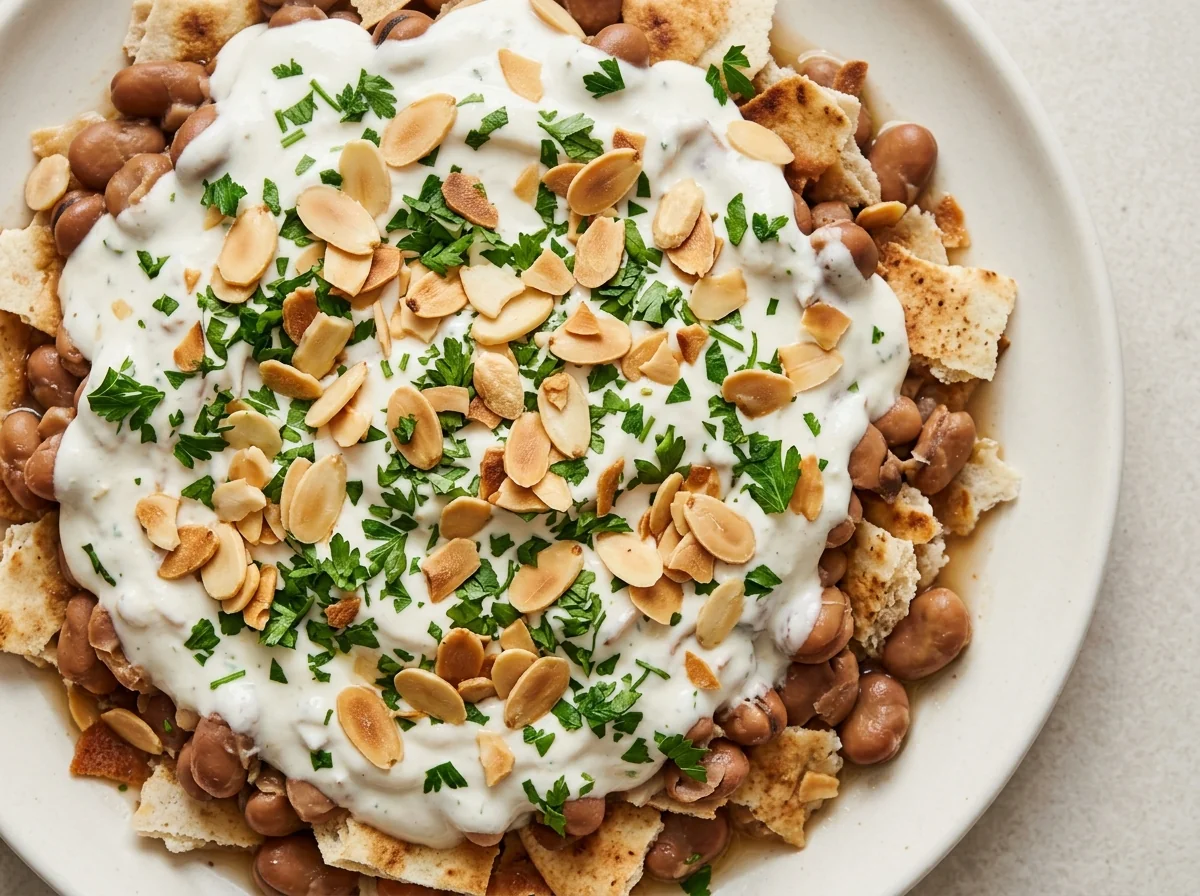
Layers of toasted Arabic bread, warm mashed fava beans, and a yogurt-tahini sauce — finished with parsley, toasted almonds, and a drizzle of olive oil.
Fatteh is one of the oldest dishes on the Levantine table — its name comes from 'futt', meaning to break, because the bread is broken over the dish.
Fatteh is usually made with chickpeas, but fatteh with foul medames is a deeper-flavored, higher-protein alternative, well-known in popular Levantine restaurants.
Preparation Steps
Toast the bread
Cut the Arabic bread into small squares and toast it in the oven at 180°C for 10 minutes until it turns golden and crisp. Take it out and let it cool slightly.
Mash the fava beans
In a pot, heat the drained fava beans with half a cup of water and mash half the beans with the back of a spoon. Add the cumin and salt and stir for two minutes.
Prepare the yogurt sauce
In a bowl, whisk the yogurt with the tahini, lemon juice, crushed garlic, and salt. Thin it with a spoon of cold water until it has a custard-like pourable texture.
Layer the dish
In a deep plate, pour half the toasted bread on the bottom, spread the foul medames over it, then pour the yogurt sauce to cover everything. Sprinkle the rest of the bread on top.
Garnish and serve
Heat the olive oil and drizzle it over the top. Sprinkle with parsley and toasted almonds and serve immediately.
Blood Sugar Impact
The glycemic index (GI) measures how quickly a food raises blood sugar, while the glycemic load (GL) measures how much a full serving raises it. Together they give the complete picture.
Glycemic Index
GI
41Low
Low0–55Medium56–69High70+
A low value (≤55) means a gradual rise in blood sugar — the most suitable range for diabetes and insulin resistance.
Glycemic Load
GL
22High
Low0–10Medium11–19High20+
Glycemic load reflects the impact of the full serving. To lower it: take half a serving, or pair the recipe with a source of protein and fiber.
Nutritional Information
Per ServingMakes 3 servings · one serving is about 300 g of raw ingredients
Calories558 kcal28%of Daily Value*
Protein25 g50%of Daily Value*
Carbohydrates64 g23%of Daily Value*
Fat24 g31%of Daily Value*
Fiber10 g36%of Daily Value*
Sodium961 mg42%of Daily Value*
* Percent Daily Values are based on a 2,000-calorie diet per FDA food-label reference values — your daily needs may be higher or lower. Values are derived from the recipe's ingredients via the USDA database.
Troubleshooting
The most common problems when preparing Fatteh with Fava Beans and Toasted Bread, and how to fix them:
Bread softens too quickly
Reduce the yogurt sauce to three-quarters of a cup and leave it aside for the guest to pour themselves.
Sauce is too sour
Add an extra spoon of tahini and thin it with cold water.
Tahini is bitter
Choose a light-colored, well-roasted variety, and thin it with cold water before mixing.
Fatteh is cold
Warm the serving plate and add the layers to it immediately after assembly.
Storage and Make-Ahead
Immediately
Must be eaten right away — the bread loses its crispness after a quarter of an hour.
Advance preparation
Prepare the beans and sauce a day ahead and assemble the layers at the last moment.
Tested Ingredient Substitutions
Original Ingredient
Tested Substitute
Ratio
Flavor Difference
Arabic bread
toasted whole-wheat bread
1:1
Keeps its crispness longer.
Greek yogurt
whipped labneh
1:1
Richer flavor and creamier.
toasted almonds
parsley only
to taste
Nut-free version.
How Much Does It Make? Scaling Guide
Ingredient
3 people
6 people
9 people
Foul medames
400 g
800 g
1200 g
Toasted bread
150 g
300 g
450 g
Yogurt
200 g
400 g
600 g
Tahini
40 g
80 g
120 g
Olive oil
30 ml
60 ml
90 ml
EEINA Nutrition Tip
Serve the dish right after layering so the bread stays crisp underneath and soft on top. If we wait more than five minutes, the bread becomes fully soft.
Add This Recipe to Your Plan
The EEINA app saves your favorite recipes, calculates them from their real ingredients, and shows your daily numbers toward your goal. Try it free now.
What is the difference between chickpea fatteh and fava-bean fatteh?
Chickpea fatteh is made with boiled chickpeas, while fava-bean fatteh uses foul medames. Fava-bean fatteh has a deeper flavor and higher plant protein.
Is it suitable to serve as hospitality?
Yes — assemble it in a large baking dish and serve it hot. Enough for six people.
How many calories per plate?
Around 480 calories per serving, mostly from the bread and tahini.
Is it suitable for pregnant women?
Yes — fava beans are rich in folic acid. We reduce the salt and choose low-fat yogurt.