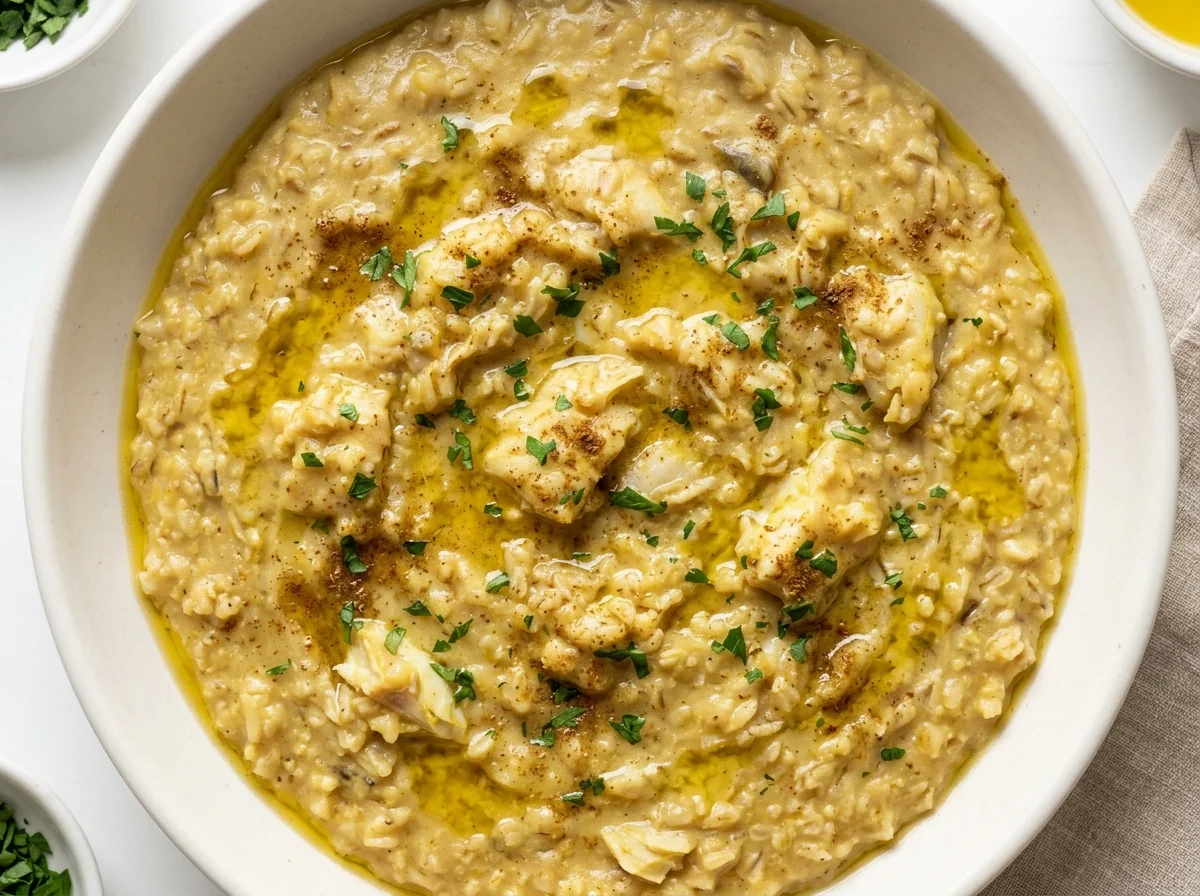
Cracked wheat porridge simmered with pan-seared hammour fillets and finished with dried black lime and ghee. A coastal Emirati take on the classic suhoor dish.
Fish harees is a coastal dish from the UAE and Oman, cooked by Gulf fishermen for suhoor and special occasions.
The wheat carries the flavor of the sea, and the loomi opens the appetite with its salty-tangy depth. The dish is easy on the stomach and high in protein, suiting anyone who wants a filling suhoor without the heaviness of red meat.
Preparation Steps
Make the stock
In a pot, combine the fish bones (if you have them) with the onion, half the cumin, and about a liter of water. Boil for 20 minutes, then strain the stock and discard the bones.
Cook the wheat
Drain the soaked wheat and place it in the pot with the fish stock. Leave it on low heat for 50 minutes, stirring from time to time.
Cook the fish
In a pan, heat the olive oil and cook the fish fillets for 4 minutes per side with salt and pepper. Break them into large chunks with a wooden spoon.
Combine and season
Add the fish to the pot with the cumin, turmeric, coriander, and loomi. Melt the ghee and drizzle it on top, then stir gently for 10 minutes until the textures come together.
Serve
Pour the harees into a plate and garnish with fresh cilantro and drops of olive oil. Serve hot with lemon.
Blood Sugar Impact
The glycemic index (GI) measures how quickly a food raises blood sugar, while the glycemic load (GL) measures how much a full serving raises it. Together they give the complete picture.
Glycemic Index
GI
39Low
Low0–55Medium56–69High70+
A low value (≤55) means a gradual rise in blood sugar — the most suitable range for diabetes and insulin resistance.
Glycemic Load
GL
16Medium
Low0–10Medium11–19High20+
Glycemic load reflects the impact of the full serving. To lower it: take half a serving, or pair the recipe with a source of protein and fiber.
Nutritional Information
Per ServingMakes 4 servings · one serving is about 565 g of raw ingredients
Calories589 kcal29%of Daily Value*
Protein45 g90%of Daily Value*
Carbohydrates49 g18%of Daily Value*
Fat25 g32%of Daily Value*
Fiber9 g32%of Daily Value*
Sodium1339 mg58%of Daily Value*
* Percent Daily Values are based on a 2,000-calorie diet per FDA food-label reference values — your daily needs may be higher or lower. Values are derived from the recipe's ingredients via the USDA database.
Troubleshooting
The most common problems when preparing Fish Harees, and how to fix them:
The fish is falling apart
Reduce the pan-frying time by a minute. Add the fish only at the final stage.
The harees is watery
Continue cooking uncovered for 10 minutes so the excess evaporates.
The flavor is flat
Add more loomi and a few drops of fresh lemon just before serving.
The wheat is tough
Soak it for 8 hours instead of 4. Older wheat needs longer soaking.
Storage and Make-Ahead
In the refrigerator
Two days only. Reheat with a spoonful of stock.
Not suitable for freezing
The fish loses its texture after thawing.
Tested Ingredient Substitutions
Original Ingredient
Tested Substitute
Ratio
Flavor Difference
hammour
shaari or salmon
1:1
Pick a variety with firm flesh.
loomi
lemon + cumin
1:1
A different but acceptable flavor.
cracked wheat
fine bulgur
1:1
Soak for only 3 hours.
How Much Does It Make? Scaling Guide
Ingredient
4 people
8 people
12 people
Fish
600 g
1200 g
1800 g
Wheat
250 g
500 g
750 g
Ghee
50 g
100 g
150 g
Broth
1.2 L
2.4 L
3.6 L
EEINA Nutrition Tip
Choose fresh fish with firm flesh — hammour, kingfish, or brown-spotted grouper are the best options. Loomi (dried black lime) lifts the fish flavor and removes any muddy note. Break the fish apart after cooking, not before, so it does not fall apart more than you want.
Add This Recipe to Your Plan
The EEINA app saves your favorite recipes, calculates them from their real ingredients, and shows your daily numbers toward your goal. Try it free now.